
The Pennebaker Writing Protocol: Science-Backed Expressive Journaling (Huberman-Approved)

A powerful journaling protocol backed by over 200 studies shows that writing for just 15–30 minutes a day, four times, can measurably improve your mental and physical health.
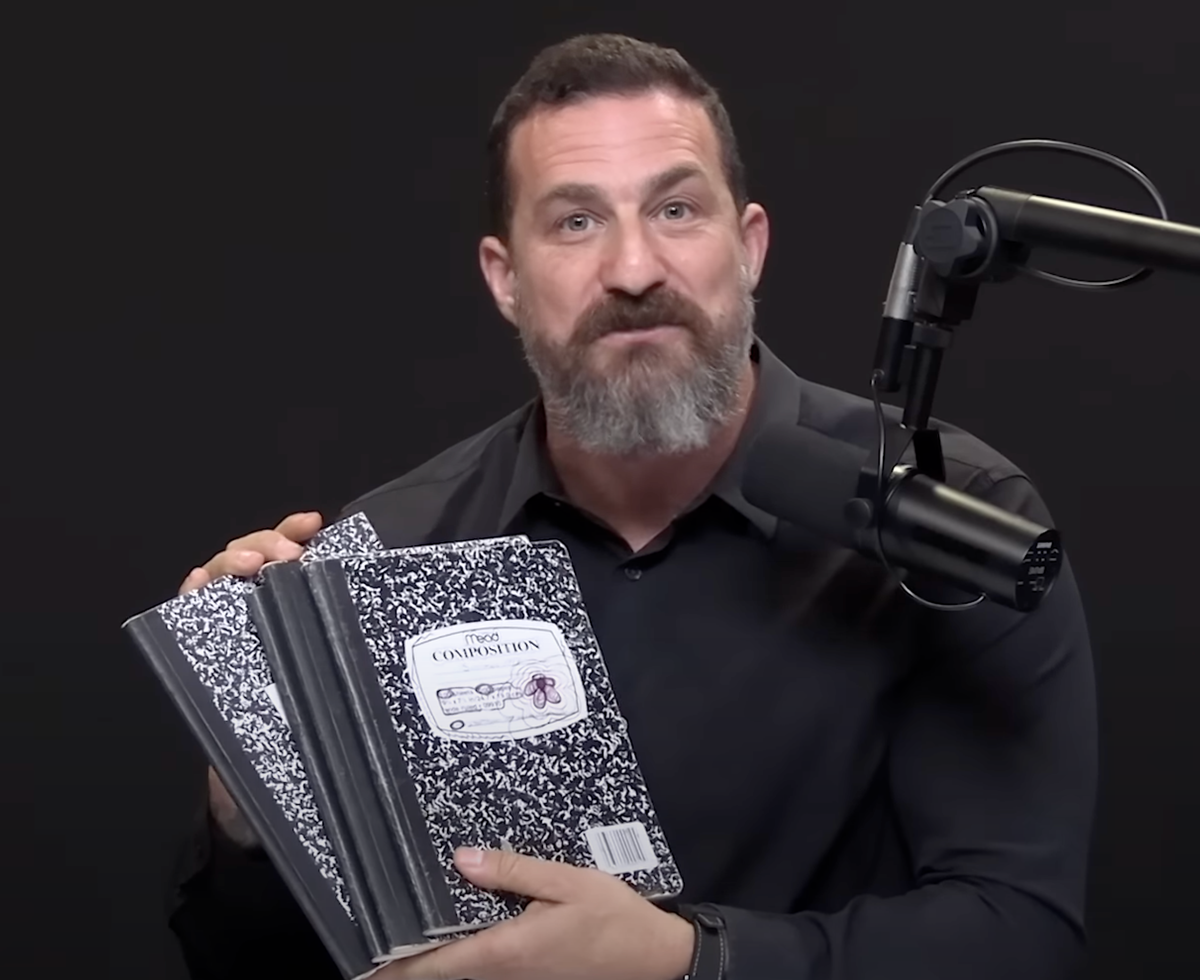
📌 TL;DR — The Pennebaker Writing Protocol
The Pennebaker Writing Protocol is a science-backed expressive journaling method: write about your deepest thoughts and feelings for 15–30 minutes over 4 consecutive days, focusing on one emotionally significant experience. Validated by 200+ studies, it measurably improves immune function, reduces anxiety and depression, and helps process stuck emotional memories. The key is continuous, uncensored writing — no editing, no grammar concerns. See also: how to process your emotions.
The Pennebaker writing protocol is a specific journaling method for emotional healing backed by over 200 peer-reviewed studies. Unlike regular journaling, this protocol asks you to write about your deepest emotional experiences for 15-30 minutes across four sessions—and the results include measurable improvements in mental health, immune function, and physical wellbeing.
Dr. James Pennebaker developed this method in the 1980s, and Andrew Huberman recently brought it mainstream attention on the Huberman Lab Podcast, calling it "one of the foundational health tools you didn't know you needed."
Related: Explore our guide to the self-authoring program.
This guide covers exactly how to do the protocol, why it works, and what to expect.
March 2026 Research Update
Pennebaker became president of the Association for Psychological Science (APS) in summer 2025, with a focus on AI and cultural movements in psychology. New research: a 2025 study in the Journal of Applied Research in Memory and Cognition compared turning-point writing (narrative about a life-changing moment) with traditional expressive writing for emerging adults' health outcomes — extending the protocol to the 18-25 age group. A systematic review of 51 studies (2025, PLOS ONE) covering 7 positive writing techniques found that gratitude letters and "best possible self" interventions showed the most consistent wellbeing improvements. See also: unsent letter technique.
What Is the Pennebaker Writing Protocol?
In four 20-minute sessions, this protocol achieves what months of thought suppression cannot — turning a stuck emotional memory into a finished story.
The Pennebaker writing protocol is a research-backed journaling method where you write about your deepest thoughts and feelings regarding a stressful experience for 15–30 minutes per day, over 3–4 consecutive days. Developed by psychologist James Pennebaker, it has been validated in over 200 peer-reviewed studies showing benefits for both physical and mental health.
The Pennebaker protocol (also called expressive writing) is a structured journaling exercise where you write continuously about a difficult emotional experience for 15-30 minutes, repeating this across four sessions. Apply expressive writing principles in a brain dump journal for quick mental relief.
(Related: writing a letter to your future self)
This is not "Dear Diary" or morning pages or gratitude lists (though those have value). This is deep emotional processing through writing—designed to help your brain integrate traumatic or stressful experiences.
The key elements that make this protocol different:
- One topic: You focus on the same emotional experience across all four sessions
- Continuous writing: No pausing, no editing, no concern for grammar
- Emotional depth: You include facts, feelings, and connections to your life
- Structured repetition: Four sessions, spaced out over days or weeks
Origins: How Pennebaker Discovered Expressive Writing
Dr. James Pennebaker discovered in the 1980s that writing about traumatic experiences for just four days measurably improved physical health and immune function.
- In the mid-1980s, Dr. James Pennebaker began experiments where participants would write for 15–30 minutes about their most difficult, emotionally charged experiences.
- Crucially: they had to write continuously (don't pause, don't self-edit) and they were told not to care about grammar, spelling, or readability.
- Multiple follow-up studies refined and extended the protocol across populations (students, veterans, clinical groups, chronic illness patients).
James Pennebaker, a social psychologist at the University of Texas at Austin, developed the expressive writing protocol in 1986 after observing a pattern in his clinical research: people who kept traumatic secrets showed higher rates of illness than those who had disclosed their experiences. In the landmark 1986 study published in the Journal of Abnormal Psychology, Pennebaker and Sandra Beall randomly assigned 46 college students to write for 15 minutes over four consecutive days about either a traumatic experience or a superficial topic. The results surprised the scientific community: students in the expressive writing group visited the campus health center 50% less frequently in the six months following the experiment than the control group. Subsequent studies expanded these findings dramatically. A 1988 study by Pennebaker, Janice Kiecolt-Glaser, and Ronald Glaser published in the Journal of Consulting and Clinical Psychology showed that participants who wrote about traumatic events exhibited measurably stronger immune responses, including increased T-helper cell activity. Over the next three decades, more than 200 studies across populations — from cancer patients to prisoners to first-year college students — replicated the core finding that structured emotional writing produces measurable improvements in physical health, psychological well-being, and even academic and professional performance.
Huberman emphasizes that although the idea of "writing about your feelings" is common, the specific structure of this expressive writing method is what gives it its edge.
The Pennebaker Protocol: Step-by-Step
The critical rule most people break: you must write about the same experience all four days — switching topics resets the therapeutic mechanism.
The Pennebaker writing protocol is a structured four-session expressive writing intervention in which you write continuously for 15 to 30 minutes per day over four consecutive days about a single emotionally significant experience. The protocol’s specific parameters — the duration, frequency, and focus on one event — are not arbitrary; they are derived from Pennebaker’s original 1986 research and refined through decades of replication studies. Neuroscientist Andrew Huberman, in his popular podcast coverage of the protocol, emphasizes that the structure is what distinguishes this method from ordinary journaling: you are not recording your day or tracking gratitude but deliberately confronting and narrativizing a difficult experience across multiple sessions. A 2005 meta-analysis by Joshua Smyth published in the Journal of Consulting and Clinical Psychology found that the greatest benefits emerged when participants wrote about the same event across all four sessions, allowing for progressive deepening of insight and narrative coherence. The protocol requires no special training, materials, or therapist oversight — only a private space, a timer, and the willingness to write honestly about something that matters to you. Here is the distilled version, drawn from Pennebaker’s research and Huberman’s recommendations:
| Step | What to Do | Notes / Why |
|---|---|---|
| 1. Choose the Topic | Pick the most distressing or difficult experience you can recall. It doesn't have to be "trauma" in the clinical sense. | If you have multiple possible events, rank them and pick one you can emotionally handle. Start with something moderately stressful rather than overwhelming. |
| 2. Four Writing Sessions | Write four times about the same experience. Each session: 15–30 minutes. | Sessions can be on consecutive days or spaced out (e.g., once per week)—both formats show benefit. |
| 3. Continuous Writing | Don't pause, edit, or censor yourself. Keep the pen (or fingers) moving the whole time. | Even if you feel blocked, keep going. Emotions and details often surface later in the session. |
| 4. Include Three Key Elements | a) Facts: what happened, who was there. b) Emotions: what you felt then and what you feel now. c) Connections: links to your past, present, future, or to other people and themes. | These dimensions deepen processing, help you contextualize the experience, and allow your brain to re-map the memory. |
| 5. Post-Writing Recovery | After each session, give yourself 5–15 minutes of calm to rest, breathe, and reset. | The process can be emotionally intense. A transition period helps your nervous system settle. |
| 6. Optional Analysis Later | After completing all sessions, you may revisit your writing to observe patterns—shifts in tone, emotional intensity, or coherence. | Many people notice that negative words decrease and narratives become more organized across sessions, reflecting cognitive and emotional integration. |
Huberman also notes: you are writing for yourself. You're not crafting a masterpiece. Don't worry about style, grammar, or readability. This is private, raw work.
Why the Pennebaker Protocol Works
Your brain spends measurable energy suppressing unprocessed memories — Pennebaker found that narrative writing frees that energy, literally boosting immune function.
The Pennebaker protocol works by converting chaotic emotional experiences into structured narratives, a process that reduces the cognitive burden of thought suppression and enables the brain to file traumatic memories more efficiently. Psychologist Daniel Wegner’s research on "ironic process theory," published in Psychological Review (1994), demonstrated that actively suppressing unwanted thoughts requires continuous mental effort that depletes executive function, increases physiological stress markers, and paradoxically makes the suppressed thought more intrusive. Expressive writing reverses this cycle: by deliberately putting difficult experiences into words, the writer engages the prefrontal cortex in organizing and contextualizing the memory, reducing the amygdala’s threat response. Pennebaker’s own linguistic analysis of writing samples, published in the Journal of Language and Social Psychology (2003), found that participants who shifted from first-person singular pronouns ("I") to causal and insight words ("because," "realize," "understand") across the four sessions showed the greatest health improvements — suggesting that the mechanism of benefit is not catharsis but cognitive restructuring. fMRI research by Matthew Lieberman at UCLA, published in Psychological Science (2007), confirmed this: labeling emotions in writing reduces amygdala activation while increasing activity in the ventrolateral prefrontal cortex, the brain region associated with emotional regulation and language processing.
Huberman and the research literature point to several overlapping mechanisms:
1. Prefrontal Cortex Activation
Stress and trauma often reduce the activity of the prefrontal cortex (PFC)—the brain region responsible for rational thinking and emotional regulation. By forcing you to recount, structure, and re-narrativize your experience, you re-engage and strengthen PFC circuits, which in turn better regulate the amygdala and autonomic stress responses.
Huberman frames "emotional resonance + truth-telling" as the stimulus for neuroplastic growth in these circuits.
2. Language and Meaning-Making
The use of emotion words and the change in word usage over time is predictive of healing. The more you can "name" and "connect," the more your internal mapping clarifies.
As participants repeat sessions, they tend to shift from raw expression to more coherent narrative form. The act of structuring deepens comprehension and emotional integration.
3. Immune and Physiological Benefits
Some of the most striking findings: writing about emotional experiences correlates with improved immune response (T-cell activation), lower stress markers, better sleep, and reductions in autoimmune symptom severity.
The brain-body connection is real in these experiments—benefits extend beyond psychological relief to measurable physical health improvements.
4. Emotional Processing and Integration
Reliving the event in detail, but in a safe, structured way, can help dislodge stuck emotional patterns. The repeated revisit allows for reappraisal, meaning-making, and new insights over time.
It's worth noting: while the protocol shows robust effects, it's not a cure for clinical PTSD, depression, or extreme psychiatric conditions. But it's a potent adjunct to therapy.
Research Behind the Pennebaker Protocol
Over 200 studies validate expressive writing — showing benefits including stronger immune response, lower blood pressure, and reduced anxiety and depression.
The expressive writing protocol is one of the most studied journaling interventions in psychology. Key findings include:
- Pennebaker & Beall (1986): The original study showing emotional writing improved physical health markers compared to control groups
- Smyth (1998) meta-analysis: Reviewed 13 studies finding significant effects on reported health, psychological well-being, and physiological functioning
- Frattaroli (2006) meta-analysis: Analyzed 146 studies confirming benefits for both psychological and physical health outcomes
- Pennebaker & Chung (2011): Demonstrated that linguistic markers (increased use of cognitive words, decreased negative emotion words across sessions) predict better outcomes
The protocol has been tested on diverse populations: college students, cancer patients, people with chronic pain, veterans with PTSD, and those recovering from job loss or relationship trauma.
| Study | Finding | Implication |
|---|---|---|
| Guo (2023) — Meta-analysis, 31 RCTs, N=4,012. British Journal of Clinical Psychology | Expressive writing produces a small but significant delayed effect on depression, anxiety, and stress (Hedges' g = −0.12). Short session intervals (1–3 days) yielded the strongest effects. | Benefits emerge after writing ends, not during. Schedule sessions on consecutive days for maximum effect. |
| Reinhold et al. (2023) — Emotion-acceptance instructions study. Frontiers in Psychology | Adding emotion-acceptance instructions ("allow yourself to feel whatever comes up") and higher writer engagement improved outcomes. Longer essays predicted greater benefit at 2-week follow-up. | Explicitly accepting emotions — rather than just expressing them — enhances the protocol. Write more, not less. |
| Meyer (2024) — Randomized controlled trial, 62 participants. Journal of Workplace Behavioral Health | Expressive writing significantly reduced exhaustion in male participants and prevented fatigue escalation. Gender-specific effects observed across three measurement points. | The protocol extends beyond trauma processing — it works for workplace stress. Effects may differ by gender. |
| Jacques & Alves (2025) — RCT, 66 participants. Quarterly Journal of Experimental Psychology | Expressive writing with self-compassion or reappraisal instructions decreased heart rate and alexithymia (difficulty identifying emotions). Both variants improved emotion regulation. | Combining expressive writing with self-compassion framing may help people who struggle to name their feelings. |
| Hakim & Rajan (2025) — Intervention study with competitive exam candidates. International Journal of Indian Psychology | Expressive writing significantly improved emotional regulation, sleep quality, and reduced self-judgment compared to control group. | High-pressure academic environments respond well to the protocol — relevant for students and professionals under performance pressure. |
| Lai et al. (2023) — Systematic review & meta-analysis of 51 studies, 7 techniques. PLOS ONE | 68% of journaling intervention outcomes were effective. Among 27 expressive writing outcomes, 19 showed significant improvements. Gratitude and "best possible self" variants showed the most consistent wellbeing benefits. | Expressive writing remains the most-studied and most-validated journaling intervention, but combining it with positive writing variants may amplify results. |
Pennebaker Protocol vs. Other Journaling Methods
Unlike gratitude or bullet journaling, the Pennebaker protocol specifically targets deep emotional processing through structured, time-limited writing sessions.
| Type | Focus | Emotional Depth | Structure | Primary Benefit |
|---|---|---|---|---|
| Pennebaker Protocol | One deep event, repeated | High | Formalized, 4 sessions | Mental & physical health |
| Daily Diary | What happened / thoughts | Low to moderate | Freeform | Self-awareness, habit |
| Morning Pages | Brain dump | Moderate | Loose | Clarity, creativity |
| Gratitude Journaling | What's good | Positive focus | Prompted | Mood, resilience |
| Anti-Overthinking Journal | Breaking thought loops | Moderate | Prompted | Reduced rumination |
Huberman emphasizes that conventional journaling styles have their place, but they do different jobs. The Pennebaker protocol is aimed at deep processing and healing, not organization or positivity. For a complete overview of all approaches, see our guide to the 9 most popular journaling methods.
Who Should Try the Pennebaker Protocol
If you notice yourself avoiding a memory, changing the subject when it surfaces, or feeling physical tension around it, that is your signal to start.
The Pennebaker expressive writing protocol is designed for anyone carrying an unprocessed emotional experience that continues to affect their daily functioning, mood, or physical health. Research suggests the protocol is particularly effective for people dealing with specific stressful or traumatic events rather than chronic, diffuse anxiety. A meta-analysis by Adriel Boals and colleagues published in the British Journal of Health Psychology (2012) found that the largest benefits occurred among individuals writing about a single, identifiable traumatic event as opposed to general life stress. The protocol has been validated across a wide range of populations including university students adjusting to college, cancer patients undergoing treatment, people who have experienced bereavement, chronic pain sufferers, individuals with post-traumatic stress symptoms, and professionals processing workplace trauma. However, it is not recommended as a substitute for therapy in cases of active suicidal ideation, severe PTSD, or ongoing abuse. Andrew Huberman and Pennebaker himself both note that the protocol works best when used proactively — as a structured intervention for a specific experience rather than an emergency response to acute crisis. This protocol may help you if:
If structured prose feels too rigid for your emotional processing, poetry therapy offers a complementary approach — using creative writing and verse to access emotions that narrative journaling may not reach.
- You have an unresolved emotional experience that still affects you
- You notice yourself avoiding thinking or talking about something painful
- You've tried regular journaling but feel like you're "going in circles"
- You want a structured, time-limited intervention (not an ongoing practice)
- You're looking for evidence-based methods to complement therapy
Who Should Be Cautious
- Recent severe trauma: If the event happened within the last few weeks, you may not have enough distance for safe processing
- Active PTSD symptoms: Work with a therapist rather than doing this alone
- Suicidal ideation: This protocol can surface intense emotions—professional support is essential
- No recovery time available: Don't start this before important meetings, sleep, or demanding tasks
Warnings and Best Practices
Expect emotional intensity during sessions — temporary distress is normal and actually predicts better outcomes, but seek professional help for severe trauma.
From Huberman and the research literature:
- The writing can be emotionally intense. You may cry, feel drained, or anxious. That is part of the process.
- Don't do this just before sleep or when you can't afford emotional fallout. Schedule recovery time.
- Don't share what you write unless with a trusted mental health professional. Some writing can trigger distress in listeners (secondary trauma).
- If the emotional cost feels too big, start with a less intense event first, or pause the protocol.
- It's low or zero financial cost, but not zero emotional cost—treat it with respect.
What to Expect During the Four Sessions
Feeling worse after session one is actually a positive sign — studies show that initial emotional activation predicts stronger long-term healing outcomes.
Session 1: The Hardest One
The four sessions of the Pennebaker writing protocol follow a predictable emotional arc that researchers have documented across hundreds of studies. The first session is typically the most difficult because you are confronting material you may have been avoiding for months or years. A 1997 study by Pennebaker and colleagues measured cortisol levels in participants and found that stress hormones spike during the first writing session before declining across subsequent sessions, mirroring the pattern seen in therapeutic exposure treatments for anxiety. Expect to feel emotionally drained after session one — this is normal and actually indicates the process is working. Research published in the Journal of Traumatic Stress (2002) found that participants who reported the highest short-term distress during writing showed the greatest long-term health improvements, a finding consistent with the principle that therapeutic benefit requires confronting — rather than avoiding — difficult material. By session three and four, most writers notice a shift from raw emotional expression to reflective meaning-making, often discovering unexpected connections between the target experience and broader patterns in their lives.
Session 2: Going Deeper
The second session often brings up details and emotions you didn't access in the first. You may discover connections between this experience and other parts of your life.
Session 3: Shifting Perspective
By the third session, many people notice their narrative starting to shift. The raw intensity may decrease as understanding increases.
Session 4: Integration
The final session often feels different—more reflective, less reactive. You may find yourself writing about meaning, lessons learned, or how you've changed. Apply these principles with our 50+ reflection examples as models.
Research shows that linguistic markers change across sessions: negative emotion words decrease, cognitive processing words ("understand," "realize," "because") increase, and narrative coherence improves.
Signs the Protocol Is Working
Successful completion shows as reduced emotional charge when recalling the event, better sleep, and the ability to discuss the experience more calmly.
After completing all four sessions, you may notice:
- Reduced emotional charge: Thinking about the event doesn't trigger the same intensity
- New perspective: You understand the experience differently than before
- Less avoidance: You can talk or think about it without needing to shut down
- Physical relief: Reduced tension, better sleep, fewer stress-related symptoms
- Sense of closure: The experience feels more "complete" or integrated into your life story
Benefits may not be immediate. Some research shows effects emerging 2-4 weeks after completing the protocol.
Related: Explore all the benefits of journaling →
You might also enjoy our guide to history's most famous diaries.
25 Expressive Writing Prompts for the Pennebaker Protocol
These prompts follow the Pennebaker structure — each one asks you to explore facts, feelings, and connections about a specific experience rather than journal freely.
Use one prompt per four-session cycle. Pick the one that creates the strongest emotional response when you read it — that intensity is the signal. For more therapeutic writing starters, see our therapy writing prompts guide.
Getting Started (Days 1–4 of Your First Protocol)
- The experience you keep replaying. Write about the memory that surfaces uninvited — in the shower, while driving, before sleep. What happened, what you felt then, and what you feel about it now.
- The conversation you never had. Write about what you wish you had said to someone during a pivotal moment. Include what held you back and how the silence has shaped you since.
- The moment everything changed. Identify a single event that divided your life into "before" and "after." Describe the facts first, then the emotions, then how it connects to who you are today.
- What you have never told anyone. Write the story you carry alone. Explore why you have kept it private and what that secrecy costs you.
- The loss that still lives in your body. Describe a loss — a person, a relationship, an identity — and where you feel it physically. Write about what you miss most and what you learned.
Processing Specific Events
- A betrayal you have not fully processed. Write about when someone you trusted broke that trust. Describe what they did, how you discovered it, and how it changed what you believe about people.
- A failure that still stings. Describe a time you fell short of your own expectations. Write about the shame, what you tell yourself about it now, and whether that story is accurate.
- The worst day of your year. Pick the hardest day from the past twelve months. Reconstruct it in full detail — the facts, the feelings, the aftermath.
- An experience where you felt powerless. Write about a situation where you had no control. Explore the anger, grief, or fear you carried and how you coped.
- Something you witnessed that changed you. Describe an event you observed — not as a participant, but as a witness. Write about why it stayed with you and what it revealed about the world.
Relationship-Focused Prompts
- The relationship you outgrew. Write about a friendship, romance, or family bond that no longer fits. Explore the guilt, relief, or grief of letting it change. For deeper work, see our trauma journal prompts.
- A parent's mistake you are still carrying. Write about something a parent or caregiver did — or failed to do — that still affects you. Describe the event, your feelings then and now, and what you need to release.
- The person you cannot forgive. Write about what they did and why forgiveness feels impossible. Explore what holding onto this costs you.
- Your most complicated love. Write about the relationship — romantic or otherwise — that was both the most meaningful and the most painful. Include the contradictions.
- What you wish your family understood about you. Write the letter you will never send. Say everything you hold back at family gatherings.
Career and Life Transitions
- The job or path you abandoned. Write about a career, dream, or calling you walked away from. Explore whether the decision was wisdom or fear.
- A professional humiliation. Describe a moment of public failure, criticism, or rejection in your career. Write about the shame and what you made it mean about yourself.
- The identity you lost in a transition. Moving, divorce, retirement, parenthood — write about who you were before and who you became, and what got lost in between.
- A decision you are still second-guessing. Write about the choice, the alternatives you imagined, and why the doubt persists. For additional decision-processing frameworks, try decision journaling.
- The version of your life you expected to have. Describe the gap between where you thought you would be and where you are. Write about the grief of that gap — and any unexpected gifts that came instead.
Self-Understanding Prompts
- The emotion you are most afraid to feel. Write about the feeling you avoid at all costs — rage, grief, vulnerability, shame. Explore where the avoidance started and what would happen if you stopped running.
- Your earliest memory of feeling unsafe. Go back as far as you can. Write about the moment, the sensory details, and how that experience shaped your nervous system. Related: CPTSD journal prompts for deeper trauma processing.
- The mask you wear most often. Write about the version of yourself you perform for others. Describe what you hide, why, and what it costs you to maintain the performance.
- A pattern you keep repeating. Identify a cycle — in relationships, work, or self-sabotage — that you cannot seem to break. Write about when it started, what triggers it, and what need it serves.
- What healing would actually look like. Write about what your life would feel like if this wound were fully processed. Describe the freedom, the relationships, the daily experience of being unencumbered by this weight.
Want ongoing guided prompts for emotional processing? Life Note uses AI to generate personalized writing prompts based on your journal entries — like having a mentor who knows your story and asks the right questions.
Common Mistakes in Expressive Writing (and How to Avoid Them)
The most damaging mistake is not choosing the wrong topic — it is editing yourself while writing, which activates the exact self-censoring circuits the protocol is designed to bypass.
Pennebaker's research and clinical practitioners have documented consistent patterns of errors that reduce or eliminate the protocol's benefits. Here are the most common:
| Mistake | Why It Hurts | What to Do Instead |
|---|---|---|
| Editing while writing | Activates the self-monitoring prefrontal circuits that suppress emotional processing. You cannot simultaneously censor and process. | Write without stopping. Misspellings, bad grammar, and incoherent sentences are features, not bugs. If you catch yourself pausing to fix something, write "I just tried to edit" and keep going. |
| Choosing a "safe" topic | If the topic does not create emotional activation, the protocol cannot trigger the cognitive restructuring that produces benefits. You are doing cognitive work, not creative writing. | Pick the topic that makes your stomach clench when you think about writing it. Pennebaker's research shows benefits scale with emotional significance of the chosen event. |
| Switching topics between sessions | The four-session structure builds progressive narrative coherence. Switching topics restarts the process from zero each time. | Commit to one experience for all four sessions. If new material surfaces that connects to your original topic, follow it — but do not abandon the core event. |
| Stopping when it gets hard | The moment you want to stop is often the moment you are approaching the material that most needs processing. Stopping reinforces avoidance. | Set a non-negotiable timer. When you hit resistance, write about the resistance: "I want to stop because..." This often breaks through to deeper material. |
| Writing for an audience | Imagining a reader — even a therapist — activates social self-monitoring and filters the emotional honesty required for the protocol to work. | Write as if no one will ever read this. Consider destroying the pages after (Pennebaker's research shows benefits are the same whether you keep or discard the writing). |
| Only writing facts (no emotions) | A factual account without emotional engagement is journalism, not expressive writing. The mechanism of benefit requires linking events to feelings and meanings. | For every fact you write, follow it with: "and that made me feel..." or "what I realize now is..." Force yourself to name specific emotions, not just "it was hard." |
| Ignoring the time limit | Writing for 5 minutes is too short for emotional depth. Writing for 90 minutes risks rumination rather than processing — you re-traumatize instead of restructure. | Use a timer. 15–30 minutes is the validated range. Huberman recommends starting at 20 minutes. Respect the upper boundary as much as the lower one. |
| Skipping recovery time | Jumping immediately into demanding tasks after an intense session can feel jarring and may lead you to avoid future sessions. | Build in 10–15 minutes of quiet time after each session. Walk, breathe, sit. Let your nervous system reset before re-engaging with your day. |
For ongoing journaling practice after completing the protocol, stream of consciousness journaling uses a similar continuous-writing approach but without the protocol's specific emotional focus — it is a good maintenance practice between protocol cycles.
Who Should Be Careful with Expressive Writing
For most people, expressive writing is safe and beneficial — but for a small subset dealing with active crisis, it can intensify distress without adequate support.
The Pennebaker protocol is one of the most studied and well-validated psychological interventions, with a strong safety profile across hundreds of studies. However, responsible use requires understanding its boundaries. The following groups should proceed with professional guidance:
Active PTSD or Acute Trauma
If you are experiencing active post-traumatic stress symptoms — flashbacks, hypervigilance, dissociation, or nightmares — unsupervised expressive writing about the triggering event may intensify symptoms rather than resolve them. A 2002 study by Sloan and Marx in Behavior Therapy found that PTSD patients who wrote without therapeutic oversight showed temporary symptom increases without the corresponding long-term improvements seen in supervised settings. What to do: Work with a trauma-informed therapist who can guide the protocol within a broader treatment plan. For therapeutic writing in a supported context, see our trauma journal prompts guide.
Very Recent Trauma (Within 2–4 Weeks)
Pennebaker's own research indicates the protocol works best with some temporal distance from the event — typically at least one month. Writing about a traumatic event while still in acute stress can overwhelm your coping capacity before you have developed sufficient emotional distance for processing. What to do: Wait until the initial shock subsides. In the interim, grounding techniques and supportive journaling (such as emotion regulation journaling) can help stabilize your nervous system.
Suicidal Ideation or Self-Harm
The protocol deliberately surfaces intense emotions. For someone already in emotional crisis, this escalation requires professional containment that self-directed writing cannot provide. What to do: If you are experiencing suicidal thoughts, contact the 988 Suicide & Crisis Lifeline (call or text 988 in the US) or the Crisis Text Line (text HOME to 741741). Expressive writing can be a powerful tool within therapy — but it should not be attempted alone during a crisis.
Dissociative Disorders
People who dissociate under emotional stress may find that the protocol's deliberate emotional activation triggers dissociative episodes without the narrative integration that produces benefits for other populations. What to do: Only attempt the protocol under the guidance of a clinician experienced in dissociative disorders, who can help you maintain a grounded connection to the present during writing.
Children and Adolescents Under 16
Most Pennebaker protocol research has been conducted on adults (18+). Younger individuals may lack the cognitive development needed for the narrative restructuring that drives the protocol's benefits. For adolescents interested in expressive writing, age-appropriate, guided approaches — ideally with a school counselor or therapist — are recommended. Pennebaker's research with college students (ages 18–22) represents the youngest well-validated population for unsupervised use.
For everyone else: The protocol has been validated across a broad range of populations including college students, cancer patients, chronic pain sufferers, veterans, people experiencing grief, and individuals navigating workplace stress. Temporary emotional discomfort during writing is normal and expected — it is not the same as harm. If you are uncertain whether the protocol is appropriate for you, consult a mental health professional before beginning.
FAQ
The most asked question — "should I share what I wrote?" — has a clear research answer: sharing is optional and does not improve the protocol’s effectiveness.
How is the Pennebaker protocol different from regular journaling?
Regular journaling is usually ongoing and covers various topics. The Pennebaker protocol is a focused, time-limited intervention: four sessions about one specific emotional experience. It's designed for deep processing rather than daily reflection.
Can I type or do I need to write by hand?
Both work. Pennebaker's research used typing, and Huberman confirms either method is effective. Choose whichever allows you to write continuously without distraction.
What if I can't write for 15 minutes straight?
Keep the pen moving. If you run out of things to say, write "I don't know what to write" until something else comes. The continuous motion is part of what makes the protocol work—it prevents your editing mind from taking over.
Should I keep or destroy what I write?
That's personal. Some people find it cathartic to destroy the pages (see the release technique in our overthinking guide). Others keep them to observe changes across sessions. The research shows benefits either way.
Can I do more than four sessions?
The protocol is designed for four sessions. Doing more isn't necessarily better and could lead to rumination rather than processing. If you still feel unresolved after four sessions, consider working with a therapist.
What topics work best?
Any emotionally significant experience: relationship endings, loss, childhood difficulties, career setbacks, health challenges, betrayals. It doesn't need to meet clinical criteria for "trauma"—if it still bothers you, it's worth processing.
Can I use this for anxiety about the future?
The protocol was designed for past experiences, not anticipated ones. For future-focused anxiety, anti-overthinking prompts or decision journaling may be more appropriate.
Getting Started: Your First Session
Choose one emotionally significant experience rated 5-7 in intensity, set a timer for 20 minutes, and write continuously without editing or censoring.
- Choose your topic: Pick one emotionally significant experience. Rate its intensity 1-10. Start with a 5-7 rather than a 10.
- Set a timer: 15-20 minutes for your first session (you can increase to 30 in later sessions).
- Find privacy: You need to write without self-censorship. Make sure you won't be interrupted.
- Write continuously: Facts, feelings, connections. Don't stop, don't edit, don't judge.
- Recover afterward: Take 10-15 minutes to breathe, walk, or sit quietly before returning to your day.
If you want ongoing journaling support between sessions, Life Note offers AI-guided reflection that helps you process emotions and spot patterns in your thinking.
Related Resources
- Journal Prompts for Overthinking
- Therapy Journal Ideas
- Journaling Exercises for Behavior Change
- 30 Journaling Prompts for Self-Reflection
- Shadow Work for Beginners
For practical models of reflective writing, see our reflection examples across personal, academic, and professional settings.
Journal with 1,000+ of History's Greatest Minds
Marcus Aurelius, Maya Angelou, Carl Jung — real wisdom from real thinkers, not internet summaries. A licensed psychotherapist called it "life-changing."
Try Life Note Free