
Inner Work Guide: The Key to Divine Feminine Energy

A deep, wisdom-driven guide to inner work and divine feminine energy. Learn how to heal triggers, integrate your shadow, rewire self-worth, and embody soft power with practical tools, journaling prompts, and spiritual insight. Ends with how Life Note supports your feminine awakening.
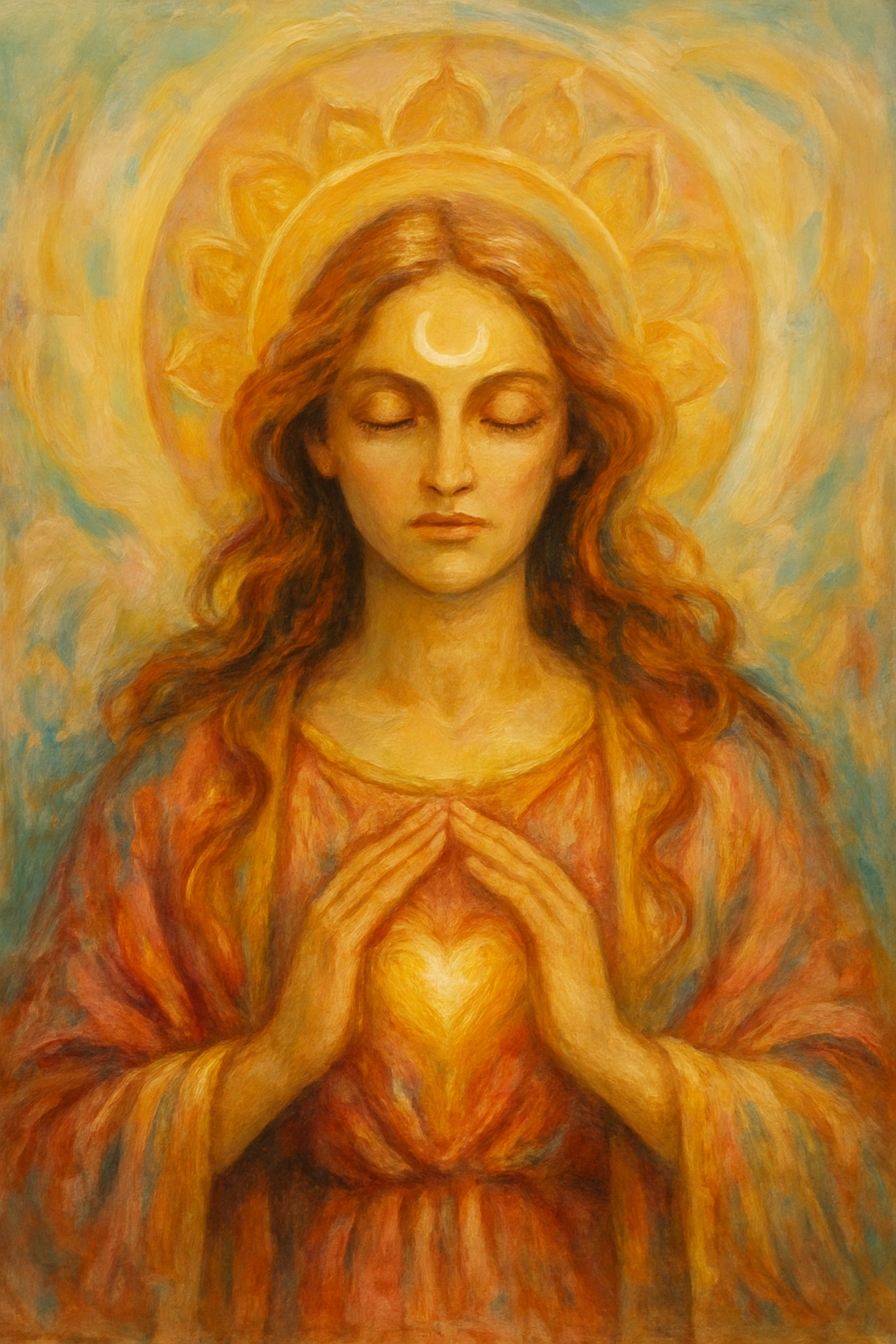
📌 TL;DR — Divine Feminine Energy
Divine feminine energy represents receptivity, intuition, nurturing, and being—qualities suppressed in modern achievement culture. Cultivating it involves: slowing down and receiving (vs. constant doing), honoring intuition, practicing self-compassion, and connecting with creativity and emotion. It's not about gender—everyone has both masculine (action) and feminine (receptive) energies.
The internet has turned “divine feminine energy” into an aesthetic.
Soft life. Silk sheets. Matcha in a sunlit kitchen. Receiving instead of chasing.
Beautiful, yes. But here’s the quiet truth:
If you don’t do inner work, your nervous system will sabotage the soft life you’re trying to manifest.
You can:
- do your skincare,
- script in your journal,
- buy the crystals,
- rehearse your “feminine energy” behavior,
and still feel anxious, abandoned, jealous, or out of control.
That gap between the life you project and the life you actually feel?
That’s where inner work lives.
In this guide, we’ll break down inner work in a way that’s spiritual, psychological, and practical:
- What inner work really is (and what it’s not).
- Why it’s the engine behind divine feminine energy.
- A step-by-step framework:
- working with triggers,
- creating safety in your body,
- doing shadow work,
- rewiring your identity and beliefs.
- Concrete practices, scripts, and journaling prompts.
- How to turn this from “vibe” into an actual daily path.
Think of this as personal development for the soul — Naval Ravikant meets Carl Jung inside a Beyoncé music video, supervised by a very patient monk with a MacBook.
Part 1: What Is Inner Work, Really?
Inner work is the deliberate practice of examining your unconscious patterns, wounds, and beliefs to transform how you relate to yourself and others.
Let’s start with a simple definition:
Inner work = personal development for the soul.
It’s everything you do to:
- examine your programming,
- heal emotional wounds,
- update your beliefs,
- and build self-worth from the inside out.
It is not:
- acting perfect,
- performing “spirituality”,
- bypassing your pain with positive quotes,
- or endlessly analyzing yourself with no change in behavior.
Inner work is a process of disassembly and redesign:
- You look at your current patterns (thoughts, feelings, behaviors).
- You see where they came from (childhood, culture, past relationships).
- You decide what stays, what goes, and what upgrades.
- You practice new ways of thinking, feeling, and responding, until they become your new baseline.
If your life today is the “app,” inner work is you going into the source code and editing it.
Part 2: Divine Feminine Energy—Beyond Aesthetic and Hashtags
Divine feminine energy is the receptive, intuitive, and nurturing force within every person that balances the driven, analytical masculine energy.
“Divine feminine” gets thrown around a lot. For this guide, let’s define it clearly:
Divine feminine energy is your capacity to receive, feel, intuit, create, and relate from a grounded place of self-worth and inner safety.
It includes qualities like:
- Receptivity instead of frantic chasing.
- Intuition instead of only cold logic.
- Softness and compassion without being a doormat.
- Creative, sensual, embodied presence.
- Healthy boundaries and self-respect (yes, that’s feminine too).
There are two poles here:
- Light feminine: nurturing, radiant, kind, soft, receptive.
- Dark feminine: boundaries, truth-telling, magnetism, seduction, righteous anger, “no more”.
Most online content worships the light side and quietly shames the dark.
But a truly divine feminine is:
Light + Dark + Healing.
Inner work is what integrates those pieces so you’re not:
- the “nice girl” who secretly burns with resentment,
- or the “bad bitch” persona that’s just armor over old wounds.
Part 3: Why Inner Work Is Non-Negotiable for Divine Feminine Energy
Without inner work, divine feminine energy stays conceptual; shadow patterns, people-pleasing, and unprocessed trauma block authentic embodiment of receptive power.
Right now, you are running on programming.
- Your beliefs about love.
- Your reactions when you’re ignored.
- Your standards in relationships.
- Your patterns with money, food, intimacy, success.
All of that is shaped by:
- your family system,
- childhood experiences,
- culture and religion,
- past partners, teachers, bullies, friends,
- the content you’ve consumed.
Your finances, relationships, body, and opportunities are not random. They’re the visible output of your inner code.
If you don’t update the code, you will:
- attract the same kind of partner with a different face,
- repeat friendships where you over-give and under-receive,
- sabotage money when it finally comes,
- “relax” into chaos because your nervous system thinks chaos is home.
Divine feminine energy without inner work is like putting a silk dress over unhealed fractures. It might photograph well, but in real life it hurts to move.
Inner work is how you:
- raise your self-worth instead of just your standards,
- feel safe enough to receive what you say you want,
- integrate your light and dark feminine,
- and stop being thrown around by every trigger.
Part 4: Step 1 — Evaluate Your Triggers (Your Soul’s GPS)
Triggers reveal where your shadow lives; tracking emotional reactions in a journal uncovers the unconscious wounds driving your automatic defensive behaviors.
If you remember nothing else from this guide, remember this:
Your triggers are your teachers.
A trigger is:
- Anything that makes your body suddenly tighten.
- An emotional reaction that feels bigger than the situation.
- A rush of anxiety, jealousy, panic, rage, or shame.
It’s not just drama. It’s data.
Imagine you have an invisible cut on your arm. Every trigger is life accidentally poking that cut. The pain doesn’t mean you’re broken; it means:
“Hey, there’s a wound here. It’s asking to be healed.”
4.1. Catch the Trigger in Real Time
Next time you’re triggered:
- Pause. Even 5 seconds.
- Ask: “Where do I feel this in my body?”
- Chest tightening?
- Stomach dropping?
- Throat closing?
- Jaw clenching?
- Put a hand there. Literally. Breathe into it.
This simple act moves you from fight-or-flight into observer mode. That’s feminine inner work: staying in your body instead of escaping into overthinking.
4.2. Ask: “What Is This Really About?”
Most triggers are echoes, not first events.
- Your partner doesn’t text back → you spiral into abandonment panic.
- The root is not this partner; it might be a parent who was hot-and-cold or emotionally unavailable.
- The messy house makes you rage-clean and criticize everyone.
- Underneath might be a sense of lost control from a chaotic time (like a pandemic, a move, or past trauma).
- A friend’s success makes you feel small and jealous.
- Underneath might be years of being compared, bullied, or told you weren’t enough.
Inner work question:
“Where have I felt this exact feeling before?”
Your rational mind will say, “It’s because of him/her/this situation.”
Your deeper self will say, “No, this started long before.”
4.3. Gratitude for the Trigger (Advanced Feminine Move)
Counter-intuitive, but powerful:
Instead of,
“Ugh, why am I like this? I thought I’d healed this already.”
Try,
“Thank you, body, for showing me a wound that’s ready to heal. This trigger is medicine, not proof that I’m failing.”
That reframe shifts you from shame → curiosity.
Shame freezes healing. Curiosity opens it.
Part 5: Step 2 — Create Safety in Your Body
Somatic safety practices like breathwork and body scans calm your nervous system, creating the regulated foundation required before deeper shadow exploration.
Divine feminine energy is embodied. You can’t just “mindset” your way into it while your nervous system is screaming.
Safety first.
When you’re triggered:
- Name it.
“I’m feeling scared / abandoned / out of control / not enough.” - Co-regulate with something steady:
- Feel your feet on the ground.
- Look around and name 5 things you can see.
- Take 10 slow exhales, longer than the inhale.
Refuse self-attack.
Inner work is not:
“I can’t believe I got triggered again. I’m so behind.”
It is:
“Of course this feels big. My body remembers. And now I get to respond differently.”
Place a hand on your heart or belly.
Tell your body (out loud if you can):
“Thank you for trying to protect me. These thoughts are not reality. I am safe right now.”
Safety is what allows deeper layers (like your shadow) to actually come forward. If your body feels constantly judged, it will keep your deepest material locked away.
Part 6: Step 3 — Shadow Work & the Dark Feminine
Shadow work uncovers the repressed dark feminine traits like rage, boundaries, and sexuality that patriarchal conditioning taught you to suppress.
Carl Jung called it:
“The shadow is everything you refuse to be.”
Every person has a shadow side:
- traits you’re ashamed of,
- desires you hide,
- emotions you judge,
- stories you never tell.
For many women, the shadow includes:
- anger,
- sexual power,
- ambition,
- “too muchness”,
- the part that says “no” instead of pleasing.
If you only allow your light feminine (sweet, kind, agreeable), your life will look polished, and feel suffocating.
Divine feminine energy requires you to integrate your dark feminine:
- the part of you that sets the boundary,
- walks away from manipulation,
- speaks the uncomfortable truth,
- enjoys her own sensuality without shame.
6.1. Shadow Work Journaling Prompts
Get a journal. No filters, no “brand,” no performing.
Write to these:
- What am I most afraid of others finding out about me?
- What parts of my childhood still make me feel angry or sad?
- What emotion do I avoid the most? What scares me about feeling it?
- Where do I secretly enjoy being “mean”, petty, or controlling, and why?
- Who told me I had to be “nice” to be loved? How did that shape me?
When you notice shame rising (“I can’t believe I wrote that”), pause and ask:
“Who taught me this part of me was wrong or dangerous?”
Very often, you’ll trace it back to:
- being punished for having a voice,
- being shamed for your body,
- being labeled “bossy”, “dramatic”, “too much”.
The goal is not to unleash your shadow on everyone. The goal is to own it so it stops driving your life from behind the scenes.
6.2. Example: The “Nice Girl” and the Buried Dark Feminine
Maybe, like many women, you were rewarded for being:
- polite,
- accommodating,
- always smiling,
- never making trouble.
Your body learns:
“If I’m pleasing, I’m safe.”
So your dark feminine — the part that is honest, powerful, seductive, boundary-setting — gets buried.
Inner work might look like:
- acknowledging: “I’m ashamed of my anger / sexuality / power.”
- seeing who taught you that (parents, culture, religion, peers).
- slowly experimenting with new behaviors:
- saying, “That doesn’t work for me,” without apologizing,
- dressing in a way that feels genuinely sensual to you,
- expressing disagreement calmly instead of swallowing it.
At first, your nervous system will freak out. It thinks changing identity = danger.
Inner work response:
“My body is scared because this is new, not because it’s wrong. I’m allowed to become a truer version of myself.”
This is where the dark feminine stops being a TikTok aesthetic and becomes a lived reality: you are kind and you have teeth. You can love deeply and walk away.
Part 7: Step 4 — Reprogramming: Identity, Beliefs, and Mental Diet
Reprogramming rewires limiting beliefs through identity affirmations, mental diet shifts, and consistent journaling that replaces old narratives with chosen ones.
You don’t just have thoughts.
You have an entire identity built around them.
“I’m anxious.”
“I’m bad with money.”
“I attract emotionally unavailable men.”
“I’m too much / not enough.”
Inner work upgrades that identity.
7.1. The Identity Wipe Prompt
Use this prompt regularly:
“How would I show up if my mind were wiped clean of trauma, social conditioning, and limiting beliefs, and I could design my identity from scratch?”
Write in detail:
- How you’d walk.
- How you’d speak.
- What you’d tolerate and what you’d never tolerate again.
- How you’d dress.
- How you’d make decisions.
- How you’d handle conflict.
- How you’d handle success.
Then ask:
“What specific beliefs would this version of me not hold anymore?”
Examples:
- “Love is scarce.”
- “I have to earn my worth.”
- “If I set boundaries, they’ll leave.”
- “If I shine, other women will hate me.”
Your job is to catch the old beliefs when they show up in real time, and gently replace them with new ones that match your chosen identity.
7.2. Reading as Inner Work (Spiritual + Psychological)
Books are some of the cheapest, highest-leverage inner work tools on earth.
Every powerful woman you admire? At some point, she sat alone with a book that rewired her.
Categories to build your feminine library:
- Attachment & relationships: to understand why you love the way you do.
- Trauma & nervous system: to understand triggers and regulation.
- Spirituality & presence: to ground you beyond ego drama.
- Money & creation: to upgrade your sense of what’s possible.
- Vulnerability & shame: to melt the armor that keeps you isolated.
Reading is not just “information”; it is mirroring. You see your patterns on the page, and suddenly they’re not the ocean — they’re a wave you can work with.
Inner work habit:
- Aim for 10–20 minutes of reading a day on one of these topics.
- After each reading session, jot down:
- “What did this book just show me about myself?”
- “What’s one tiny behavior I can change today because of this?”
You don’t need a $10,000 retreat to start. A library card + honest reflection can move mountains.
Part 8: Daily & Weekly Inner Work Rituals (Divine Feminine in Real Life)
Sustainable inner work requires daily micro-rituals like morning journaling and weekly deeper practices like shadow prompts or somatic check-ins.
Let’s make this concrete. For a curated list of tools and apps that support each of these practices, see our round-up of the best resources for deep inner work.
8.1. Morning Ritual (10–20 Minutes)
- No phone first 15 minutes.
Divine feminine doesn’t roll out of bed and immediately outsource her nervous system to notifications. - Make the bed.
Tiny act of order → signal of “I can create structure and beauty.” - Check in with your body.
- “What do I feel today?” (one word)
- Hand on heart: “Whatever I feel, I’m allowed to be here.”
- 5 minutes of silence, prayer, or meditation.
Let your awareness expand beyond your to-do list.
One page of journaling:
Prompt:
“Who am I choosing to be today in love / work / with myself?”
8.2. Trigger Protocol (As Needed)
When triggered:
- Name the feeling.
- Locate it in your body.
- Ask: “Where have I felt this before?”
- Ask: “What is the wound underneath this, really?”
Write one compassionate sentence to yourself:
“Of course you feel this way; you learned XYZ. But now we’re doing it differently.”
8.3. Weekly Shadow Session (30–60 Minutes)
Once a week:
- Pick 1–2 of the shadow prompts from above.
- Write without censoring for 20–30 minutes.
- Then write a response from your higher self or “big sister self”:
- “Here’s what I love about you that you can’t see yet.”
- “Here’s why this ‘ugly’ part of you actually kept you safe.”
- “Here’s how we can channel this energy in a healthy way now.”
- End with one embodied action:
- send the text you’re avoiding,
- say no to something you don’t want to do,
- wear something that expresses your authentic style,
- book therapy or coaching if needed.
Inner work is never just journaling; it’s journaling + behavior change.
Part 9: Common Myths & Mistakes About Inner Work and the Divine Feminine
The biggest myth is that inner work has an endpoint; it is a lifelong practice of returning to self-awareness, not a destination you reach.
Myth 1: “If I do enough inner work, I’ll never be triggered again.”
Reality:
You’re human. Triggers will still arise. The difference is:
- they become less intense,
- you recover faster,
- and you stop building your identity around them.
Healing isn’t becoming stone; it’s becoming fluid.
Myth 2: “Divine feminine means I should always be soft, kind, and forgiving.”
Reality:
Sometimes divine feminine looks like:
- “No.”
- “That doesn’t work for me.”
- “I’m not available for this level of treatment.”
- Blocking someone and sleeping well.
Softness without boundaries is not divine; it’s self-abandonment.
Myth 3: “Inner work is narcissistic. It’s just me, me, me.”
Reality:
Unhealed people unconsciously export their pain onto everyone around them.
Healing yourself is one of the most generous things you can do.
- Your friendships become cleaner.
- Your romantic relationships become safer.
- Your work becomes less about proving your worth and more about serving from it.
Myth 4: “If I change, I’ll lose everyone.”
Sometimes you will lose people.
But you’ll often lose the ones who were benefiting from your lack of boundaries, low self-worth, or silence.
You do not heal to keep the old life comfortable.
You heal to become someone your future life can rely on.
Part 10: Bringing It All Together
Integrating all four steps creates a self-sustaining cycle where trigger awareness, body safety, shadow work, and reprogramming reinforce each other daily.
Inner work is not a weekend challenge. It’s a lifetime relationship with your own soul.
Divine feminine energy is not a costume you put on. It’s what emerges when:
- your nervous system feels safe,
- your shadow is acknowledged,
- your triggers are honored as teachers,
- your identity is chosen, not just inherited,
- your mind, body, and spirit are in ongoing conversation.
Every time you:
- pause instead of react,
- tell yourself the truth instead of the old story,
- choose a boundary over people-pleasing,
- sit with an emotion instead of numbing it,
you’re doing inner work.
You’re not “behind.” You’re mid-alchemy.
How Life Note Can Support Your Inner Work & Divine Feminine Journey
Life Note pairs you with AI mentors trained on Jung, Brach, and other wisdom traditions to guide personalized inner work and feminine energy journaling.
You don’t have to hold this whole process in your head. That’s where tools help.
Inside Life Note, you can:
- Journal through your triggers and shadow work prompts,
- then ask a council of mentors to reflect back themes, patterns, and blind spots.
You can invite wise feminine voices like Maya Angelou, Jane Goodall, and others into your process — from poets and psychologists to spiritual teachers and modern creators. Imagine journaling about:
- jealousy,
- abandonment wounds,
- your dark feminine,
- your fear of changing identity,
and then receiving letters of guidance written in the spirit of women like:
- contemplative spiritual leaders,
- trauma-informed therapists,
- boundary-setting creatives,
- and compassionate visionaries.
You get both:
- the raw truth (“Here is what you’re actually doing to yourself.”)
- and the deep compassion (“Here is why it makes sense. Here is how we move forward.”)
Use Life Note to:
- turn your daily triggers into journaling prompts,
- track your growth over time,
- and let your “future self” — and a whole council of wise feminine mentors — walk this inner work path with you.
Your divine feminine energy is not something you need to “earn.”
It’s what’s left when you stop abandoning yourself.
Inner work is how you come home.
Journaling Prompts for Inner Work & Divine Feminine Energy
These targeted prompts help you explore triggers, shadow patterns, and divine feminine qualities through structured self-inquiry and reflective writing.
Use these as ongoing companions to your inner work. Don’t try to answer all at once. Pick 1–3 per session, go slow, and be radically honest.
1. Triggers: Turning Pain into Information
- Body check:
- “What triggered me recently, and where did I feel it in my body (chest, stomach, throat, jaw)?”
- Echoes from the past:
- “Where have I felt this exact feeling before in my childhood, family, or past relationships?”
- Deeper wound:
- “If this trigger could speak, what old wound would it say it’s protecting?”
- Hidden belief:
- “What belief about myself or others sits underneath this trigger? (‘I’m not enough’, ‘People always leave’, etc.)”
- New response:
- “If I stepped 1% out of my old pattern next time this happens, what would I do differently?”
2. Safety & Self-Compassion in the Body
- Safety inventory:
- “What situations, people, or places make my body feel most safe, soft, and relaxed? What do they have in common?”
- Inner dialogue:
- “When I’m anxious or overthinking, what do I usually say to myself? How does that tone feel in my body?”
- Re-parenting:
- “If I spoke to myself like a loving, wise parent in my next trigger, what words would I use?”
- Permission slip:
- “What emotions have I silently told myself are ‘not allowed’? Where did I learn that?”
- Nervous system truth:
- “In what ways is my nervous system still living in an old environment (old danger) that no longer exists?”
3. Shadow Work & the Dark Feminine
- What I hide:
- “What am I most afraid of other people discovering about me?”
- Forbidden traits:
- “What qualities in other women secretly trigger me, and how might those be disowned parts of myself?”
- The “mean” or “too much” self:
- “Where have I learned to label my truth, power, or boundaries as ‘mean’, ‘dramatic’, or ‘too much’?”
- Channeling the dark feminine:
- “If my dark feminine could speak freely, what would she say no to? What would she stop tolerating immediately?”
- Alchemizing shame:
- “Which part of my shadow is actually trying to protect me? How has it kept me safe up to now?”
4. Identity, Self-Worth & Reprogramming
- Identity wipe prompt:
- “How would I show up if my mind were wiped clean of trauma, cultural expectations, and limiting beliefs, and I could design myself from scratch?”
- Old labels:
- “What labels do I still carry that don’t feel true anymore (e.g., shy, needy, broken, lazy)? Who gave them to me?”
- Beliefs to retire:
- “Which three beliefs about love, success, or my worth quietly run my life, and are ready to be retired?”
- Self-worth without performance:
- “If I could not prove my worth through productivity, beauty, or pleasing others, what would my worth be based on?”
- Future self mirror:
- “If my highest, most integrated self wrote me a letter today, what would she lovingly ask me to stop doing? What would she beg me to start?”
5. Love, Attachment & Feminine Relational Energy
- Attachment style in action:
- “How do I behave when I feel someone pulling away — cling, chase, shut down, pretend I don’t care? Where did I learn that response?”
- Patterns in partners:
- “What type of partner have I repeatedly attracted? What do they reflect back about my own wounds and beliefs?”
- Jealousy as desire:
- “The last time I felt jealous of another woman, what was the hidden desire underneath that jealousy?”
- Boundaries as self-respect:
- “Where am I still choosing peace outside (avoiding conflict) over peace inside (being true to myself)?”
- Love redefined:
- “If love were no longer about earning, fixing, or chasing, how would I relate differently — to myself and to others?”
6. Daily Divine Feminine Integration
- Soft power:
- “What is one small way I can be softer with myself today without abandoning my boundaries?”
- Receiving practice:
- “Where did I deflect or downplay compliments, support, or love this week? How could I practice receiving instead?”
- Aligned “no”:
- “What is one thing my body is a clear no to that my mind keeps rationalizing as ‘not a big deal’?”
- Pleasure without guilt:
- “What forms of healthy pleasure or rest do I still feel guilty about? Where did that guilt originate?”
- Living the work:
- “If inner work showed up in my calendar, what would my week actually look like — in actions, not just intentions?”
Use these prompts like a conversation with your soul. You’re not trying to “fix” yourself; you’re trying to finally meet yourself.
FAQ: Inner Work & Divine Feminine Energy
1. What exactly is “inner work” in this context?
Inner work is personal development for the soul.
It’s the ongoing process of:
- observing your thoughts, emotions, and patterns,
- tracing them back to their roots (family, culture, past relationships, trauma),
- consciously updating your beliefs and behaviors,
- learning to feel safe, grounded, and worthy from the inside out.
It’s not about becoming perfect. It’s about becoming conscious of what’s been running your life on autopilot, and choosing differently.
2. How is inner work connected to divine feminine energy?
Divine feminine energy thrives on:
- receptivity,
- intuition,
- emotional depth,
- softness with boundaries,
- grounded sensuality,
- authentic self-expression.
If your inner world is full of unhealed wounds (abandonment, shame, constant self-attack), your nervous system will not feel safe enough to relax into that.
Inner work:
- heals the abandonment wound → so you can receive love without panicking,
- integrates your shadow → so you can own your sensuality and power,
- builds self-worth → so your standards rise without needing to perform.
Divine feminine energy isn’t something you slap on top. It’s what emerges when the inner work matures.
3. Is “divine feminine” only for women?
No.
“Divine feminine” is a label for a cluster of energies and qualities, not a biological category:
- feeling instead of numbing,
- receiving instead of over-controlling,
- cooperating instead of dominating,
- intuition instead of only analysis.
Men, women, and non-binary people all have both “feminine” and “masculine” aspects. Inner work is about balancing, not erasing, either side.
If the term itself doesn’t resonate, you can substitute:
- “yin”,
- “receptive energy”,
- or simply “my emotional/relational side.”
The work is the same.
4. What’s the difference between inner work and shadow work?
Think of it like this:
- Inner work = the whole ecosystem: triggers, nervous system, beliefs, identity, purpose, boundaries, habits, etc.
- Shadow work = one powerful part of inner work that deals specifically with the parts of you you’ve hidden, rejected, or disowned.
Shadow work focuses on:
- the traits you’re ashamed of,
- desires you suppress,
- emotions you judge (anger, jealousy, envy, lust, power).
Inner work zooms out and asks:
“How does all of this — triggers, shadow, beliefs, programming — shape my life, and what do I want to change?”
5. How do I start inner work if I feel overwhelmed?
Start small and specific.
- Choose one doorway:
- Triggers, or
- Shadow work journaling, or
- Nervous system regulation (breath, body awareness), or
- Reading one book that speaks to you.
- Create one simple habit:
- 10 minutes of journaling each night,
- or 5 minutes of breathwork when triggered,
- or one “shadow work session” per week.
- Focus on pattern awareness, not perfection:
You’re not trying to “fix your whole life.” You’re trying to understand and slightly upgrade one pattern at a time.
Overwhelm is often a sign you’re trying to do all levels at once. Choose one entry point and let it compound.
6. How do I know inner work is actually working?
Signs it’s working are usually subtle at first:
- You still get triggered, but recover faster.
- You catch yourself mid-spiral and can pause instead of exploding or shutting down.
- You start saying “no” in situations where you’d normally betray yourself.
- Old relationship dynamics feel less attractive, even if they’re familiar.
- You feel less obsessed with how others see you, and more tuned into how you feel about your choices.
You may not feel “healed” — but your default response is slowly changing. That’s the real progress.
7. Is it normal to feel worse before I feel better?
Often, yes.
When you:
- stop numbing,
- start journaling honestly,
- allow old memories and feelings to surface,
you can temporarily feel like things are “getting worse.”
It’s not that you’re breaking yourself; it’s that you’re finally seeing what was already there.
Think of it like cleaning a long-ignored closet:
It looks messier in the middle. That doesn’t mean you should close the door again — it means you’re in the work.
That said, if you feel flooded, destabilized, or unable to function, it’s important to:
- slow down,
- ground in body-based tools (breath, movement, safe people),
- and consider professional support (therapy, trauma-informed practitioners) alongside your self-guided process.
8. Can inner work replace therapy or professional support?
Inner work and therapy can overlap, but they’re not identical.
Self-guided inner work is powerful for:
- understanding patterns,
- building self-awareness,
- adjusting beliefs and habits,
- improving day-to-day emotional literacy.
Therapy or other professional support may be important when:
- you’ve experienced significant trauma,
- you feel stuck in severe anxiety, depression, or compulsive behaviors,
- your relationships or work are being seriously impacted,
- you feel unsafe or overwhelmed by your own emotions.
You can think of inner work as your daily practice, and therapy as a structured container for the heavier, more complex layers.
9. What is “dark feminine energy” and is it dangerous or “toxic”?
Dark feminine energy is:
- your truth-telling,
- your anger when your boundaries are crossed,
- your magnetism,
- your power to seduce, say no, walk away, cut cords.
It becomes toxic when it’s:
- used to manipulate, punish, or control,
- acting out unprocessed trauma on other people,
- disconnected from empathy and accountability.
Inner work turns the dark feminine from weapon into wisdom:
- Your anger becomes clear boundary-setting.
- Your magnetism isn’t used to exploit, but to attract what truly aligns.
- Your “no” isn’t revenge; it’s self-respect.
The goal isn’t to kill your dark feminine. It’s to integrate her so she protects you, not sabotages you.
10. How often should I journal or do shadow work?
Frequency matters less than honesty and consistency.
Some guidelines:
- Aim for 10–20 minutes of journaling a few times a week.
- Do a deeper shadow work session (30–60 minutes) once a week or once every two weeks.
- Use mini-journaling in the moment of triggers (even 5 lines can shift your state).
If you’re new, don’t force daily 2-hour sessions. That tends to burn out quickly.
Instead, choose a rhythm you can maintain for months, not days.
11. Will inner work make me lose people or blow up my relationships?
It might change them. Sometimes radically.
As you:
- raise your self-worth,
- set clearer boundaries,
- stop over-functioning or people-pleasing,
- speak honestly instead of swallowing everything,
some people will:
- adjust and meet you at this new level,
- fall away naturally,
- or react negatively because your growth exposes their patterns.
This is painful but not a sign that the work is “wrong.”
You are not doing inner work to keep your old life perfectly intact.
You’re doing it to build a life where your nervous system, values, and soul can breathe.
12. Does inner work mean I must constantly be “processing” and never just enjoy life?
No.
You are not a self-improvement project; you’re a human being.
Healthy inner work:
- gives you more capacity to enjoy simple pleasures,
- helps you feel safer in rest and play,
- allows you to be present with friends, lovers, and yourself without constant performance.
A good question to ask:
“Is my inner work helping me live more fully, or making me more rigid and self-critical?”
If it’s the second, you might be turning inner work into another perfection game. Gently step back, simplify, and reintroduce joy and play on purpose.
13. How can I practice divine feminine energy in conflict without being passive?
Practical steps:
- Regulate first.
Take space if needed. Breathe. Feel your body. - Observe instead of immediately reacting.
“What is actually triggering me? What is the story I’m telling?” - Speak from feeling, not attack.
- Instead of: “You never care about me.”
- Try: “When this happens, I feel unseen and scared. I need X.”
- Hold your boundary without drama.
Divine feminine doesn’t need a monologue to justify her boundary. She can simply state it and follow through.
You can be:
- soft in tone,
- clear in language,
- firm in follow-through.
That’s feminine conflict: nervous system regulated, truth intact.
14. Can I do inner work if I’m busy, burnt out, or have a heavy schedule?
Yes, but you need to work with micro-practices:
- 5–10 minutes of journaling in bed at night.
- 3 deep breaths + hand on heart in the bathroom during work.
- One intentional weekly walk without your phone, just to process your week.
- Reading 5 pages of a supportive book before sleep instead of scrolling.
Inner work is less about having long, dramatic rituals and more about:
- regularly checking in with yourself,
- being honest about what you feel,
- and making small course-corrections.
Tiny daily choices, over time, shift your identity more than once-a-year “transformational weekends.”
15. How can Life Note support my inner work and divine feminine journey?
Life Note can act as a living container for your inner work:
- A private space to process triggers, shadow material, and identity shifts.
- Guided prompts inspired by themes like self-worth, attachment, boundaries, dark feminine, and purpose.
- Letters from a council of wise mentors (including powerful feminine thinkers, writers, and spiritual teachers) responding to your journaling with nuanced reflections — part compassion, part challenge.
- A way to track your evolution over time and see patterns you might miss alone.
Instead of doing this work only in your head, you can:
- Journal honestly about your triggers, jealousy, guilt, desires, or relational patterns.
- Ask your Life Note mentors to respond from different archetypal perspectives.
- Use their reflections as mirrors to deepen your self-understanding and refine your next actions.
Inner work is your journey.
But you don’t have to walk it without wise company.
Inner work is the practice of exploring your unconscious patterns, emotional wounds, and limiting beliefs to develop greater self-awareness and emotional freedom—and it is the essential foundation for embodying divine feminine energy authentically.
Journal with 1,000+ of History's Greatest Minds
Marcus Aurelius, Maya Angelou, Carl Jung — real wisdom from real thinkers, not internet summaries. A licensed psychotherapist called it "life-changing."
Try Life Note Free