
How to Identify Limiting Beliefs Through Journaling

Journaling exposes hidden limiting beliefs, traces their origins, and helps you reframe thoughts into empowering, lasting habits.

Explore More
Continue your journey:
- Journaling Prompts for Mental Health — The complete guide
📌 TL;DR — Identifying Limiting Beliefs
Limiting beliefs are unconscious assumptions that hold you back. Common ones: "I'm not good enough," "I don't deserve success," "People like me don't...". To identify them: notice when you say "I can't" or "I always/never," trace strong emotions to their beliefs, and journal about what you would do if failure were impossible. Most limiting beliefs were formed in childhood.
Limiting beliefs are the mental barriers that stop you from reaching your potential. These thoughts often sound like "I’m not good enough" or "I can’t do this", and they quietly shape your decisions, creating self-fulfilling cycles of doubt. Journaling is a simple yet effective way to identify, understand, and challenge these beliefs. By writing down your thoughts, you can spot recurring patterns, trace their origins, and reframe them into more constructive ideas.
Here’s a quick breakdown of how journaling helps tackle limiting beliefs:
- Write down negative self-talk: Capture moments when you think "I can’t" or "I’m not."
- Track patterns and triggers: Identify situations where these beliefs surface.
- Explore their origins: Reflect on past experiences or influences that shaped these thoughts.
- Challenge and reframe: Separate facts from assumptions and rewrite beliefs into positive statements.
- Build a habit: Regular journaling helps maintain progress and weaken old patterns.
Tools like Life Note can enhance this process by analyzing your journal entries, spotting patterns, and offering tailored guidance. Through consistent practice, you can break free from these mental roadblocks and create space for growth.
What Limiting Beliefs Are and How They Affect You
Defining Limiting Beliefs
A limiting belief is essentially a belief you accept as an absolute truth, one that holds you back from pursuing certain goals or actions [1]. Think of these as invisible mental walls that stop you from reaching the things you truly aspire to achieve [2].
These beliefs don't just revolve around how you view yourself - they can also shape how you see the world or interact with others [1]. For instance, you might think, "I'm not good enough" (a belief about yourself), or "You can't trust anybody" (a belief about relationships), or "The only way to get promoted is to sacrifice your personal life" (a belief about career growth) [1].
Take this example: someone might believe, "I'm too old to go back to school. My chance to get an education has passed, so why even try?" Or they might think, "I'm too quiet and reserved to become a successful entrepreneur. I should just give up now" [1].
What makes these beliefs so powerful is that they often become a part of who you think you are [2]. They’re not fleeting doubts - they’re convictions you’ve accepted as truths about your abilities and your potential. Many of these beliefs sit quietly in your subconscious, limiting your ability to see new opportunities or imagine different outcomes [2].
How These Beliefs Control Your Life
Understanding these beliefs is the first step to seeing how they quietly shape your decisions. They act like mental filters, designed to protect you from pain or disappointment [3]. Your subconscious mind recalls past negative experiences and tries to shield you from similar situations [1]. While this might seem helpful, it often holds you back from chasing dreams, building healthy relationships, or making meaningful changes [1].
This control often works through confirmation bias - your brain’s tendency to seek out evidence that supports what you already believe [2]. This creates a loop where limiting beliefs reinforce themselves, becoming self-fulfilling prophecies. For example, if you believe you’re bad at public speaking, you might avoid opportunities to improve, which only confirms your belief [2].
Limiting beliefs can affect nearly every area of your life. In your career, thinking "you have to be arrogant to succeed in sales" might prevent you from exploring that field [1]. In relationships, beliefs like "if you win, I lose" can create unhealthy dynamics and block genuine connections [1]. Even specific self-doubts - like "I’m terrible at math" - can lead to avoidance and stunt your progress [4].
These beliefs also trigger negative emotions like imposter syndrome, procrastination, and anxiety [1]. They keep you stuck in a cycle of self-doubt by distorting how you view challenges, often making them seem far more intimidating than they really are [4].
Why Journaling Works for This Process
Once you understand how limiting beliefs influence your life, journaling becomes a powerful way to address them. Writing helps you bring subconscious thoughts into the open, where you can examine and challenge them [4]. Many limiting beliefs operate under the radar, influencing your actions without you even realizing it.
Journaling allows you to externalize negative thoughts and patterns, making them easier to identify and assess [4]. By reflecting on your experiences, you can start to uncover the underlying beliefs driving your reactions.
For example, limiting beliefs often show up as negative self-talk or deeply ingrained attitudes formed during childhood [4]. Even if you generally see yourself in a positive light, these hidden beliefs can still influence your behavior in subtle ways.
Writing about moments when you felt stuck or anxious can help you pinpoint the beliefs behind those emotions [4]. The act of journaling engages your brain differently, helping you process feelings and gain clarity.
Keeping a journal over time also helps you spot recurring patterns and trace the origins of your beliefs [4]. When you review past entries, you can evaluate whether your interpretations were overly negative and start to challenge those assumptions.
Psychological research suggests that you can train your brain to think differently by focusing on possibilities instead of limitations [2]. Journaling provides a structured way to practice this shift. Once you identify a limiting belief, you can rewrite it as a more empowering statement, separating facts from assumptions [2].
Beyond raising awareness, journaling helps you process emotions and reduce their intensity [4]. This is crucial because limiting beliefs often stem from early experiences, shaped by family, friends, school, or societal expectations [1][4][3]. By reflecting on these influences, journaling allows you to understand not just what you believe, but why - and how those beliefs continue to affect your choices today [4].
Step 1: Notice and Write Down Your Limiting Beliefs
The journey to overcoming limiting beliefs starts with a simple yet powerful practice: paying attention to the thoughts you tell yourself. These beliefs often operate quietly in the background, shaping how you see yourself and the choices you make. Without recognizing them, it’s impossible to challenge their hold on your life.
By using journaling to bring these hidden patterns to light, you can start identifying these beliefs as they arise. The first step is to jot them down as they come to mind, and then move toward a more structured approach.
Write Down Negative Self-Talk
Your internal dialogue often reveals the presence of limiting beliefs. They tend to surface as recurring negative thoughts, often beginning with phrases like "I’m not…", "I can’t…", "I don’t have…", or "It’s always been this way…." Pay attention to these patterns and write them down exactly as they occur. This practice helps you uncover the emotional roots of these thoughts.
For instance, saying "I could have prepared better" offers constructive feedback, but labeling yourself with "I’m terrible at public speaking" creates a fixed, negative identity. These kinds of thoughts often show up in moments of stress - before a big interview, meeting new people, or considering a career change. When you notice these patterns repeating, it’s a strong indicator that a limiting belief is at play.
To capture these thoughts effectively, write them down as soon as possible. Use a notebook, a notes app on your phone, or whatever is convenient. Include details like the situation that triggered the thought, the specific words you used, and the emotions that followed. This helps you build a clearer picture of how these beliefs influence your daily life.
Start a Belief Tracking Journal
Once you’ve begun noticing your negative self-talk, take it a step further by creating a structured system to track these patterns over time. Dedicate 10–15 minutes a day to record and reflect on these thoughts. This practice can reveal recurring themes you might not have noticed otherwise.
Each journal entry should include:
- The date and time the thought occurred
- The situation or trigger
- The exact limiting belief statement (written in first person)
- The emotions you experienced
- Any behaviors or avoidance patterns that followed
For example, a journal entry might look like this:
"Tuesday, December 3, 2026, 2:30 PM. My manager asked me to lead a project meeting. Limiting belief: 'I’m not a good public speaker and I’ll embarrass myself.' Emotions: anxiety, fear. Behavior: I declined the opportunity."
This systematic journaling approach creates a searchable log that allows you to identify patterns over time. Whether you prefer writing in a table format or as narrative entries, the key is to be consistent and detailed.
If writing down thoughts as they happen feels overwhelming, set aside a specific time each day - maybe during your morning coffee or before bed - to reflect on moments when these beliefs surfaced. Writing them down helps you step back and view them objectively, rather than accepting them as unchangeable truths.
By documenting these moments, you lay the groundwork for deeper exploration in later steps.
Common Examples of Limiting Beliefs
As you track your thoughts, you’ll likely notice recurring themes. Some of the most common limiting beliefs revolve around age, timing, and capability. For instance:
- "I’m too old to go back to school. I missed my chance."
- "I’m too quiet to succeed as an entrepreneur."
Beliefs about relationships often crop up too. You might think:
- "My personality doesn’t match others, so I’ll never find a meaningful relationship."
- "If I get divorced, no one will want to be with me."
These thoughts don’t just influence who you date - they can also undermine your self-worth and belief in your own deservingness of love.
Other common themes include beliefs about skills and competence, like:
- "I’m terrible with money."
- "I’ll never be good at math."
- "I’m not worthy of true love."
Time-related beliefs are another frequent culprit, such as: "I don’t have time to start a new hobby because I’m too busy." These thoughts can prevent you from exploring new interests. Watch out for absolute language like "never", "always", "everyone", or "no one." For example, "I always mess up important presentations" is a generalized limiting belief, while saying "I forgot one slide in yesterday’s presentation" is simply an observation.
As you document your own beliefs, you’ll likely notice they tend to fall into a few categories: beliefs about your abilities, how the world works, your relationships with others, or what you deserve. Some of these realizations may surprise you, revealing ways you’ve been unintentionally holding yourself back. Recognizing these patterns is the first step toward rewriting your inner narrative.
Step 2: Find Where Your Beliefs Come From
Once you've pinpointed your limiting beliefs, the next step is figuring out where they originated. These beliefs didn’t just materialize - they were shaped by your experiences, the people around you, and the environments you’ve been part of. Tracing their roots helps you realize they’re learned behaviors, not unchangeable truths.
Most limiting beliefs take shape during childhood, as you absorb ideas from family, teachers, and society without questioning them[4]. Parents, educators, and other influential figures often pass down their beliefs - sometimes intentionally but often without even realizing it[1]. For example, a grandparent might frequently comment on the divide between "rich people" and others, or a parent might set impossibly high standards, making even small mistakes feel like major failures[1].
Beyond family, your interactions with friends, school, society, and the media also play a role[4]. A single negative experience - like being laughed at during a presentation, rejected by a group, or criticized by a teacher - can lead your subconscious to create a belief aimed at protecting you from future pain[1]. Recognizing these origins reveals that these beliefs are tied to past experiences, not your current abilities or potential[4]. Use your journal as a tool to dig into the origins of these thoughts.
Journal Prompts for Exploring Origins
To understand where your limiting beliefs come from, retrace your personal history. Ask yourself questions like: When did I first feel this way? Who influenced this thought? What specific event might have triggered it? What fear is this belief trying to protect me from?
For instance, if you think, "I’m not good with money", look back and consider whether a family member often expressed anxiety about finances or if a past financial mistake resulted in harsh criticism. Write about that experience in detail - where you were, what happened, how it made you feel, and what conclusion you drew from it.
Pay attention to the key figures in your life - parents, teachers, or peers - and how their attitudes may have shaped your thinking[1]. Many limiting beliefs stick around because they act as defense mechanisms, shielding you from potential emotional pain[1][3]. For example, if you believe "I’m not good at public speaking", it might be your subconscious protecting you from the embarrassment of a past speaking experience.
Writing your thoughts as a narrative helps you recreate the emotional and contextual details that shaped these beliefs. This process not only shines a light on the past but also equips you to question and eventually change these beliefs.
Identify Patterns and Triggers
After exploring the origins of your beliefs, shift your focus to spotting patterns and triggers in your daily life. With your journal entries as a guide, look for recurring themes or situations that bring these beliefs to the surface.
Do certain beliefs only appear in specific settings or around particular people? Do they intensify when you’re stressed or interacting with authority figures? For instance, you might notice that the belief "I’m not capable of leadership" shows up when you’re around more experienced colleagues, hinting that it’s tied to comparison and hierarchy. Or perhaps the thought "I don’t have time for creative projects" surfaces at the start of a hectic week, suggesting it’s more about stress than an actual lack of time.
If feelings like anxiety, shame, or fear consistently arise when you think about a specific ability - like applying for a promotion - it could signal a deeper limiting belief. Similarly, tasks you avoid or procrastinate on may point to underlying beliefs. For example, if you’ve been putting off learning a new skill and keep thinking, "I’m too old for this" or "I’m just not talented enough", it’s worth examining how those beliefs are holding you back.
To make this process easier, create a simple tracking system in your journal. Each time a limiting belief pops up, note the situation, who was involved, how you felt, and the time of day. After a few weeks, review your entries to uncover recurring triggers, like meetings with your manager or moments spent scrolling through social media. This exercise helps turn abstract thoughts into clear patterns you can address. For example, if you notice that the belief "I’m not smart enough" is most prominent during group discussions about technical topics but not in one-on-one conversations, you’ll have a more specific focus for challenging and reframing that belief in the next steps.
Step 3: Question and Replace Your Beliefs
After uncovering your limiting beliefs through journaling, the next step is to challenge them and replace them with more constructive alternatives. Our brains are wired to look for evidence that supports what we already believe, even if those beliefs are outdated or shaped by past experiences. Journaling can serve as a tool to break this cycle by helping you evaluate your beliefs and adopt new, healthier ones.
Separate Facts from Assumptions
Facts are objective and proven, while assumptions are subjective interpretations often mistaken for facts. Limiting beliefs tend to masquerade as facts, even though they’re typically rooted in emotions or past experiences.
A simple way to expose this is by using a two-column method in your journal. Write the limiting belief in one column and the evidence for or against it in the other. For instance, if you believe, "I'm terrible at public speaking", you might note that you stumbled during a presentation once. But on the other side, you could record times when you spoke confidently or received positive feedback. This exercise highlights how we often focus on negatives while ignoring evidence of our strengths.
Ask yourself questions like:
- What proof supports this belief?
- What contradicts it?
- If a close friend believed this, what advice would I give them?
- When did I first start believing this, and was it even true then?
For example, if you think, "I'm bad with money", you might list an instance where you overspent, but also include times when you saved effectively, budgeted well, or sought financial advice. This process creates a mental conflict, or cognitive dissonance, which can motivate you to reconsider and adjust your beliefs.
You can also dedicate a section of your journal to "Evidence Against My Limiting Belief." Use it to document moments of success, positive feedback, and new skills. Over time, this collection of evidence will naturally weaken the grip of limiting beliefs.
Turn Limiting Beliefs into Empowering Statements
Once you've challenged your beliefs, the next step is to rewrite them in a way that feels encouraging and realistic. This process, known as reframing, involves changing negative self-talk into positive, actionable statements. For instance, instead of saying, "I can't do this", try saying, "I'm learning how to do this."
The key is to create statements that feel achievable. For example, instead of jumping from "I'm bad at math" to "I'm a math genius", use a more gradual belief like "I'm improving at math" or "Math gets easier with practice."
Here are some examples:
| Limiting Belief | Empowering Reframe |
|---|---|
| "I'm too old to go back to school" | "Learning is a lifelong journey, and I can start anytime" |
| "I'm not good enough for this job" | "I'm building the skills I need to excel in this role" |
| "I'm too quiet to succeed in business" | "My thoughtful nature helps me create meaningful connections" |
| "I'm not ready" | "I am ready to take small steps forward" |
Write these reframed beliefs in your journal and repeat them regularly. It’s normal for new beliefs to feel strange at first because they challenge long-standing thought patterns. Acknowledge any discomfort, track small victories, and remind yourself why adopting these new beliefs matters.
Use Affirmations and Visualization
Affirmations and visualization are powerful tools for reinforcing new beliefs. Affirmations are positive statements you repeat to counter negative thoughts, while visualization involves imagining yourself succeeding in specific situations. Together, they help reshape your brain's natural tendency to look for evidence that supports your beliefs.
For example, if you affirm, "I am capable of achieving my goals", while visualizing yourself delivering a confident presentation or reaching a milestone, your brain starts to align with this new reality. This taps into neuroplasticity, the brain’s ability to form new connections through repeated thought patterns.
To get started:
- Write affirmations in your journal, such as "I am growing more confident every day" or "I have the ability to succeed."
- Keep them in the present tense, as if they’re already true.
- Spend a few minutes visualizing yourself succeeding in situations where you previously felt limited. Engage your senses - imagine what you see, hear, and feel in that moment.
This practice combines words and imagery to create a vivid experience that helps your brain treat these imagined successes as real. Over time, this builds confidence and familiarity, making it easier to face challenges with a positive mindset. Track moments when you successfully challenge a limiting belief, noting what actions you took and how it felt. These records will reinforce your progress and create a cycle of positive change.
Step 4: Keep Going and Build New Habits
Reframing limiting beliefs through journaling isn’t a quick fix. These beliefs often take years to form and work quietly in the background, shaping how you see yourself and the world around you[5]. If you stop journaling, those old patterns can creep back in, especially when life throws challenges your way[4]. Left unchecked, limiting beliefs only get stronger over time[5]. That’s why sticking with journaling is so important - it helps break the cycle and keeps those old thought patterns from regaining control.
Monitor Your Progress Over Time
Once you’ve started identifying and reframing your beliefs, tracking your progress can take your self-awareness to the next level. Progress in shifting beliefs isn’t always straightforward, so documenting your journey can help you spot real changes versus temporary setbacks. Reviewing your journal entries regularly lets you see patterns, identify triggers, and notice how your mindset evolves.
Pay attention to positive shifts, like catching limiting beliefs more quickly or using kinder language toward yourself. You can even track specific aspects, like how often negative self-talk occurs or how intense it feels (rate it on a scale of 1 to 10). You might also note moments when you act in spite of a limiting belief or when your emotional reactions start to shift. A simple system - recording the date, the belief, the trigger, and your response - can help you compare entries over time and see how far you’ve come.
Create a Daily Journaling Routine
To make journaling stick, it’s key to create a routine that feels manageable and rewarding. Think of it as self-care, not just another chore. Pick a time that works well for you - maybe in the morning to set intentions, in the evening to reflect on your day, or even during a quiet moment in the afternoon. Consistency is what turns journaling into a habit, and it helps you rely less on fleeting motivation[5]. Even just 5 to 10 minutes a day can make a difference[1]. Some days you might write more, some less, and that’s perfectly okay.
Make it easy to journal by keeping your notebook or device within reach. Pair it with an existing habit, like jotting down thoughts after your morning coffee. To keep things interesting, mix up your approach - some days, write freely about your emotions, and other days, use prompts to dive into specific beliefs. If you skip a day, don’t stress - just pick it back up. What matters most is consistency, not perfection. And don’t forget to celebrate small wins along the way; it helps reinforce the habit and keeps you motivated.
Acknowledge Your Progress
Celebrating small wins is a powerful way to keep your momentum going[3]. Each time you reframe a negative thought, take an action despite fear, or notice a shift in how you feel, you’re proving to yourself that change is possible[5]. These small victories chip away at old beliefs and build confidence in your ability to grow.
Make it a habit to end each journaling session by noting at least one win, no matter how small. For example, if you shift your thinking from "I can’t do this" to "I’m learning how to do this", that’s a win. If you speak up in a meeting or take a chance on something new, that’s a win too. Over time, these moments add up, reinforcing your belief in your ability to change. Without recognizing progress, it’s easy to feel stuck, which can let old patterns creep back in. To keep yourself motivated, try dedicating a section of your journal to track these wins - call it something like "Evidence of Growth" or "Wins." On tough days, revisiting these moments can remind you just how far you’ve come.
Using AI-Assisted Journaling to Go Deeper
Journaling is a powerful way to uncover your thoughts, but it often falls short when it comes to spotting patterns or connecting the dots across your experiences. When you're journaling on your own, it’s easy to miss the bigger picture because you're so immersed in your own perspective. This is where AI-assisted journaling steps in, offering insights and pattern recognition that traditional journaling can't provide. It helps you identify limiting beliefs more quickly and with greater clarity.
How Life Note Supports Self-Discovery
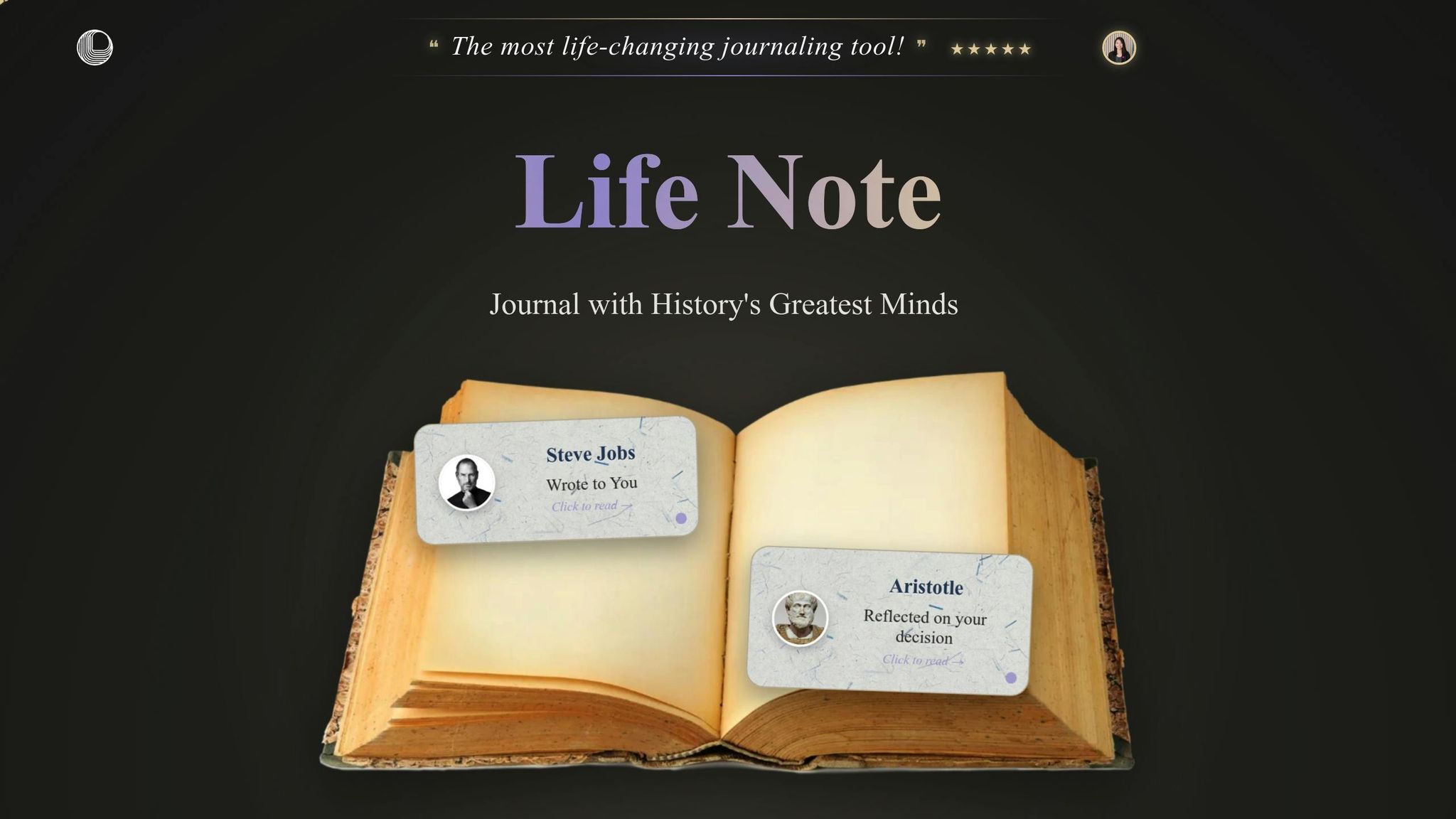
While traditional journaling allows you to dive into your inner thoughts, Life Note takes it further by helping you see connections you might otherwise miss. This AI-driven tool transforms self-reflection into a more dynamic process by offering real-time insights. As you write about your emotions, challenges, or daily experiences, Life Note pairs you with a mentor inspired by influential figures like Carl Jung or Steve Jobs. These mentors provide personalized advice tailored to your situation, drawing from the wisdom of their own lives.
For example, if you’re struggling with self-doubt as an entrepreneur, the system might channel insights from Steve Jobs, who faced similar challenges. If you’re wrestling with perfectionism or creative blocks, you could receive guidance inspired by J.K. Rowling, who overcame rejection and setbacks in her journey. Rather than simply mirroring your thoughts, these mentors expand your perspective and offer fresh ways to think about your beliefs and behaviors.
Related: journaling for imposter syndrome
Every week, Life Note compiles your themes and progress into a personalized reflection letter from your mentor. These letters are crafted to help you understand your emotional and behavioral patterns, offering guidance to maintain balance and track your growth. Beyond written reflections, Life Note creates visual art from your journal entries, called the Inner Gallery. This feature turns your emotional journey into symbolic artwork, providing a therapeutic way to observe patterns in your life. All these insights are saved in your Wisdom Library - a searchable space where you can revisit the transformative ideas that have shaped your growth.
Using AI to Spot Patterns and Insights
Limiting beliefs often show up as recurring behaviors, like procrastination, people-pleasing, or avoiding challenges. The tricky part is that these patterns can take months to notice, especially when they pop up in different contexts. For instance, you might write about feeling anxious in social situations one week, skip networking events the next, and then feel isolated later - without realizing these are all connected to a deeper belief about your social worth.
Life Note's AI is designed to uncover these hidden connections by analyzing your entries over time. It remembers everything you’ve written, identifying recurring themes that might not be obvious in individual sessions. For example, if you frequently express feelings of being "not good enough" in various areas - like work, relationships, or creative pursuits - the AI can highlight this as a core belief, even if you hadn’t consciously linked these experiences together. This ability to recognize patterns across time gives you insights that manual journaling simply can’t match.
Journaling practitioner Tiffany Durham shares that the "tailored responses" from Life Note - and the way it "remembers" her previous entries - make it feel like "my mentor is on this journey with me."
Life Note user Eddie Fidler adds, "Sometimes the feedback from my mentors has been able to stop a negative thought pattern that had been bothering me the entire day."
These insights don’t just stop at reflection - they naturally lead to actionable steps.
Moving from Reflection to Action
Recognizing your limiting beliefs is only part of the journey. The real change happens when you take specific actions to challenge and replace those beliefs with empowering alternatives. Life Note bridges this gap through a feature called Aligned Actions. These are practical, achievable steps rooted in behavioral science and timeless wisdom, designed to connect your daily habits with your long-term goals.
Let’s say you’ve been journaling about a belief like, "I’m too quiet to succeed as an entrepreneur." Life Note might guide you to take small, manageable steps, such as attending one networking event per week, practicing a short introduction about your business, or inviting a potential collaborator for coffee. These actions are intentionally simple, making them easy to accomplish while directly addressing the limiting belief.
Your mentor plays a key role here, offering guidance based on their own experiences. For instance, learning how someone like Brené Brown overcame self-doubt or how Carl Jung approached personal growth can make your next steps feel more attainable. This isn’t generic advice - it’s grounded in the real-life strategies of individuals who have faced and overcome similar challenges.
Life Note also prioritizes your privacy. Sensitive reflections about limiting beliefs, childhood experiences, or insecurities are encrypted and kept secure. Unlike social media platforms or standard chatbots that may sacrifice privacy for personalization, Life Note ensures your data remains entirely under your control. This commitment to privacy allows you to explore your thoughts freely, knowing that your journaling stays confidential.
Conclusion
Transforming limiting beliefs through journaling takes consistent effort and a willingness to be honest with yourself. The first step is paying attention to your inner dialogue and jotting down those negative thoughts without passing judgment. From there, you can dig deeper to uncover where these beliefs come from - often rooted in childhood experiences, family dynamics, or moments of vulnerability. Once you identify their origins, you can challenge whether these beliefs are grounded in reality or simply assumptions. The goal? To rewrite them into empowering, realistic statements that inspire growth and change.
Change doesn’t happen overnight. Limiting beliefs often operate beneath the surface and have been reinforced for years, even decades. But with regular journaling, you can gradually replace those self-defeating patterns with new, constructive ones. This practice trains your mind to focus on opportunities and potential rather than accepting limits as facts.
Writer Jessie Liu shares, "Through Life Note, I've built a consistent journaling habit and, with AI mentor support, learned to understand and accept my various states of mind."
This showcases how tools that provide personalized insights can make the process of uncovering and reframing beliefs more effective, helping you navigate the emotions tied to these patterns.
Journaling also slows down your thinking, giving you space to examine your reactions and spot recurring themes. Over time, you’ll start to see the same beliefs cropping up in different areas of your life or notice how specific triggers lead to familiar responses. Recognizing these patterns is a crucial step toward breaking free from them.
To take this practice further, consider using Life Note. Its AI mentors analyze your entries, point out patterns, and guide you toward actionable insights. Drawing on the wisdom of thinkers like Carl Jung, Brené Brown, and Steve Jobs - who all faced and overcame their own doubts - Life Note turns journaling into a powerful tool for growth. With features like weekly reflections, Aligned Actions, and progress tracking, it shifts journaling from a solitary exercise into an interactive journey of self-discovery.
Start small: set aside 10–15 minutes each day to write about your thoughts, feelings, and challenges. Pay attention to when limiting beliefs arise, question their truth, and practice reframing them. Over time, those beliefs that once held you back will begin to lose their grip, allowing you to step into a more confident and authentic version of yourself.
FAQs
How can I stay consistent with journaling to uncover and challenge my limiting beliefs?
Consistency is the cornerstone of understanding and tackling limiting beliefs through journaling. Dedicate a specific time each day - just 5 to 10 minutes is enough - to sit down and write. Use this time to explore your thoughts, emotions, and any recurring patterns that might reveal underlying beliefs holding you back.
A tool like Life Note can add an engaging twist to the process. It transforms journaling into interactive conversations with historical mentors, keeping you motivated while offering fresh perspectives to challenge those unhelpful beliefs. With time and commitment, this daily practice can sharpen your self-awareness and pave the way for meaningful growth.
How can I spot limiting beliefs through journaling, and what are some signs to look for?
Limiting beliefs often show up as those nagging, negative thoughts or waves of self-doubt that stop you from stepping into your full potential. As you journal, keep an eye out for recurring phrases like "I can't," "I'm not good enough," or "This is just how things are." These kinds of statements can clue you in on the deeper beliefs shaping how you think and make decisions.
To spot them, focus on moments in your writing that stir strong emotions - times when you feel stuck, frustrated, or unsure. Ask yourself if those feelings are tied to assumptions about your abilities, your value, or what you think is possible for you. Once you pinpoint these beliefs, you can start challenging their truth and replacing them with thoughts that encourage growth and confidence.
How does Life Note use AI to help uncover and reframe limiting beliefs?
Life Note transforms journaling into something extraordinary by introducing AI-powered mentors modeled after some of history's most influential thinkers. These mentors offer new ways of looking at things, helping you spot emotional patterns and beliefs that might be keeping you stuck.
Through tailored insights and reflections, Life Note guides you toward a better understanding of your emotions and thoughts. This approach makes shifting from limiting beliefs to empowering ones more achievable, paving the way for personal growth and a clearer mindset.
How to Identify & Shift Your Own Limiting Beliefs I The Three A's I Mini Mindset Masterclass
Related Blog Posts
Journal with 1,000+ of History's Greatest Minds
Marcus Aurelius, Maya Angelou, Carl Jung — real wisdom from real thinkers, not internet summaries. A licensed psychotherapist called it "life-changing."
Try Life Note Free