Best Philosophy Books: 20 Timeless Reads (And the One Question to Journal After Each)

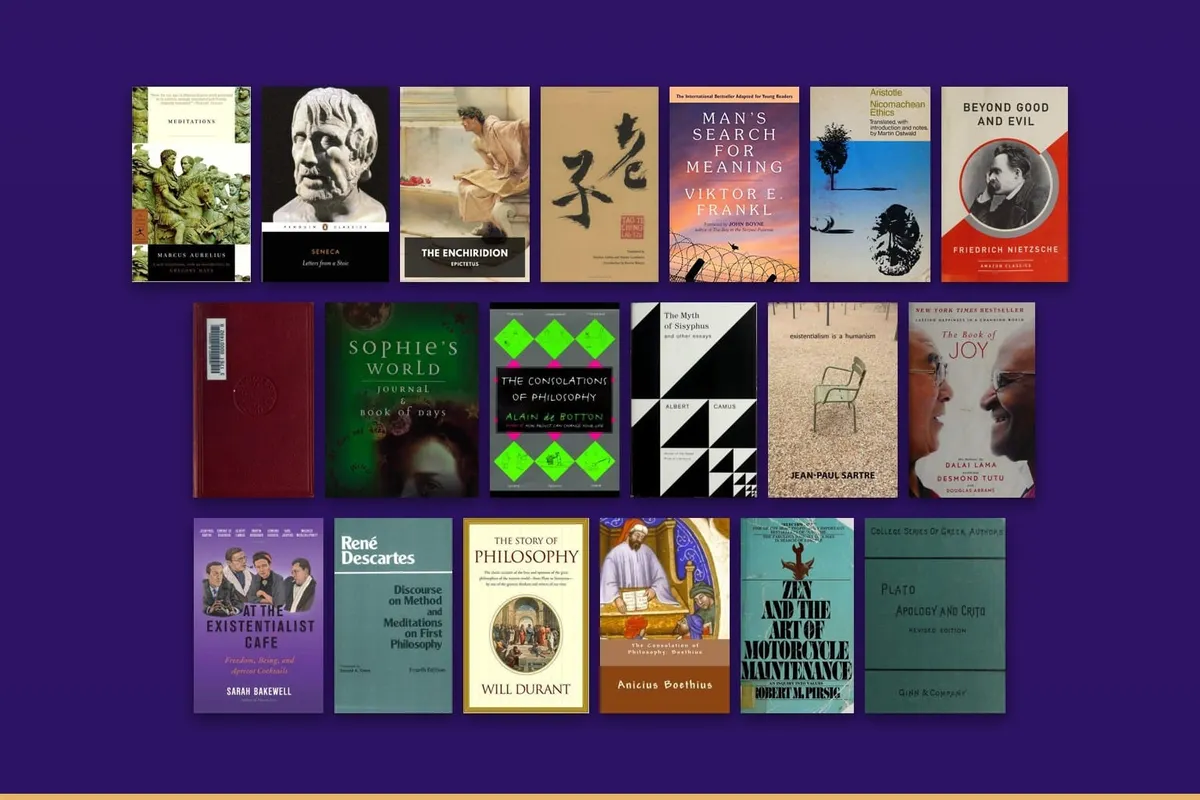
📌 TL;DR — The Best Philosophy Books
The best philosophy books for beginners are Meditations by Marcus Aurelius, the Tao Te Ching by Lao Tzu, and Man’s Search for Meaning by Viktor Frankl — all short, practical, and life-applicable. Below you’ll find 20 essential titles grouped by tradition (Stoicism, Eastern wisdom, existentialism, and more) — and after each one, a single question to journal on, because philosophy was always meant to be practiced, not just read.
The most recommended philosophy book of all time was never meant to be published. Marcus Aurelius wrote Meditations as a private journal — notes to himself, by candlelight, on how to live. Two thousand years later it tops every reading list. There’s a lesson hidden in that: the greatest minds in history didn’t just read wisdom — they wrote their way into it.
Most “best philosophy books” lists hand you a stack of titles and stop. This one does something different. Every book below is paired with one reflection prompt — a question to sit with in a notebook — so the ideas move from the page into your actual life. You don’t need a philosophy degree. You need a book, ten quiet minutes, and a pen.
Where to start: If you read only three, make them Meditations (Marcus Aurelius), the Tao Te Ching (Lao Tzu), and Man’s Search for Meaning (Viktor Frankl) — each is short, plainly written, and immediately useful. For a fuller foundation, add Seneca’s Letters, Plato’s Republic, and Sartre’s Existentialism Is a Humanism.
The best philosophy books at a glance
| Book | Author | Tradition | Best for | Length |
|---|---|---|---|---|
| Meditations | Marcus Aurelius | Stoicism | Daily self-discipline | Short |
| Letters from a Stoic | Seneca | Stoicism | Time & mortality | Medium |
| The Enchiridion | Epictetus | Stoicism | One-sitting intro | Very short |
| Tao Te Ching | Lao Tzu | Taoist | Letting go / flow | Very short |
| Man’s Search for Meaning | Viktor Frankl | Existential | Finding purpose | Short |
| Nicomachean Ethics | Aristotle | Virtue ethics | Building character | Long |
| Beyond Good and Evil | Nietzsche | Modern | Questioning values | Medium |
| The Republic | Plato | Ancient Greek | Justice & society | Long |
| Sophie’s World | Jostein Gaarder | Survey (fiction) | Absolute beginners | Long |
| The Consolations of Philosophy | Alain de Botton | Modern / practical | Everyday problems | Short |
Best philosophy books for beginners
New to philosophy? Start with a narrative on-ramp that teaches you to think, not a dense treatise to decode. These four are the friendliest doors into the whole tradition.
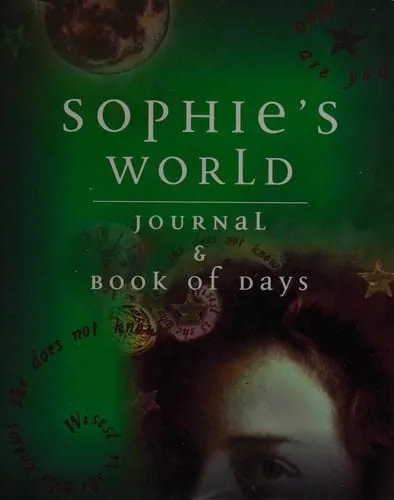
1. Sophie’s World — Jostein Gaarder
Survey · Fiction
A fourteen-year-old girl named Sophie starts receiving mysterious letters — “Who are you?” and “Where does the world come from?” — that pull her, and you, through the entire history of Western philosophy. The genius of Gaarder’s novel is that it hides a rigorous philosophy course inside a page-turning mystery, so you absorb Socrates, Descartes, and Kant almost without noticing. It’s the single most-recommended first philosophy book for exactly that reason: it teaches you how philosophers think, not just what they concluded. By the end you have a mental map of the whole tradition and a shortlist of thinkers you actually want to read next. Start here if the field feels overwhelming.
✍️ Journal on: Which era’s big questions feel most alive to you right now — the ancient “how should I live?” or the modern “what is real?”
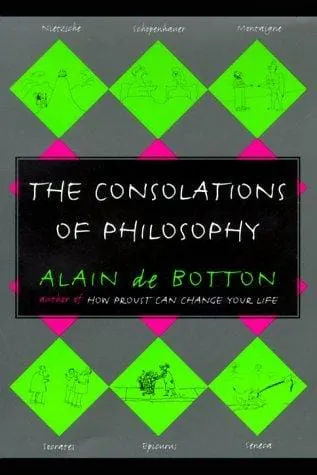
2. The Consolations of Philosophy — Alain de Botton
Modern · Practical
De Botton takes six philosophers — Socrates, Epicurus, Seneca, Montaigne, Schopenhauer, and Nietzsche — and shows how each one speaks to a specific modern ache: unpopularity, not having enough money, frustration, feeling inadequate, heartbreak, and difficulty. It’s philosophy as first aid, warm and witty, with none of the jargon that scares people off. What makes it special is the reframing: Seneca on anger or Montaigne on self-acceptance can genuinely change how you feel about a bad week. It’s also a perfect on-ramp, because it makes you want to read the original thinkers it introduces. Short, humane, and quietly practical.
✍️ Journal on: Pick one thing frustrating you this week. What would Seneca — or Nietzsche — say about it?
Then graduate to the two shortest classics on this whole list: Marcus Aurelius’s Meditations and Lao Tzu’s Tao Te Ching (both below). Neither takes more than an afternoon, and both reward a lifetime of re-reading.
Best Stoic philosophy books
If you want philosophy you can use tomorrow morning, start with the Stoics. Stoicism is the most practical school ever written — a operating manual for staying calm, focused, and decent in a chaotic world. These three are the canon.
3. Meditations — Marcus Aurelius
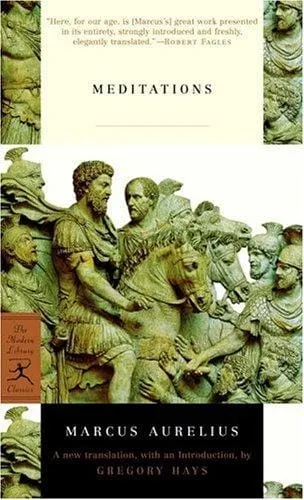
Stoicism
The most powerful man in the world sat down at night and wrote reminders to himself about how to be a decent human being — and never meant anyone to read them. That’s exactly why Meditations lands so hard: there’s no audience, no performance, just an emperor coaching himself to stay patient, humble, and unbothered by things he can’t control. You can open it to almost any page and find a line worth carrying through your day. It’s the closest thing philosophy has to a daily devotional, and the model for what journaling can be. Read our full guide to Marcus Aurelius and Stoicism to go deeper.
✍️ Journal on: Write one thing today that is in your control, and one that isn’t. Then let the second one go. (More: 50 Stoic journal prompts.)
4. Letters from a Stoic — Seneca
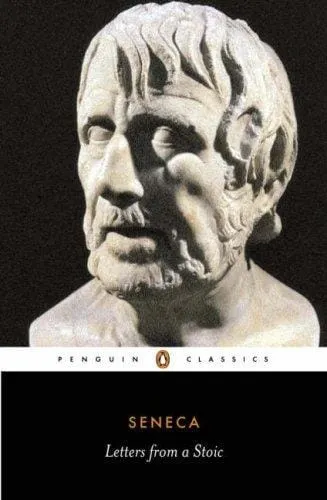
Stoicism
Seneca was a statesman, playwright, and one of the richest men in Rome — which makes his letters on time, wealth, anger, and mortality feel lived-in rather than preachy. Warmer and more literary than the other Stoics, each letter reads like advice from a wise, slightly world-weary friend who has seen it all. His short essay On the Shortness of Life — often bundled in — is the best 30-minute gut-check on how you spend your days that you’ll ever read. Start here if Meditations feels too terse; Seneca explains where Marcus simply asserts. See our guide to Seneca on time, wealth, and living well.
✍️ Journal on: Are you spending your time or wasting it? Audit where the last week actually went. (Try memento mori journaling.)
5. The Enchiridion — Epictetus
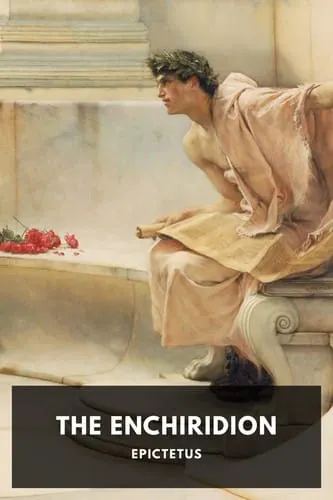
Stoicism
Epictetus was born a slave, walked with a limp from a master’s cruelty, and became the ancient world’s clearest teacher of inner freedom — the idea that no one can touch the one thing that’s truly yours: your judgments. The Enchiridion (“handbook”) distills his teaching into short, punchy maxims you can read in a single sitting and spend years applying. Its opening move — divide everything into what’s “up to us” and what isn’t — is arguably the most useful sentence in all of philosophy. If you only have one afternoon, this is the fastest door into Stoic practice. It later shaped modern cognitive behavioral therapy, too.
✍️ Journal on: Name one worry you’re carrying. Split it in two: the part that is yours to control, and the part that never was.
Want more? These three absorb almost everything people mean by “best stoic books.” If you’d rather practice than read, our roundup of the best Stoic apps and alternatives covers guided daily options.
Eastern & Taoist wisdom
Where the Stoics teach discipline, Eastern philosophy teaches release — how to stop forcing, strive less, and move with life instead of against it. Radically different medicine for a striving mind.
6. Tao Te Ching — Lao Tzu
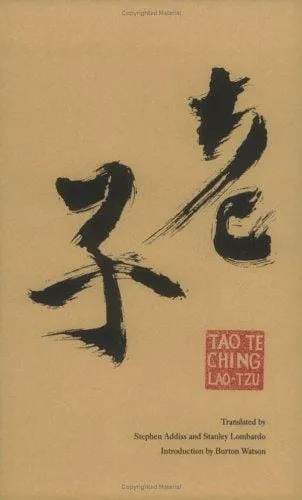
Taoist
Eighty-one short, poetic verses on living in harmony with the natural flow of things — the art of wu wei, usually translated as “effortless action” or “not forcing.” Where Western philosophy tends to add (more rules, more argument, more striving), Lao Tzu subtracts, and the result is one of the most quietly radical books ever written. You can read the whole thing in under an hour and spend the rest of your life unpacking a single line. It’s the perfect antidote to a striving, over-optimized modern mind. Read it slowly, a verse at a time. (See how wisdom is defined across traditions.)
✍️ Journal on: Where in your life are you forcing an outcome that would resolve itself if you simply stopped pushing?
7. The Book of Joy — Dalai Lama & Desmond Tutu
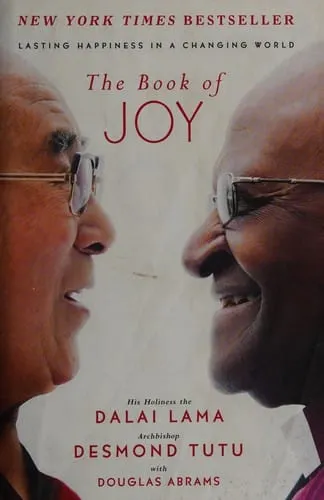
Eastern · Modern
Two of the world’s great spiritual leaders — a Tibetan Buddhist and a South African Anglican, each with every reason for bitterness — spend a week together laughing, teasing, and working out how to stay joyful in a world full of suffering. It’s part conversation, part memoir, part practical guide, and its central claim is bracing: joy isn’t something that happens to you, it’s a discipline you cultivate through compassion and perspective. The warmth between these two men is itself the argument. A genuinely uplifting read that never feels naïve.
✍️ Journal on: Recall one moment of joy today that came from giving rather than getting. What made it different?
8. Zen and the Art of Motorcycle Maintenance — Robert Pirsig
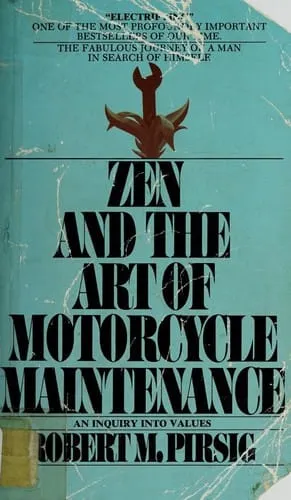
East–West blend
On its surface it’s a father and son riding across America on a motorcycle; underneath, it’s one of the most ambitious popular meditations ever written on “Quality” — what makes work, thought, and a life actually good. Pirsig weaves Eastern and Western philosophy into something entirely his own, and the maintenance metaphor is deceptively deep: how you care for small things reveals how you meet the world. It rewards patience and can drag in places, but its best passages stay with you for years. A cult classic that earned the following. Bridges neatly to how traditions compare across Stoicism, Buddhism, and beyond.
✍️ Journal on: Where are you chasing quantity — more, faster, bigger — when quality is what you actually want?
Existentialism & the search for meaning
If the Stoics ask “how should I live?”, the existentialists ask the harder one: “why, and who decides?” This is philosophy for anyone standing at a crossroads. Pair these with our existential journal prompts.
9. Man’s Search for Meaning — Viktor Frankl
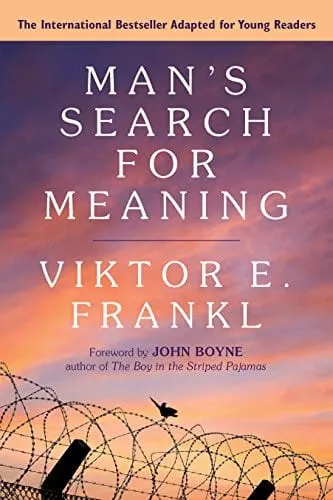
Existential · Psychology
Frankl was a psychiatrist who survived Auschwitz, and this short book is two things at once: an unflinching memoir of the camps and the foundation of his school of therapy, logotherapy. His central observation is devastating and hopeful — the prisoners who survived were often those who held onto a why, some meaning to live for. From that he argues that meaning, not pleasure or power, is the primary human drive, and that we can find it even in unavoidable suffering by choosing our response. Almost everyone who reads it calls it life-changing, and it earns the phrase. Go further with our journaling exercises for finding meaning.
✍️ Journal on: Frankl found meaning three ways: through work, through love, and through how we face unavoidable suffering. Where do you find yours? (How to find your life purpose.)
10. Existentialism Is a Humanism — Jean-Paul Sartre
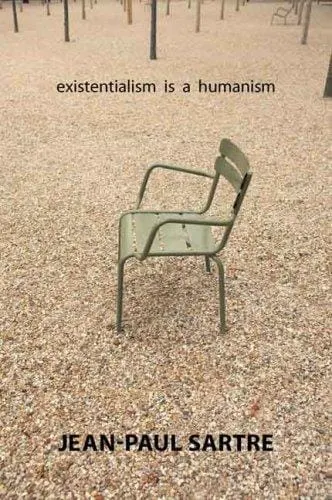
Existentialism
Originally a public lecture, this is the most accessible statement of Sartre’s vertiginous core idea: “existence precedes essence.” There’s no blueprint handed to you at birth — you are nothing until you act, and you create yourself choice by choice. That means radical freedom, but also total responsibility: you can’t blame your nature, your upbringing, or the world for who you become. Sartre wrote it partly to answer critics who found existentialism gloomy, and it’s bracing rather than bleak. A short, sharp jolt of a book that makes every choice feel weightier.
✍️ Journal on: If nothing predetermines who you are, what are you actively choosing to become this year?
11. The Myth of Sisyphus — Albert Camus
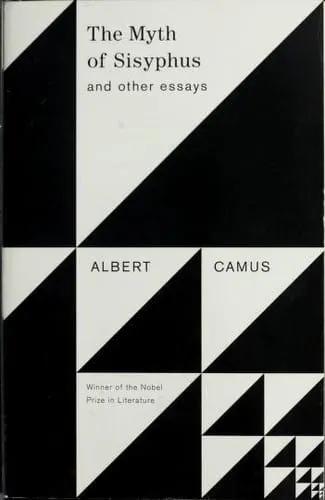
Existentialism
Camus opens with the only philosophical question he thinks really matters: given that the universe offers no built-in meaning, is life worth living? His answer is a surprising, defiant yes. Sisyphus — condemned by the gods to roll a boulder uphill forever — becomes his hero precisely because he can find purpose and even happiness in the pushing itself, without needing the summit to mean anything. It’s a strange, exhilarating argument for embracing life without illusions. If the essay feels abstract, his novel The Stranger dramatizes the same ideas and is the gentler entry point.
✍️ Journal on: What “boulder” do you push every day? Can you find meaning in the pushing itself, not just the summit?
Nietzsche & questioning your values
No philosopher is more misquoted — or more bracing. Nietzsche’s project was to make you examine the values you never chose, and forge your own. Read him when you’re ready to be uncomfortable.
12. Beyond Good and Evil — Friedrich Nietzsche
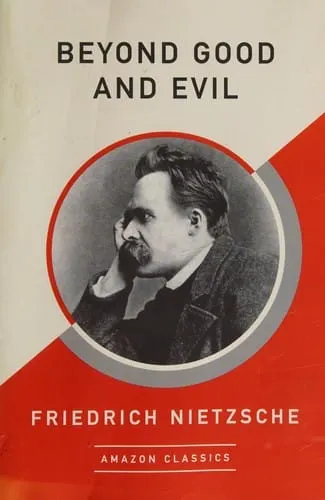
Modern
Nietzsche takes a hammer to inherited morality — the comfortable “good vs evil” story we absorb from culture and religion — and dares you to ask where your values actually came from. His claim is that most people never choose their morals at all; they inherit them and call it conscience. Written in sharp, quotable aphorisms, it’s the most accessible door into his thought and far less intimidating than its reputation. He’s not telling you to abandon values, but to own them — to become the author of your life rather than a character in someone else’s script. Uncomfortable in the best way.
✍️ Journal on: Which of your “shoulds” did you actually choose — and which did you simply inherit and never question?
13. Thus Spoke Zarathustra — Friedrich Nietzsche
Modern
Nietzsche’s strangest and most ambitious book: a philosophical novel-poem in which a prophet comes down from the mountains to teach humanity about self-overcoming, the death of God, and becoming who you truly are. It’s the source of his most famous (and most misused) ideas, written in deliberately biblical, rhapsodic language. This is the denser sibling of Beyond Good and Evil — don’t start here, but do come here once the ideas grip you. Read it slowly, like scripture you’re allowed to argue with, and let the images do their work.
✍️ Journal on: What would it mean to “become who you are”? Describe the self you’re quietly growing toward.
Ancient Greek foundations
Everything downstream — Stoicism, ethics, science, the very idea of arguing well — traces back here. Don’t read these cover-to-cover; read the famous parts and let them work on you.
14. The Republic — Plato

Ancient Greek
Plato’s sprawling masterpiece asks what justice really is and, to answer it, designs an entire ideal society from scratch. Along the way it drops the most famous image in philosophy: the Allegory of the Cave, where prisoners chained to a wall mistake flickering shadows for reality — until one escapes and sees the sun. It’s a haunting metaphor for education, illusion, and how hard it is to see past what we’ve always assumed. Don’t read it cover to cover on the first pass; read the Cave and a few key books, and let them rewire how you look at your own certainties. Foundational to nearly everything that came after.
✍️ Journal on: What “shadows on the wall” — beliefs you’ve never tested — might you be mistaking for reality?
15. The Apology & Five Dialogues — Plato
Ancient Greek
This is where Western philosophy dramatically begins: Socrates on trial in Athens for “corrupting the youth,” defending not himself so much as the whole project of questioning everything. The Apology is short, gripping, and unexpectedly moving — a man choosing death over the abandonment of his convictions. Paired with dialogues like Euthyphro and Crito, it’s the best narrative introduction to Greek thought and the Socratic method of relentless questioning. If Plato’s longer works feel daunting, start here; it reads like courtroom drama with the stakes of a life.
✍️ Journal on: “The unexamined life is not worth living.” What is one belief you’ve never actually stopped to question?
16. Nicomachean Ethics — Aristotle
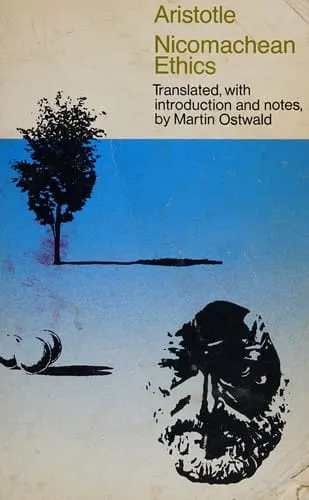
Virtue ethics
Aristotle’s great work on how to live well is built around eudaimonia — usually translated as “happiness,” but closer to flourishing or a life fully realized. His radical, still-relevant claim is that virtue isn’t something you’re born with or decide once; it’s a habit you build by repeated action. You become brave by doing brave things, generous by giving, temperate by practicing moderation — character is trained like a muscle. He also introduces the “golden mean,” the idea that most virtues sit between two extremes. Denser than the Stoics, but the payoff is a complete, practical blueprint for building a good character.
✍️ Journal on: Which single virtue — courage, patience, honesty, generosity — would most change your life if you practiced it daily for a month?
Modern foundations & big-picture surveys
Two more to round out your foundation: one that launched modern philosophy, and one that maps the whole terrain in a single readable volume.
17. Meditations on First Philosophy — René Descartes
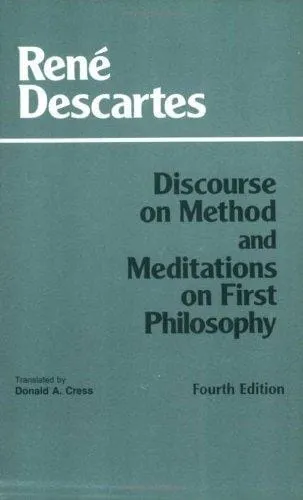
Modern foundations
Descartes sets out to doubt everything he possibly can — his senses, the physical world, even his own body — to see whether anything survives. What survives is the one thing he cannot doubt while doubting: that he is thinking. “I think, therefore I am” becomes the bedrock he rebuilds knowledge upon, and modern philosophy is born. It’s remarkably short and written as a first-person meditation, so you experience the doubt alongside him rather than just reading about it. Not everyone buys his conclusions, but the method — question your foundations, then rebuild deliberately — is a permanent tool for thinking clearly.
✍️ Journal on: What do you believe simply because you were told it? How would you actually test whether it’s true?
18. The Story of Philosophy — Will Durant
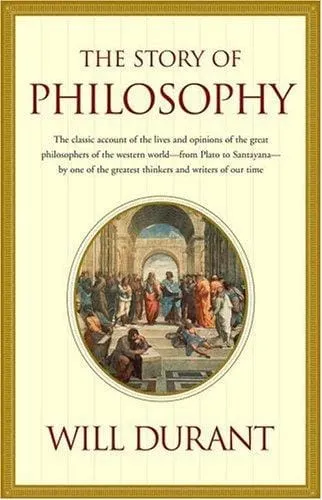
Survey · Narrative
Durant tells the history of philosophy through its great thinkers as people — their loves, feuds, poverty, and passions — rather than as a dry march of abstract arguments. His prose is warm and novelistic, and by rooting each philosophy in the life that produced it, he makes ideas stick. It’s the single best one-volume map of Western philosophy for a general reader, and it has sent millions of people to the primary sources. A little dated in places, but that’s a small price for how readable it is. Keep it as your reference shelf and read the originals it introduces.
✍️ Journal on: Which philosopher’s life — not just their ideas — do you most want to learn from?
19. The Consolation of Philosophy — Boethius
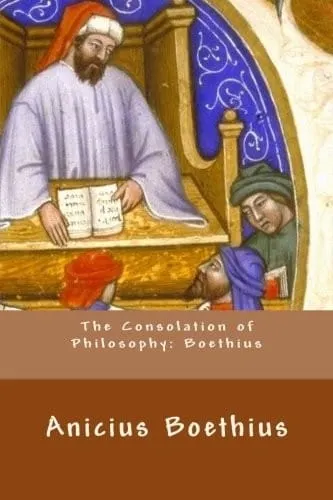
Ancient / Medieval
Boethius wrote this in prison, awaiting execution on false charges, having fallen from the heights of power — and the result is one of the most genuinely consoling books ever written. Philosophy appears to him as a woman who gently argues him out of despair, showing how reason and perspective steady us when fortune’s wheel turns cruel. For a thousand years it was among the most-read books in Europe, and you can feel why: it speaks directly to anyone who has lost something and wondered what remains. A moving bridge from the ancient world into the medieval one.
✍️ Journal on: When fortune last turned against you, what did it reveal about what you truly value?
20. At the Existentialist Café — Sarah Bakewell
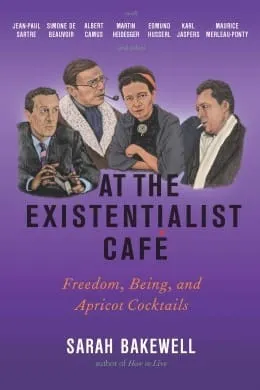
Existentialism · Narrative
Bakewell brings the existentialists to life through the people who lived the philosophy — Sartre, Simone de Beauvoir, Camus, and Heidegger — arguing over apricot cocktails in 1930s Paris and across a century of war, love, and betrayal. It’s equal parts group biography and lucid introduction to difficult ideas, and it’s the friendliest possible way to understand what existentialism actually meant to the humans who invented it. You come away understanding both the ideas and why they mattered so urgently. A modern classic, and a perfect capstone to this list.
✍️ Journal on: Are you living authentically right now — or performing a role others expect of you?
💬 A quiet note: many of the thinkers on this list — Marcus Aurelius, Seneca, Epictetus, Lao Tzu, Viktor Frankl, Carl Jung, and Alain de Botton among them — are also among the mentors you can actually reflect with inside Life Note, which responds in the spirit of their original works. Reading them is step one; having a conversation with their ideas is step two.
How to read philosophy so it actually changes you
Here’s the uncomfortable truth about reading philosophy: most of it evaporates. You finish Meditations, nod along, feel briefly wiser — and a week later you’re anxious about the same things. The ideas never made the jump from your head into your habits.
The fix is the oldest one there is. The philosophers on this list didn’t just read wisdom — they wrote. Marcus Aurelius journaled. Seneca wrote letters. Montaigne invented the essay to think on paper. Reading gives you the idea; journaling like a philosopher makes it yours. That’s why every book above comes with a prompt — a question to carry into a notebook and answer honestly.
The method is simple: read a chapter, close the book, and write for ten minutes on the prompt. Don’t summarize the author — apply them to your life. That’s the difference between collecting quotes and being changed by them.
Life Note lets you reflect alongside AI mentors modeled on Marcus Aurelius, Lao Tzu, Carl Jung, and 1,000+ of history’s greatest minds — drawing on their original works, not AI-generated summaries. A licensed psychotherapist who co-develops Life Note puts it this way: “I see AI journaling not as a replacement for therapy, but as a powerful tool to complement it.”
Frequently asked questions
What philosophy book should I read first?
For most people, start with Marcus Aurelius’s Meditations or Lao Tzu’s Tao Te Ching — both are short, plainly written, and immediately useful. If you want a gentle narrative introduction to the whole subject, read Sophie’s World by Jostein Gaarder first.
What is the best Stoic book?
Meditations by Marcus Aurelius is the most recommended Stoic book, followed by Seneca’s Letters from a Stoic and Epictetus’s Enchiridion. Together these three cover nearly everything people mean by “best stoic books.”
Are philosophy books hard to read?
Some are, but many of the most valuable ones aren’t. Meditations, the Tao Te Ching, Man’s Search for Meaning, and The Consolations of Philosophy are all short and written in plain language. Save dense works like Heidegger or Kant for later.
What about Carl Jung?
Jung wrote psychology rather than classical philosophy, so he’s not on the main list — but his work on the unconscious and the shadow is deeply philosophical. If that’s your interest, start with our guide to Carl Jung and shadow work and what shadow work is.
How do you journal about philosophy?
Read a short passage, then close the book and write for ten minutes applying the idea to your own life — not summarizing the author. Each book above includes a specific prompt to get you started. Our guide to journal prompts inspired by history’s greatest minds has 150+ more.
Philosophy isn’t a museum of dead ideas — it’s a set of tools for living, sharpened over 2,500 years and waiting for you to pick them up. Choose one book from this list, read a few pages tonight, and answer its question in a notebook. That’s not studying philosophy. That’s doing it. Ready to begin? Here’s how to journal like a philosopher.
Journal with 1,000+ of History's Greatest Minds
Carl Jung, Marcus Aurelius, Lao Tzu: replies grounded in their original works, each citing its source. Co-developed with a licensed psychotherapist.
Try Life Note Free