
10 Best Apps for Overthinking in 2026 (Finally Quiet Your Mind)

Struggling to stop overthinking? These 10 apps help break rumination cycles, process racing thoughts, and find mental clarity. Tested and reviewed for 2026.

TL;DR — Best Apps for Overthinking 2026
- Best overall: Life Note — AI journaling that processes racing thoughts with wisdom from great thinkers
- Best for thought loops: Wysa — catches and challenges cognitive distortions with free CBT
- Best for grounding: Rootd — pulls you out of your head and into your body
- Best for nighttime: Calm — Sleep Stories redirect your mind when it won't quiet
- Best free: Finch — gentle self-care without overwhelming features
- The key to stopping overthinking isn't suppression — it's processing
You know that feeling. It's 11 PM, you're exhausted, but your brain won't stop. Did I say something weird in that meeting? What if they think I'm incompetent? Why did I phrase it that way? What will happen if I mess up the presentation?
Welcome to the overthinking spiral — where one thought leads to another until you're mentally exhausted but somehow still wide awake. You replay conversations, analyze decisions, and imagine worst-case scenarios until your brain feels like it's running a marathon while your body is trying to sleep.
Overthinking isn't just annoying. Research links chronic rumination to depression, anxiety, insomnia, decision paralysis, and even physical health problems. The good news? The right tools can help you break the cycle.
This guide covers the 10 best apps for overthinking in 2026 — from AI journaling to CBT chatbots to meditation programs designed to quiet racing minds.
Understanding Overthinking: Why Your Brain Gets Stuck
Overthinking — also called rumination — happens when your mind replays or rehearses thoughts repeatedly without reaching resolution. Unlike productive reflection, overthinking goes in circles.
The Two Types of Overthinking
| Type | Pattern | Example |
|---|---|---|
| Rumination | Replaying the past | "Why did I say that? I'm so stupid. That was years ago and I still cringe." |
| Worry | Rehearsing the future | "What if the presentation goes wrong? What if they reject my proposal? What if I fail?" |
Both types share the same trap: they feel productive while actually being counterproductive. Your brain believes that analyzing one more time will reveal the answer or prevent disaster. Research shows the opposite.
Why Overthinking Feels Productive (But Isn't)
| What Overthinking Does | What Research Shows |
|---|---|
| Feels like problem-solving | Actually worsens decision-making (Nolen-Hoeksema, 2000) |
| Promises closure | Creates more questions and doubt |
| Seems protective | Increases anxiety and depression |
| Appears thoughtful | Blocks creative solutions and action |
| Gives sense of control | Actually perpetuates feeling out of control |
The Science: What Actually Stops Overthinking
Research shows expressive writing, CBT thought-challenging, mindfulness meditation, and physical grounding exercises are the four proven interventions for chronic rumination.
Research points to specific interventions that break the overthinking cycle:
| Intervention | How It Helps | Source |
|---|---|---|
| Expressive writing | Externalizes thoughts, breaking the internal loop | Pennebaker (1997) |
| Cognitive restructuring (CBT) | Challenges distorted thoughts fueling rumination | Beck (2011) |
| Mindfulness | Teaches observing thoughts without engaging | Hoge (2023) |
| Behavioral activation | Doing breaks the thinking loop | Dimidjian (2006) |
| Self-distanced reflection | Third-person perspective reduces emotional intensity | Kross (2014) |
The solution isn't to "just stop thinking." Instead, effective apps help you: externalize thoughts (get them out of your head), examine them objectively (see distortions), and redirect attention (break the loop).
The 10 Best Apps for Overthinking
The top apps combine journaling, CBT, meditation, and grounding techniques to interrupt thought spirals and help overthinkers process rather than replay.
1. Life Note — Best Overall
Price: Free tier | Premium $10.99/month, $99.99/year
Platforms: iOS, Android, Web
Approach: AI wisdom journaling
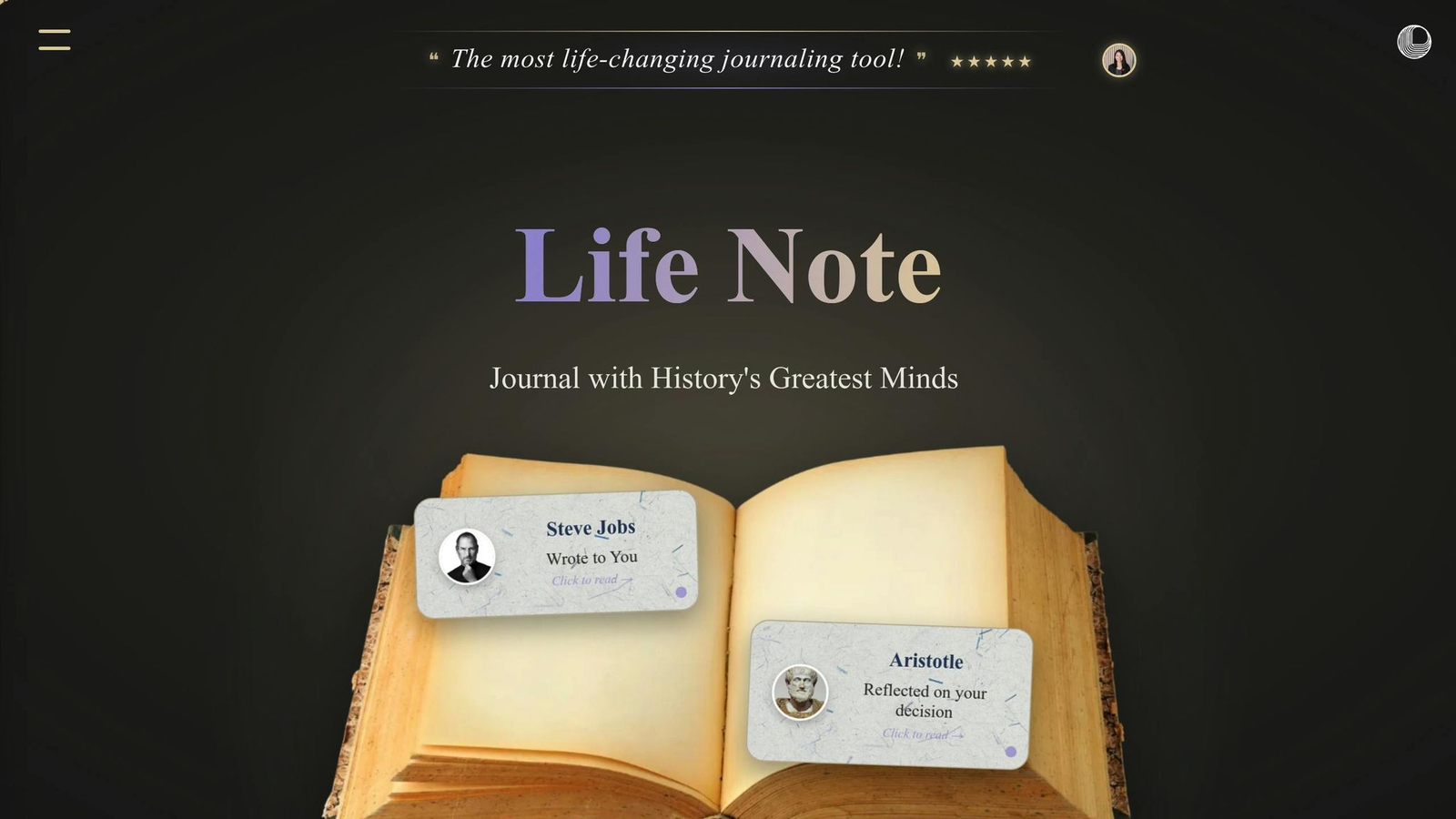
The reason overthinkers can't stop is that thoughts feel unfinished. They're bouncing around your head, demanding attention but never resolving. Life Note solves this by giving your thoughts somewhere to go, and someone wise to process them with.
Journal with AI mentors trained on history's greatest thinkers: Marcus Aurelius (for anxiety about the future), Carl Jung (for understanding your patterns), or modern therapists (for practical reframes). The AI doesn't just listen — it responds with perspectives that help you see your thoughts differently.
Key Features:
- Externalizing: Writing thoughts down breaks the mental loop — they're no longer stuck inside
- Reframing: AI offers perspectives you wouldn't consider alone
- Pattern recognition: Over time, identifies recurring themes in your overthinking
- Multiple mentors: Different wisdom traditions for different types of thoughts
- End-to-end encryption: Your racing thoughts stay completely private
Pros: Deepest processing of any app; multiple perspectives; excellent privacy.
Cons: Requires engagement; not for immediate panic relief.
Best for: People who want to understand their thoughts, not just quiet them.
2. Wysa — Best for Thought Loops
Price: Free | Premium $99.99/year
Platforms: iOS, Android
Approach: CBT + DBT chatbot
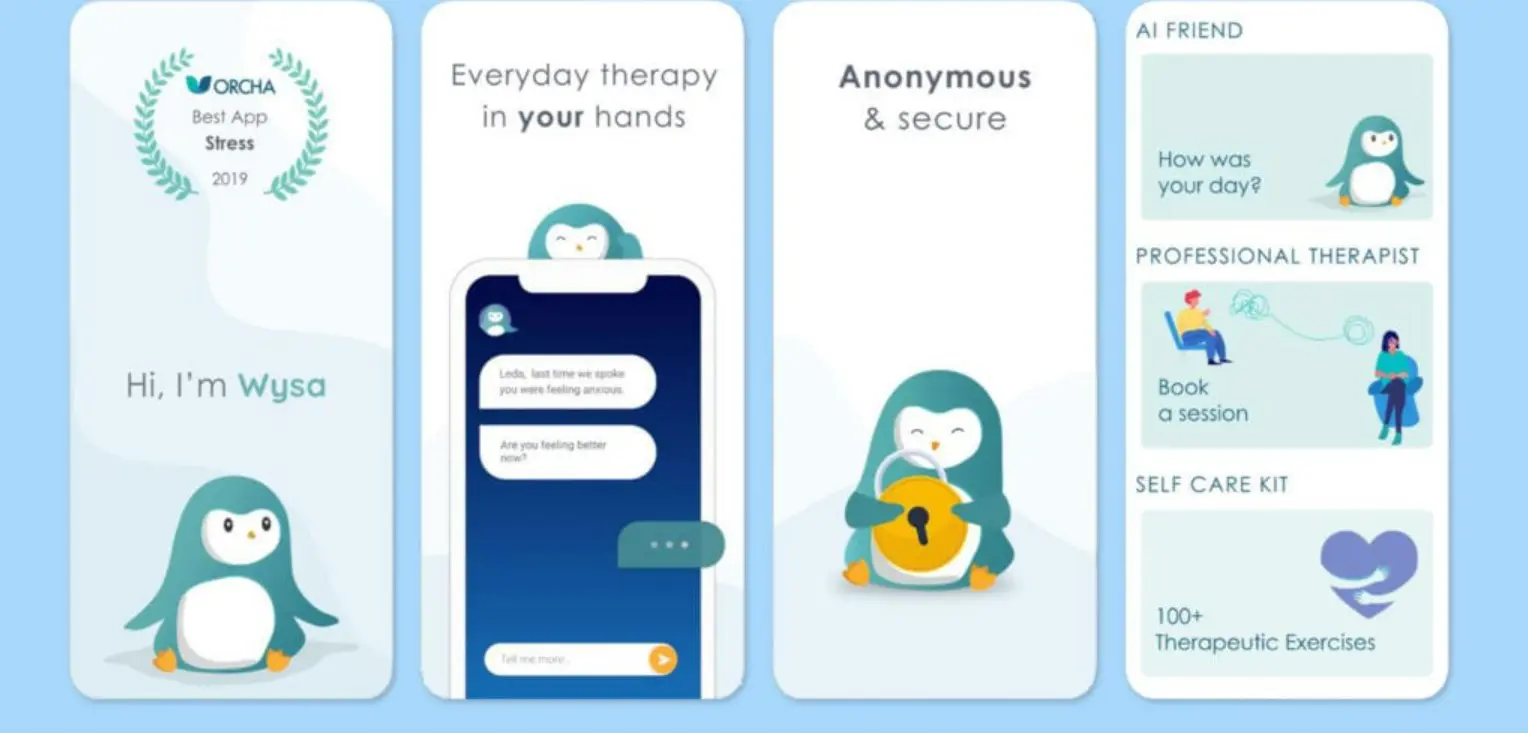
Wysa is a free AI chatbot backed by clinical studies and FDA-recognized as comparable to in-person counseling. It specializes in catching cognitive distortions — the irrational thought patterns that fuel overthinking.
Cognitive distortions Wysa catches:
- Mind reading: "Everyone noticed my mistake"
- Overgeneralization: "This always happens to me"
- Catastrophizing: "If I don't figure this out, everything will fall apart"
- All-or-nothing: "If it's not perfect, it's a failure"
When you share your racing thoughts with Wysa, it helps you identify which distortion is at play, then guides you through challenging it with evidence.
Pros: Genuinely free core features; FDA recognition; catches distortions in real-time.
Cons: Responses can feel generic; less depth than human therapy.
Best for: People whose overthinking involves negative self-talk or worst-case scenarios.
3. Rootd — Best for Grounding
Price: Free | Premium $69.99/year
Platforms: iOS, Android
Approach: Grounding + breathing
Sometimes overthinking escalates into physical symptoms — racing heart, tight chest, shallow breathing. Your mind is so active that your body follows. Rootd was designed for exactly these moments.
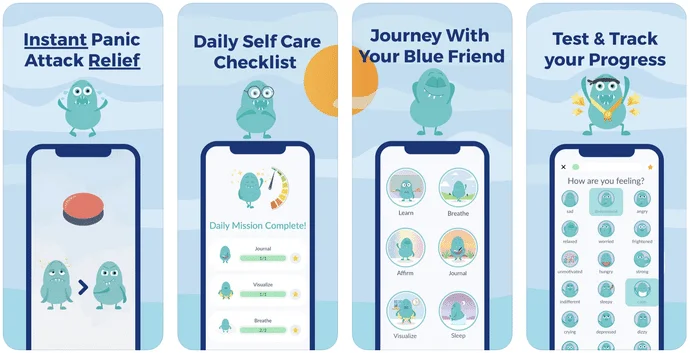
The app's panic button launches immediate grounding exercises that pull you out of your head and into your body. When you're stuck in thoughts, reconnecting with physical sensation breaks the loop.
Key Features:
- Panic button: One-tap emergency intervention
- Body scan exercises: Notice physical sensations to interrupt thought spirals
- Breathing techniques: Visual guides for box breathing, 4-7-8, and more
- Grounding visualizations: "5 things you can see, 4 you can touch..."
- Post-episode journaling: Track what triggered the spiral
Pros: Purpose-built for acute moments; immediate intervention; tracks progress.
Cons: Less useful for daily processing; limited journaling depth.
Best for: Overthinkers who experience physical symptoms or need immediate grounding.
4. Finch — Best Free Option
Price: Free (premium available)
Platforms: iOS, Android
Approach: Gamified self-care
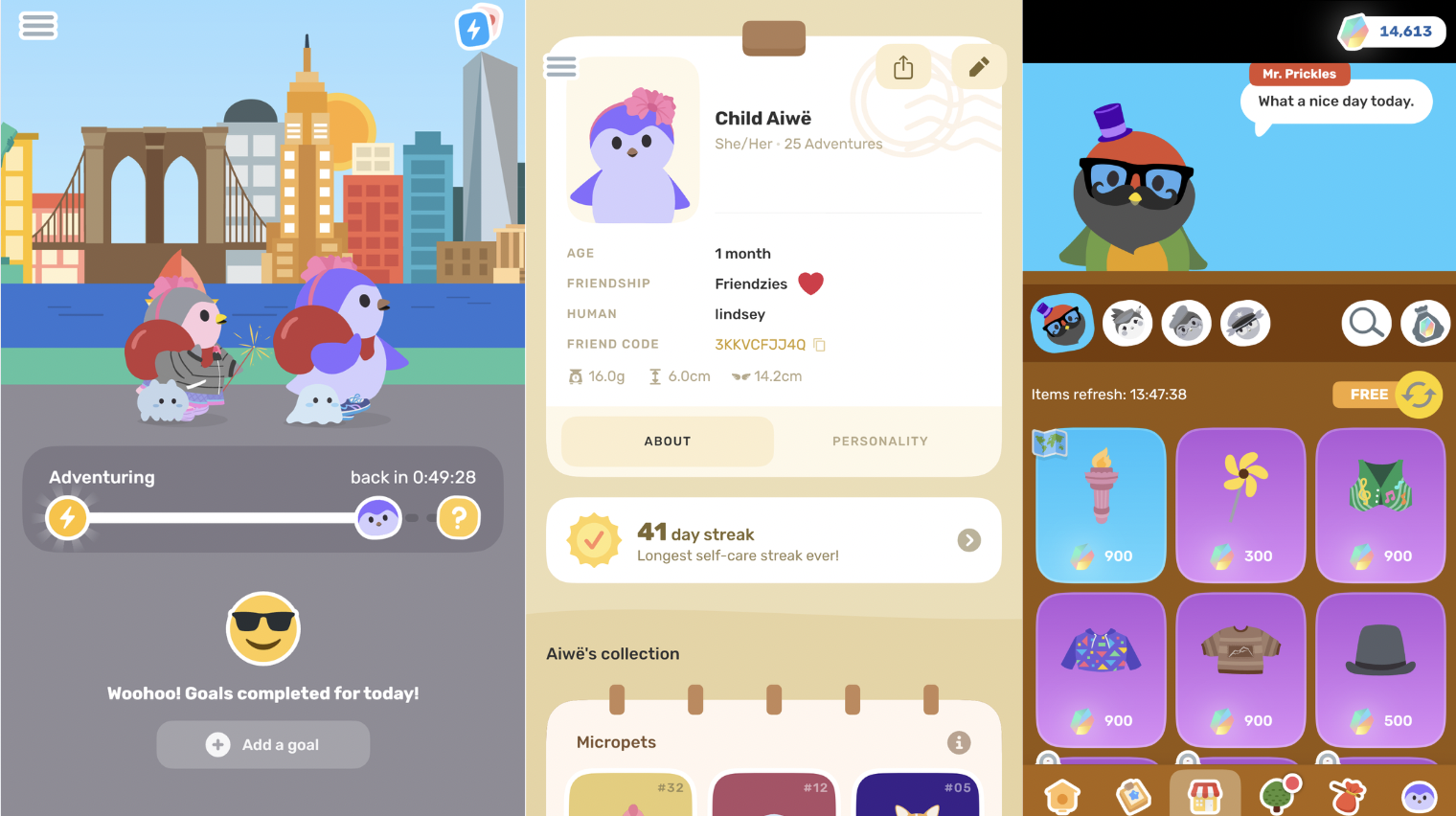
Finch takes a gentle approach: you raise a virtual pet bird by completing self-care activities. It sounds childish. It works. Completing breathing exercises, journaling prompts, or mood check-ins helps your bird grow and explore.
For overthinkers who feel overwhelmed by complex mental health apps, Finch provides tools without pressure. The gamification creates motivation without adding to the mental load.
Key Features:
- Simple daily check-ins: Quick mood tracking without analysis paralysis
- Breathing exercises: Short, accessible techniques
- Journaling prompts: Gentle questions to redirect thought patterns
- Goal setting: Break overwhelming tasks into small steps
- Rewards that motivate: Your bird's progress reflects your self-care
Pros: Excellent free tier; non-clinical approach; genuinely engaging.
Cons: Less depth for serious patterns; gamification may not suit everyone.
Best for: Overthinkers who feel overwhelmed by complex apps.
5. Headspace — Best for Meditation
Price: Free trial | Premium $69.99/year
Platforms: iOS, Android, Web
Approach: Guided meditation
Headspace's "Letting Go of Stress" and "Managing Anxiety" courses teach you to observe thoughts without engaging them: like watching cars pass on a highway. You notice them, but you don't chase them.
This mindfulness approach doesn't stop thoughts. Instead, it changes your relationship with them. Over time, you learn that thoughts are just thoughts — not facts, not commands, just mental events passing through.
Key Features:
- Anxiety-specific courses: Multi-day programs designed for racing minds
- SOS sessions: 3-minute exercises when overthinking spikes
- Focus music: Background audio to occupy part of your attention
- Sleep content: Wind-down meditations for nighttime overthinking
Pros: Best-in-class meditation guidance; research-backed; excellent production.
Cons: Subscription required for most content; takes practice to see results.
Best for: People new to meditation who want structured guidance.
6. Calm — Best for Nighttime Overthinking
Price: Free trial | Premium $69.99/year
Platforms: iOS, Android, Web
Approach: Sleep stories + meditation
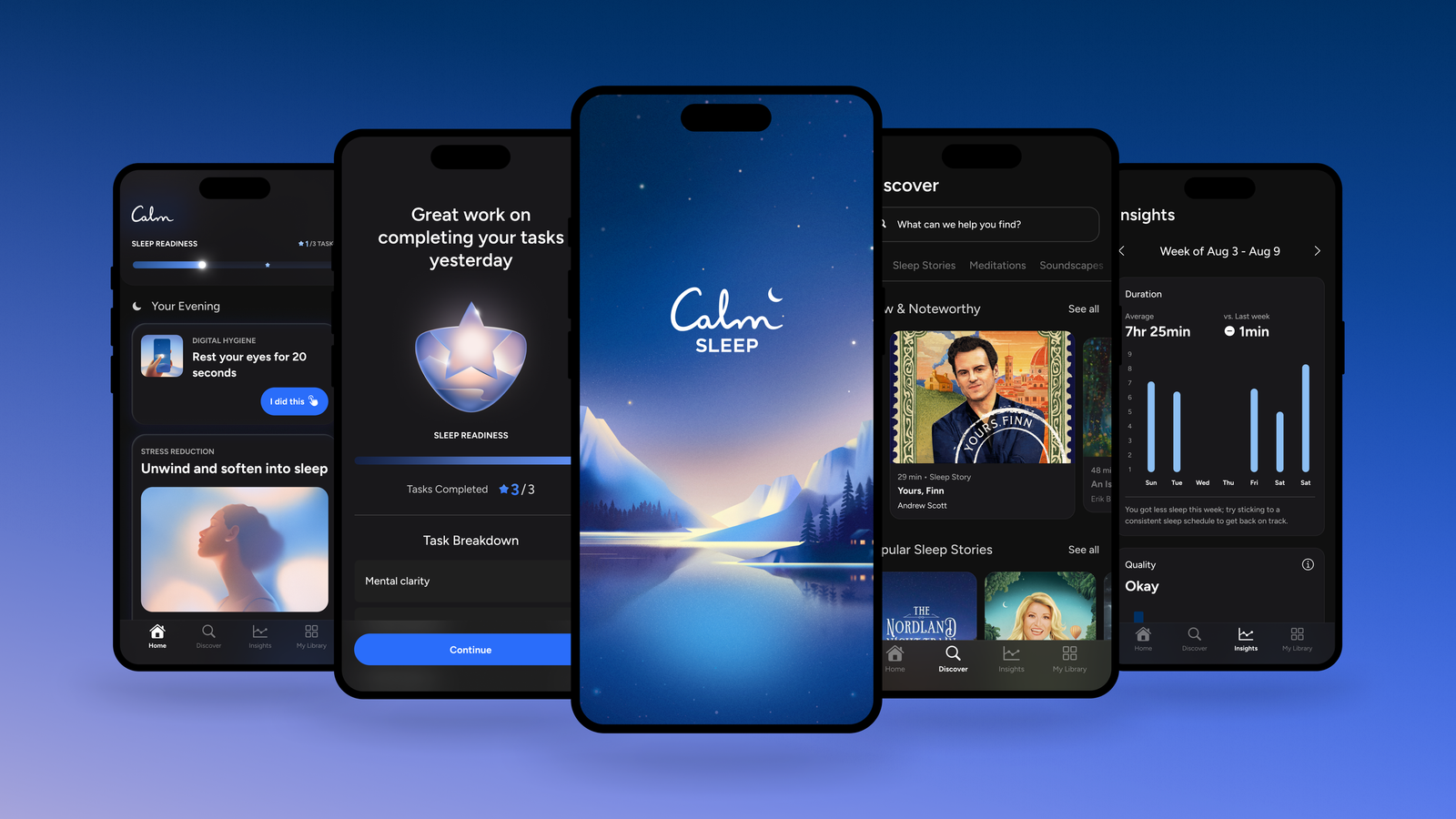
If your overthinking peaks at bedtime, Calm's Sleep Stories are remarkably effective. Celebrity narrators (Matthew McConaughey, Stephen Fry, Harry Styles) tell soothing stories that redirect your mind from anxious thoughts to gentle imagery.
The mechanism is simple: your brain can't maintain two thought streams simultaneously. By engaging with a story, you interrupt the overthinking loop with something calming.
Key Features:
- Sleep Stories: 100+ hours of bedtime content
- Daily Calm: New meditation every day
- Emergency calm: Quick exercises for spiraling moments
- Soundscapes: Background audio for focus or sleep
Pros: Exceptional sleep content; celebrity narrators; beautiful design.
Cons: Less structured than Headspace; expensive without family plan.
Best for: Overthinkers who can't fall asleep because their brain won't stop.
7. Reflectly — Best for Quick Journaling
Price: Free trial | Premium $59.99/year
Platforms: iOS, Android
Approach: AI-guided journaling
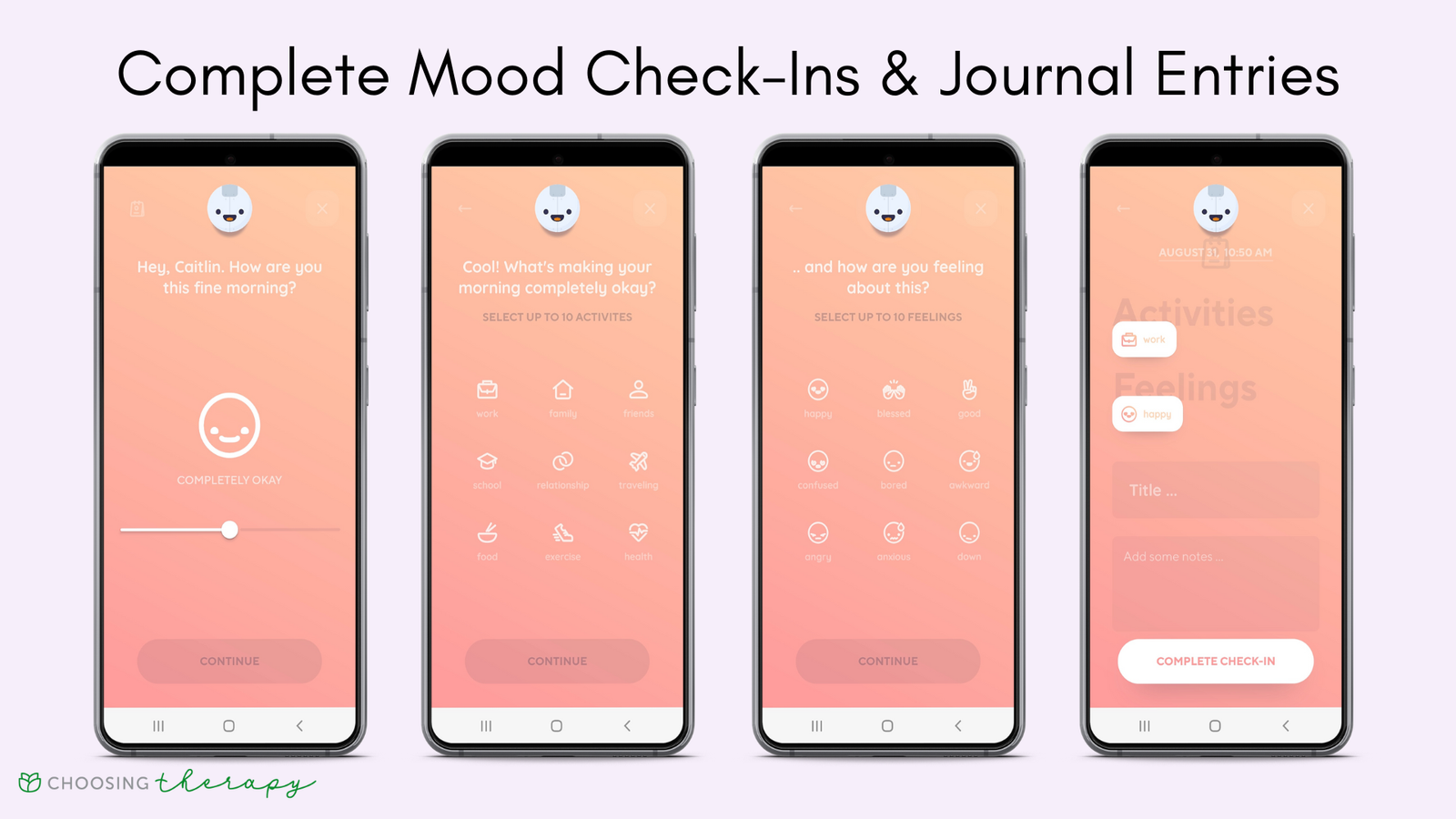
Reflectly uses AI to guide quick journaling sessions. For overthinkers, the value is speed — sometimes you just need to dump the thoughts and move on. The app asks simple questions about your day, then offers AI-generated insights.
Key Features:
- Simple questions: How was your day? What's on your mind?
- AI-generated insights: Personalized reflections based on your entries
- Quick and frictionless: 5 minutes or less
- Mood tracking: See patterns over time
Pros: Fast journaling; cheerful interface; AI insights.
Cons: Less depth than Life Note; subscription required for full features.
Best for: People who want journaling benefits without time commitment.
8. MindShift CBT — Best Free CBT
Price: Completely free
Platforms: iOS, Android
Approach: CBT thought challenging
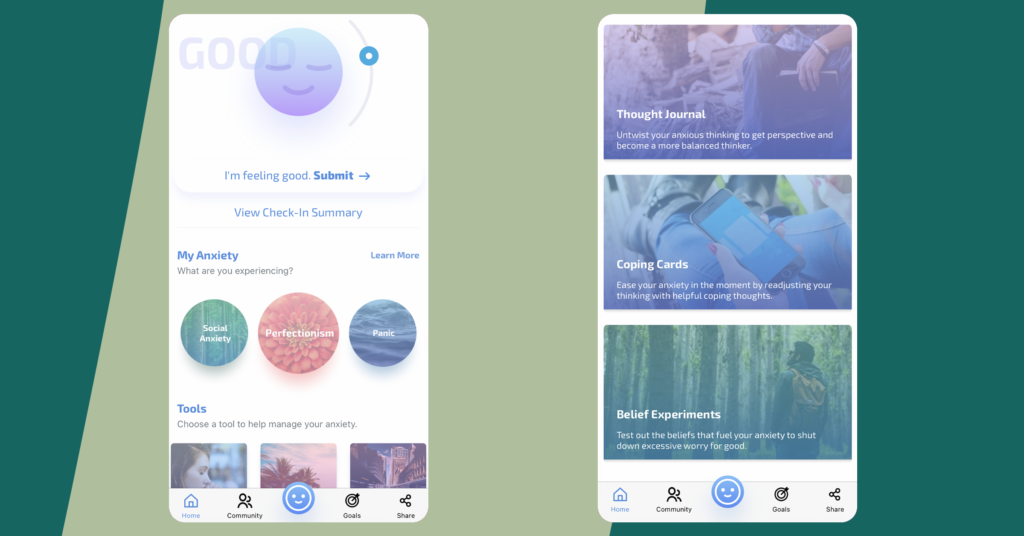
MindShift was developed by Anxiety Canada specifically for worried thinking. The "belief experiments" feature helps you test whether your overthinking predictions actually come true — spoiler: they usually don't.
The app is 100% free — no premium tier, no ads. It's one of the best free options for overthinkers who want structured CBT without cost.
Key Features:
- Thought journals: Log anxious thoughts and reframe them using CBT
- Belief experiments: Test whether your predictions come true
- Coping cards: Quick-reference cards for overthinking moments
- Goal setting: Break overwhelming situations into steps
Pros: Completely free; evidence-based CBT; no subscription.
Cons: Interface is dated; no AI personalization.
Best for: Overthinkers who want structured CBT techniques without cost.
9. Stoic — Best for Stoic Approach
Price: Free | Premium $59.99/year
Platforms: iOS, Android
Approach: Stoic wisdom + journaling
Stoicism has been the overthinker's antidote for 2,000 years. The core insight: focus only on what you can control, accept what you can't. Most overthinking involves rehearsing scenarios beyond our control.
The Stoic app provides daily wisdom from Marcus Aurelius, Seneca, and Epictetus, paired with journaling prompts that apply ancient philosophy to modern worries.
Key Features:
- Daily Stoic wisdom: Quotes and teachings to reframe worries
- Journaling prompts: "What is within my control? What isn't?"
- Morning/evening routines: Structured reflection to bookend your day
- Exercises for acceptance: Practical techniques from Stoic practice
Pros: Timeless wisdom; philosophical depth; free tier available.
Cons: Requires interest in philosophy; no AI responses.
Best for: Overthinkers drawn to philosophical frameworks.
10. Sanvello — Best for Pattern Tracking
Price: Free | Premium $53.99/year
Platforms: iOS, Android
Approach: Mood tracking + CBT
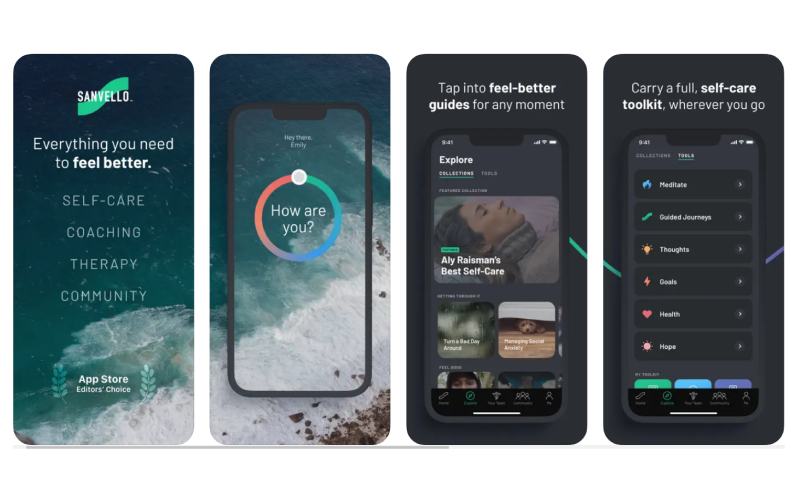
Sometimes understanding your overthinking patterns is the first step to breaking them. Sanvello tracks mood, thoughts, and behaviors over time, revealing correlations you might not notice.
Maybe your overthinking spikes on Sunday evenings. Maybe it correlates with certain people or situations. Maybe it's worse when you're sleep-deprived. Sanvello's data visualization surfaces these patterns.
Key Features:
- Mood and thought tracking: Multiple daily check-ins
- Pattern visualization: Charts showing overthinking over time
- Correlation analysis: Links overthinking to sleep, situations, people
- Guided journeys: Multi-week programs for specific issues
Pros: Best pattern tracking; combines multiple approaches; peer community.
Cons: Can feel overwhelming; requires consistent logging.
Best for: Analytical overthinkers who want to understand their patterns through data.
Quick Comparison: Best Apps for Overthinking
This comparison table ranks all ten overthinking apps by approach, price, platform availability, and which specific type of overthinking each addresses best.
| App | Best For | Price | Approach | Free? |
|---|---|---|---|---|
| Life Note | Processing thoughts deeply | $9.99/mo | AI wisdom journaling | ✓ Yes |
| Wysa | Breaking thought loops | Free | CBT + DBT | ✓ 100% |
| Rootd | Physical symptoms | $69.99/yr | Grounding | ✓ Yes |
| Finch | Gentle daily habits | Free | Gamified | ✓ 100% |
| Headspace | Meditation | $69.99/yr | Guided meditation | Trial |
| Calm | Nighttime | $69.99/yr | Sleep stories | Trial |
| Reflectly | Quick journaling | $59.99/yr | AI journaling | Trial |
| MindShift | CBT techniques | Free | Thought challenging | ✓ 100% |
| Stoic | Philosophical | $59.99/yr | Stoic wisdom | ✓ Yes |
| Sanvello | Pattern tracking | $53.99/yr | Mood tracking | ✓ Yes |
15 Journal Prompts for Overthinking
These fifteen prompts use CBT reframing and externalization techniques to move racing thoughts from your head onto paper where they lose their power.
Journaling is one of the most effective tools for breaking the overthinking loop. These prompts help you externalize racing thoughts and examine them objectively:
For Breaking Thought Loops
- What specific thought is replaying right now? (Write it down exactly)
- Is this thought about something I can control, or something outside my control?
- What would happen if I stopped thinking about this right now?
- Have I solved anything by thinking about this repeatedly?
- What would I tell a friend who was stuck on this same thought?
For Challenging Worry
- What's the worst case scenario? How likely is it, really? (Assign a percentage)
- If the worst case happened, what would I do? (You'd handle it)
- What's the best case scenario? Why am I not considering that?
- Have my worst-case predictions come true in the past?
- What evidence supports this worry? What evidence contradicts it?
For Moving Forward
- What's one action I can take right now instead of thinking?
- What decision am I avoiding by continuing to analyze?
- If I had to decide in the next 5 minutes, what would I choose?
- What's the cost of continuing to overthink this?
- What would my life look like if I trusted myself to handle whatever happens?
For more prompts, see our full guide to journal prompts for overthinking.
5 Techniques to Stop Overthinking Right Now
Five evidence-based techniques — writing it down, naming distortions, grounding, scheduled worry time, and physical action — interrupt thought spirals within minutes.
When you're stuck in a thought spiral, these evidence-based techniques can interrupt the loop:
1. Write It Down (Externalize)
Racing thoughts feel powerful inside your head. On paper, they often seem smaller. Write the exact thought that's looping. Just getting it out of your head can break the cycle.
2. Name the Distortion
Most overthinking involves cognitive distortions. Ask yourself: Is this catastrophizing? Mind reading? All-or-nothing thinking? Naming the pattern creates distance from it.
3. Ground Yourself (5-4-3-2-1)
Name 5 things you can see, 4 you can touch, 3 you can hear, 2 you can smell, 1 you can taste. This pulls attention from thoughts back to your body and surroundings.
4. Schedule Worry Time
Counterintuitive but effective: give yourself 15 minutes of dedicated worry time. Outside that window, tell yourself "I'll think about that during worry time." The postponement often reveals the thought wasn't urgent.
5. Do Something — Anything
Overthinking thrives in stillness. Physical action — walking, cleaning, exercising — redirects mental energy into physical energy and often breaks the loop.
When to Seek Professional Help
Apps are tools, not replacements for professional care.
Consider seeing a therapist if:
- Overthinking significantly interferes with work, relationships, or daily functioning
- You experience depression alongside rumination
- You've tried these tools consistently for 4-6 weeks without improvement
- You have thoughts of self-harm
- Your overthinking is triggered by trauma
Cognitive behavioral therapy (CBT) is particularly effective for chronic overthinking. A therapist can help you identify and change the patterns that apps alone might not reach.
Related Reading
- Journal Prompts for Overthinking
- Best Apps for Anxiety
- 75+ Journaling Prompts for Mental Health
- Shadow Work Prompts
- 8 Best AI Journaling Apps
Frequently Asked Questions
What is the best app to stop overthinking?
Life Note is the best app for processing overthinking because it helps you examine thoughts deeply with AI mentors. For breaking thought loops with CBT, Wysa is excellent and free. For nighttime overthinking, Calm's Sleep Stories are highly effective.
Can apps really help with overthinking?
Yes. Research shows that expressive writing (journaling) reduces rumination, CBT apps effectively challenge cognitive distortions, and mindfulness meditation changes your relationship with thoughts. Apps make these evidence-based techniques accessible.
How do I stop my brain from overthinking at night?
Calm's Sleep Stories are specifically designed for nighttime overthinking — they redirect your mind to gentle narratives. Life Note also helps by letting you "complete" thoughts before bed through journaling. The key is giving thoughts somewhere to go instead of trying to suppress them.
Is there a free app for overthinking?
Wysa, MindShift CBT, and Finch all offer robust free versions with CBT techniques and self-care tools. MindShift is 100% free with no premium tier.
Why can't I stop overthinking?
Overthinking feels productive — your brain believes that analyzing one more time will reveal answers or prevent problems. But research shows rumination actually impairs problem-solving. The solution isn't to suppress thoughts, but to externalize them (write them down), examine them objectively, and redirect attention.
Is overthinking a mental illness?
Overthinking itself isn't a diagnosis, but chronic rumination is a symptom of anxiety disorders and depression. If overthinking significantly interferes with your life, consider seeing a therapist who specializes in cognitive behavioral therapy (CBT).
Related Reading
- Brain Dump Journal — How to use brain dump journaling for mental clarity and stress relief
- Anxiety Journaling Prompts — CBT-informed prompts to break the rumination loop
- Best Brain Training Apps 2026 — Scientifically tested apps for cognitive health
Journal with 1,000+ of History's Greatest Minds
Marcus Aurelius, Maya Angelou, Carl Jung — real wisdom from real thinkers, not internet summaries. A licensed psychotherapist called it "life-changing."
Try Life Note Free