
Shadow Integration: The Complete Guide to Reclaiming Your Whole Self

Shadow integration is Carl Jung's process for becoming whole — meeting the parts of yourself you've rejected, denied, or projected onto others. Most self-help skips this work because it's hard. But the parts you exile run your life from the dark. This is how you bring them home.
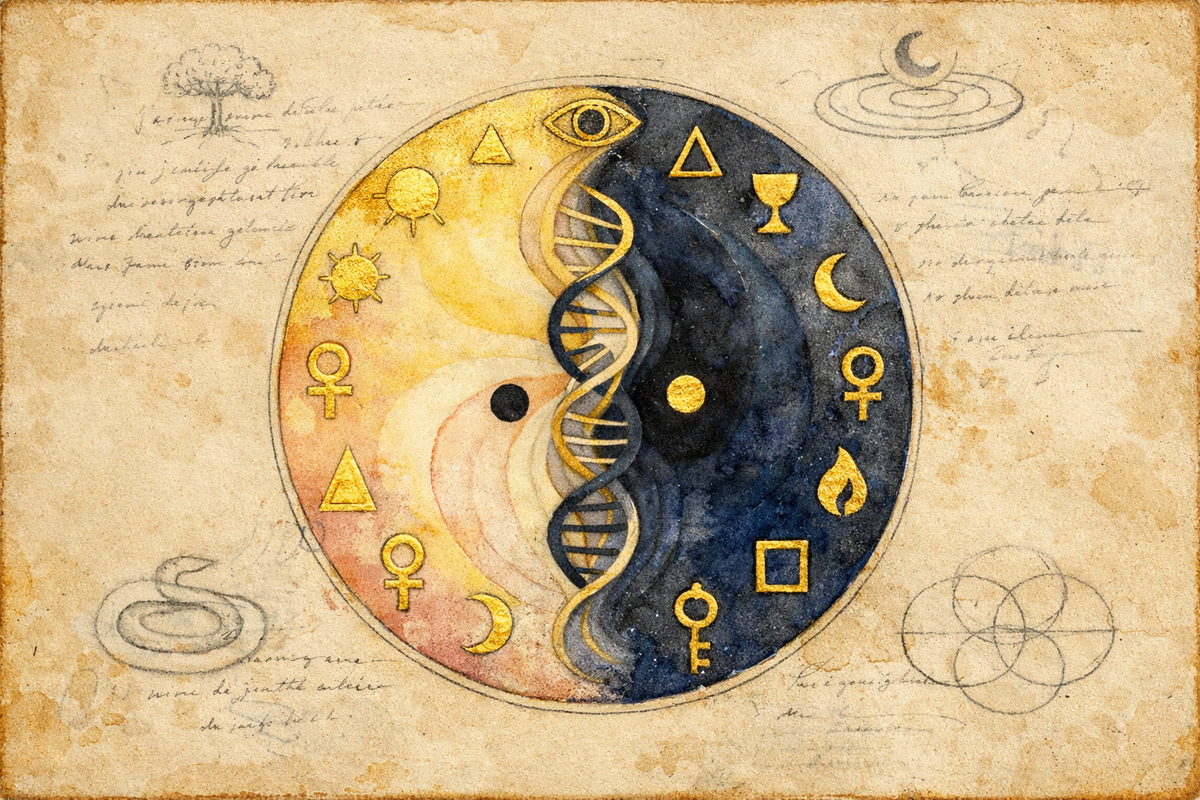
Shadow integration is the process of acknowledging, accepting, and incorporating your unconscious traits—repressed emotions, hidden desires, and denied aspects of yourself—into your conscious personality. Unlike shadow work, which focuses on discovering these hidden parts, integration is about learning to live with them as part of who you are.
📌 TL;DR — Shadow Integration
Shadow integration is the process of accepting and incorporating your hidden, repressed aspects into conscious awareness. The 5 stages: Recognition (seeing your shadow), Acceptance (without judgment), Dialogue (understanding its purpose), Integration (incorporating into your identity), and Transformation (living more authentically). Signs of progress include less reactivity, more self-compassion, and authentic relationships. This isn't about becoming "perfect" — it's about becoming whole.
What Nobody Tells You About Shadow Work
What most people miss about shadow work is that the goal is not eliminating your shadow — it is integrating those rejected parts into conscious awareness and wholeness.
The most important thing about shadow work that few guides mention: integration is not about "fixing" yourself. It's about recognizing that the traits you've repressed—anger, neediness, ambition—aren't flaws to eliminate but energies to redirect. True shadow integration means these parts stop controlling you from the unconscious and start serving you consciously. For a deeper dive, see our structured inner work practice.
Most shadow work advice stops too early.
It tells you to find your shadow. Name your triggers. Acknowledge your darkness. And that's valuable—you can't work with what you can't see. But recognition is just the beginning. The real transformation happens in what comes next: integration. If you're new to this territory, our beginner's guide to shadow work covers the foundations. This guide goes deeper.
This process is about of reclaiming all parts—positive or negative—of the human experience of yourself—your shadow side, dark side, and all you've exiled. Not just seeing them. Not just tolerating them. Actually bringing them back into the whole of who you are, where their energy becomes available for living instead of locked in suppression. Our 100+ shadow work prompts can help you begin this exploration.
Carl Jung spent decades exploring this territory. His conclusion was unambiguous: "One does not become enlightened by imagining figures of light, but by making the darkness conscious." The goal isn't to transcend your shadow. It's to integrate it so thoroughly that it stops running your life from the basement.
This guide is about that deeper work. Not just shadow discovery—shadow homecoming.
The Psychology of the Shadow
Your shadow started forming before age seven — every time a parent, teacher, or peer signaled that part of you was unacceptable.
The psychology of the shadow refers to Carl Jung's theory that every person carries an unconscious repository of repressed traits, desires, and emotions that their conscious mind has rejected. Jung introduced the shadow concept in the 1930s as part of his analytical psychology framework, arguing that the shadow forms during childhood as we learn which aspects of ourselves are socially acceptable and which must be hidden. Research by Gross and John (2003), studying 1,483 participants, found that habitual emotional suppression — the mechanism that creates and maintains the shadow — is associated with lower well-being, poorer social outcomes, and reduced life satisfaction. The shadow is not inherently negative; it contains any quality that was deemed unacceptable by family or culture, including positive traits like ambition, creativity, and assertiveness. Understanding shadow psychology is the foundation for integration work, because you cannot transform what you do not first comprehend. Jung himself wrote that "until you make the unconscious conscious, it will direct your life and you will call it fate." The shadow operates through projection (seeing disowned traits in others), self-sabotage (unconscious patterns that undermine conscious goals), emotional flooding (disproportionate reactions to minor triggers), and repetition compulsion (recreating the same painful dynamics across different relationships). Recognizing these patterns is the first step toward reclaiming the energy locked in suppression.
How Shadows Form
You weren't born with a shadow. You built one.
As a child, you learned which parts of yourself were acceptable and which weren't. Maybe anger got you punished, so you pushed it down. Maybe sadness was met with discomfort, so you learned to perform okayness. Maybe ambition made adults uncomfortable, so you learned to play small.
Each rejection created an exile. The quality didn't disappear—it went underground, into what Jung called the shadow: the repository of everything you decided (or were told) you couldn't be.
This wasn't a one-time event. It's ongoing. Every time you think "I would never..." or "I'm not the kind of person who..." you're actively maintaining the border between self and shadow.
What's Actually in There
Here's what surprises most people: the shadow isn't just your "dark" qualities. It contains anything you've rejected, including:
- Anger — Often exiled by people who were taught to be "nice"
- Sexuality — Repressed in anyone raised with shame around desire
- Ambition — Hidden by those who learned that wanting things is selfish
- Vulnerability — Buried by anyone taught that need is weakness
- Joy — Surprisingly common in people who learned that happiness was unsafe
- Power — Rejected by those who saw power abused and vowed never to become that
- Grief — Suppressed by anyone who never had space to fully mourn
Your shadow is as unique as your biography. It contains whatever you learned was unacceptable to be—regardless of whether that judgment was accurate.
The Cost of Non-Integration
Shadow material doesn't stay quiet. When you exile a part of yourself, it finds other ways to express:
Projection: You see your disowned qualities in others and react strongly to them. The thing you can't stand in someone else is often the thing you can't accept in yourself.
Self-sabotage: Your conscious goals get undermined by unconscious material. You want success but keep creating failure. You want connection but keep pushing people away.
Emotional flooding: Small triggers produce outsized reactions. You're not responding to what's happening now—you're responding to accumulated, unexpressed material from the past.
Repetition compulsion: The same patterns show up across different relationships, jobs, and contexts. You keep casting different actors in the same play.
Energy drain: Suppression takes constant effort. The energy spent keeping things down is energy unavailable for living.
Integration reverses all of this. Not overnight—but progressively, as you do the work.
The Five Stages of Shadow Integration
Most people stall at stage two — acceptance — because they confuse acknowledging a shadow trait with endorsing the harmful behavior it produced.
Shadow integration unfolds through five distinct psychological stages: recognition, acceptance, understanding, integration, and embodiment. This stage model draws on Jung's individuation framework and is supported by modern research in emotion regulation and self-compassion. Neff and Germer (2013) found that self-compassion — a quality essential at every stage of integration — significantly reduces anxiety, depression, and self-criticism. The process begins when a person first recognizes a shadow quality, often through an intense emotional reaction or a relationship conflict that makes a repressed trait undeniable. From there, it progresses through acceptance (acknowledging the trait without shame), understanding (tracing its origins to childhood or cultural conditioning), active integration (finding healthy conscious expression for the previously suppressed energy), and finally embodiment (living from the integrated self in daily life). Each stage has its own challenges: recognition requires overcoming denial, acceptance demands sitting with shame, understanding involves revisiting painful memories, integration asks for behavioral experimentation, and embodiment requires consistent practice over months or years. Most people move through these stages non-linearly, sometimes revisiting earlier stages as deeper layers of shadow material surface. The timeline varies widely — surface-level shadows may integrate in weeks, while trauma-related material can require years of steady work.
Stage 1: Recognition
Before you can integrate something, you have to see it. This often happens through what Jung called the "shock of meeting oneself"—a moment when shadow material becomes undeniable.
Common triggers for recognition:
- A relationship forces your patterns into view
- Feedback from someone you trust points to your blind spots
- A crisis breaks down your usual defenses
- Meditation, therapy, or journaling reveals what you've been avoiding
- You notice yourself reacting intensely to someone who embodies your disowned qualities
Signs you're in this stage: You're starting to see the shadow, but it still feels like "not me." You might oscillate between recognition and denial.
Key question: What quality in others triggers me most? Is there any chance I carry a version of that myself?
Stage 2: Acceptance
Seeing the shadow is easier than accepting it. Acceptance means genuinely acknowledging: "Yes, this is part of me." Not rationalizing. Not performing acceptance for an audience. Actually letting it be true.
This is where most people get stuck. The shadow often carries shame, and shame resists being looked at directly. The move from "I see this" to "I accept this" can take months or years.
Signs you're in this stage: You can name the shadow quality without immediately defending yourself. Shame is still present but you can hold it. You can say "I have this quality" and "I'm still a worthwhile person" in the same breath.
Key question: Can I sit with this truth about myself without rushing to fix it, explain it, or make it mean something about my worth?
Stage 3: Understanding
Once you've accepted the shadow's existence, you can begin to understand it. This is archaeological work: digging into where the shadow came from, what it was protecting, what function it served.
Understanding transforms your relationship with shadow material. Instead of an enemy to fight, it becomes a younger part of you that made sense at the time—even if it no longer serves.
Signs you're in this stage: You can trace the shadow quality back to childhood experiences or messages. You understand why you rejected this part of yourself. Compassion starts to replace judgment.
Key question: When did I first learn that this part of me was unacceptable? What was the context? What was I protecting?
Stage 4: Integration
Integration proper is finding a conscious, healthy expression for the energy that was bound up in the shadow. The anger that was exiled becomes healthy assertiveness. The ambition that was hidden becomes clear direction. The sexuality that was shamed becomes embodied aliveness.
This isn't about acting out your shadow. It's about giving the underlying need a mature form of expression.
Signs you're in this stage: The trigger loses its charge—you can encounter it without automatic reaction. You find new ways to express the underlying energy. What was frozen becomes fluid. You feel more whole, less fragmented.
Key question: How can I express this part of myself in a way that serves my life rather than sabotages it?
Stage 5: Embodiment
The final stage is living from your integrated self—not just understanding it intellectually, but actually behaving differently. This is where the work becomes visible to others, where your relationships change because you've changed.
Signs you're in this stage: New responses feel natural, not forced. Old patterns stop repeating. You can access the full range of your emotional repertoire. People who knew you before notice the shift.
Key question: How is my life different now that this part of me has come home?
shadow work worksheet generator Methods for Integration
The method that works best depends on where your shadow lives — cognitive methods miss body-held trauma, and somatic work alone skips meaning-making.
Practical methods for shadow integration include journaling, active imagination, projection work, parts work (IFS), and body-based somatic approaches. Each method targets a different dimension of the shadow — cognitive, emotional, relational, or somatic, and research supports their effectiveness. Pennebaker's landmark 1997 study demonstrated that writing about suppressed emotions for just 15 minutes per day over four consecutive days improved immune function and reduced physician visits by up to 50% over six months. Active imagination, Jung's original technique, involves consciously engaging with inner figures as if they were autonomous characters, allowing repressed parts of the psyche to speak and be heard. Projection work uses strong emotional reactions to other people as diagnostic data, since what triggers you most in someone else often points to a disowned quality in yourself. Internal Family Systems (IFS), developed by Richard Schwartz, treats shadow parts as "exiles" — younger parts of the psyche carrying pain or shame that the system has pushed away to maintain functioning. Body-based approaches like somatic experiencing address shadow material stored as physical tension, numbness, or chronic pain patterns, which is particularly important for trauma-related material that may be encoded in the nervous system rather than narrative memory. The most effective integration practice combines multiple methods, as different shadow material responds to different approaches. Shadow integration is ultimately one of the most demanding forms of deep inner work — and many of the same tools (books, apps, journaling practices) that support inner work generally apply here.
1. Shadow Journaling
Writing is one of the most accessible ways to work with shadow material. The act of putting words on paper creates distance, making it possible to examine what usually stays hidden.
How to practice:
- When you feel triggered, write about it without censoring
- Ask: "What does this reaction reveal about a part of me I haven't accepted?"
- Write a dialogue between yourself and your shadow quality
- Look for patterns across multiple entries
For structured prompts, see our complete collection of 100+ shadow work prompts.
2. Active Imagination
This is Jung's original technique. It involves engaging with inner figures as if they were autonomous characters, allowing them to speak and respond.
How to practice:
- Find a quiet space. Close your eyes or soft-gaze
- Bring to mind an image associated with your shadow—a figure, a feeling, a memory
- Let the image become vivid. Don't force it; let it emerge
- Ask the figure: "What do you want me to know?"
- Write or speak what it says, without editing
- Respond. Continue the dialogue until something shifts
This can feel strange at first. Trust the process. The unconscious speaks in images and feelings, not logic.
3. Working with Projections
Your strongest reactions to others are often pointing to your own shadow. What you can't stand in someone else is frequently what you've disowned in yourself.
How to practice:
- Think of someone who triggers you
- List their most irritating qualities in detail
- For each quality, ask: "Where do I have even a small version of this?"
- Write about when and how you express that quality—even if it's well-hidden
- Notice what happens to the charge when you take ownership
This isn't about blaming yourself for others' bad behavior. It's about recognizing that the intensity of your reaction often signals something more than the external situation warrants.
4. Parts Work (IFS-Influenced)
Internal Family Systems treats the psyche as a collection of "parts," each with its own perspective, history, and needs. Shadow parts are "exiles"—pushed away because they carry pain or shame.
How to practice:
- Notice a difficult emotion or pattern
- Instead of identifying with it, say "A part of me feels..."
- Turn toward that part with curiosity, not judgment
- Ask: "How old is this part? When did it first show up?"
- Ask: "What is this part trying to protect me from?"
- Ask: "What does this part need from me?"
- Offer what it needs—usually some form of acknowledgment, compassion, or permission
5. Body-Based Work
Shadow material often lives in the body as tension, numbness, or chronic patterns. Approaches like somatic experiencing, breathwork, or mindful movement can release what words can't reach.
How to practice:
- When shadow material arises, pause and scan your body
- Locate where you feel the emotion physically
- Breathe into that area without trying to change it
- Ask: "What is this sensation trying to tell me?"
- Let the body complete any movements that want to happen
This is particularly important for trauma-related shadow material, which may be stored in the nervous system rather than in narrative memory.
Signs Your Shadow Is Integrating
The clearest sign is noticing a trigger that used to hijack you for hours now passes in minutes — without suppression or performance.
Signs that shadow integration is progressing include reduced emotional reactivity, fewer projections onto others, increased self-compassion, more available energy, spontaneous behavioral change, shifts in dream content, improved relationships, and access to previously suppressed qualities. These markers are consistent with research on emotional regulation and self-awareness. Lieberman et al. (2007) used fMRI imaging to demonstrate that the simple act of labeling negative emotions — a core shadow integration skill — reduces amygdala reactivity, literally calming the brain's threat response. Hayes et al. (2006) found that acceptance of difficult emotions, rather than suppression, leads to measurably better psychological outcomes across multiple dimensions of well-being. Integration is gradual and non-linear; there is no single moment of completion. Instead, you notice a progressive shift: situations that once triggered intense emotional reactions become manageable, the qualities you previously condemned in others stop provoking outrage, and you find yourself responding to old patterns with new choices. The most reliable indicator is a felt sense of increased wholeness — not perfection, but a genuine experience of having more of yourself available for living.
- Reduced reactivity: Things that used to trigger you now feel manageable. You can pause between stimulus and response.
- Fewer projections: You stop seeing your disowned qualities in everyone else. Other people's behavior becomes about them, not about you.
- Increased self-compassion: You can acknowledge flaws without spiraling into shame. Self-knowledge becomes less painful.
- More energy: The constant effort of suppression decreases. You feel less drained by internal conflict.
- Behavioral change: You respond differently in situations that used to trap you. New choices become possible.
- Dream shifts: Shadow figures in dreams become less threatening, sometimes even helpful or friendly.
- Relationship improvements: You attract different people. Old patterns stop repeating. Intimacy becomes more possible.
- Access to new qualities: Aspects of yourself that were locked away become available. You surprise yourself.
Common Obstacles and How to Navigate Them
The biggest trap is not resistance — it is premature acceptance, where you intellectually "own" a shadow trait without ever feeling its emotional weight.
The most common obstacles to shadow integration are spiritual bypassing, premature forgiveness, intellectualization, over-identification with the shadow, and rushing the process. Each represents a way the psyche resists genuine encounter with repressed material. Jung warned that the ego has sophisticated defense mechanisms designed to avoid the discomfort of meeting the shadow directly. Baumeister et al. (1998), in a comprehensive meta-analysis, found that unexamined ego threat — essentially, an unintegrated shadow — is the primary predictor of aggression and destructive behavior, underscoring the real costs of failed integration. Spiritual bypassing uses transcendent language to avoid feeling ("I've moved beyond anger"), premature forgiveness rushes past grief to arrive at a false peace, intellectualization replaces felt experience with conceptual understanding, and over-identification collapses into the shadow rather than relating to it consciously. Recognizing which pattern you default to is itself a form of shadow work, because each defense style reveals something about what your psyche most wants to avoid.
Spiritual Bypassing
Using spiritual concepts to avoid shadow work. "I've transcended anger." "I've let go of my past." "I'm all love and light."
Genuine integration requires going through, not around. If you haven't felt the anger, you haven't transcended it—you've just pushed it deeper.
Remedy: Notice when spiritual language is being used to avoid feeling. Ask: "What's underneath this transcendence?"
Premature Forgiveness
Rushing to forgive before fully acknowledging the wound. Forgiveness that skips over anger isn't integration—it's suppression with a holy veneer.
Remedy: Honor the natural sequence. Acknowledge the harm. Feel the anger. Grieve what was lost. Only then can genuine forgiveness become possible—if it does.
Intellectualizing
Understanding the shadow conceptually without actually feeling it. You can explain your patterns perfectly and still be completely controlled by them.
Remedy: When you notice yourself explaining, pause. Drop into the body. Ask: "Where is this in my felt experience?"
Over-Identification
Going from "I never get angry" to "I AM my anger." Integration isn't about becoming your shadow—it's about having it without it having you.
Remedy: Practice both owning the quality and maintaining perspective. "I have anger" is different from "I am anger."
Rushing the Process
Expecting integration to happen faster than it can. Shadow material accumulated over decades doesn't transform in a weekend workshop.
Remedy: Trust the timeline of your own psyche. Do the work consistently, but hold outcomes loosely.
FAQ
How long does shadow integration take?
It depends on the material. Surface-level shadows might integrate in weeks of focused work. Deep, early-life shadows—especially trauma-related ones—can take months or years. Integration isn't a destination you arrive at; it's a capacity you develop. And new shadows surface throughout life, as each transition reveals new material.
Can I do this work without a therapist?
Yes, for many aspects. Journaling, self-reflection, and reading can take you far. However, if you're working with trauma, finding yourself destabilized, or encountering material that feels overwhelming, a skilled therapist—especially one trained in depth psychology, IFS, or somatic approaches—provides crucial support. Shadow work should open you up, not break you down.
What's the difference between shadow work and shadow integration?
Shadow work is the broader category—any practice of gaining conscious awareness and conscious personality by exploring your personal unconscious patterns. This stage is specifically the process of bringing exiled parts from the personal unconscious back into conscious wholeness. Think of shadow work as the journey and integration as what happens when you actually bring something home. (For a mythological lens on this process, try our hero's journey journal prompts.)
How do I know if I'm avoiding or actually done?
If you've genuinely integrated something, you can think about it without charge. You can talk about it openly. You can encounter situations that used to trigger you without automatic reaction. If you're avoiding, there's usually still heat, defensiveness, or the quick change of subject. The body knows the difference even when the mind pretends.
Is there a shadow that can't be integrated?
Some shadow material is harder to work with than others—particularly material tied to severe trauma. But in principle, nothing is off-limits. The question is always: what support do you need to work with this safely? Some material requires professional guidance. Some requires community. Some requires time and patience. But integration is possible.
The Promise of Integration
Jung's concept of individuation — becoming a complete, undivided self — is the ultimate promise of shadow integration: wholeness, not perfection.
Jung believed that the goal of psychological development was "individuation"—becoming a complete, undivided self. Not perfect. Complete. A self that includes all of its parts, light and dark, in conscious relationship.
This isn't comfortable work. It asks you to face what you've spent your life avoiding. To own what you'd rather project. To feel what you'd rather suppress.
But the reward is corresponding: a life lived from your whole self. Access to energy you didn't know you had. Relationships where you can actually show up. Freedom from the patterns that have been running you.
Your shadow isn't your enemy. It's your lost self, waiting at the gate. The work is learning to let it in.
Start the Work
The most effective way to begin shadow integration is to choose one avoided quality and engage it directly through journaling, dialogue, or somatic awareness.
Pick one shadow quality you're aware of—something you've been avoiding or denying. Use one of the methods above to engage with it, even briefly. Notice what happens.
That's the practice. Not dramatic transformation. Just small, repeated contact with what's been in the dark. Over time, the darkness becomes less frightening—not because it changes, but because you learn you can meet it.
If you want AI-supported reflection for your shadow work, Life Note can help. It tracks your patterns across entries, reflects back what you might miss, and provides a consistent space for the kind of deep work that integration requires.
But the tool matters less than the commitment. Commit to meeting yourself—all of yourself. The rest follows.
Several apps can support your integration practice — explore the best shadow work apps we've tested.
Related Resources
- 100+ Shadow Work Prompts for Deep Self-Discovery
- Advanced Shadow Work Techniques
- 50 Shadow Work Prompts Backed by Research
- Shadow Work for Beginners
- Best Inner Work Books
Related: Jung's Original Framework
Research on Shadow Work and Integration
| Study | Finding |
|---|---|
| Jung (1951) | Shadow integration is essential for individuation—becoming whole requires acknowledging rejected parts |
| Pennebaker (1997) | Writing about difficult emotions improves immune function and reduces doctor visits |
| Neff & Germer (2013) | Self-compassion (key to shadow work) reduces anxiety, depression, and self-criticism |
| Hayes et al. (2006) | Acceptance of difficult emotions (vs. suppression) leads to better psychological outcomes |
Key insight: Modern research validates Jung's theory—integrating rather than suppressing difficult emotions improves mental health, relationships, and self-understanding.
This concept comes from Carl Jung's analytical psychology and the individuation process. Explore his techniques and journal prompts in our Carl Jung Shadow Work Guide.
Journal with 1,000+ of History's Greatest Minds
Marcus Aurelius, Maya Angelou, Carl Jung — real wisdom from real thinkers, not internet summaries. A licensed psychotherapist called it "life-changing."
Try Life Note Free