
7 Best Reflectly Alternatives in 2026 (Beyond Mood Tracking)

Outgrown Reflectly's guided check-ins? Compare 7 alternatives with real AI, free-form writing, and deeper reflection tools. Honest pros, cons, pricing.

📌 TL;DR — Reflectly Alternatives
Reflectly is a beautifully designed mood-tracking journal with 10M+ downloads and a structured daily check-in. But its AI is pre-LLM era, there's no free-form writing mode, and core analytics are paywalled. If you've hit the depth ceiling, here are the best alternatives — from conversational AI apps to traditional journals.
1. Rosebud alternatives — Best for Conversational AI Journaling

Rosebud — real-time conversational AI with long-term memory
Rosebud is the most natural upgrade from Reflectly for users who want AI that actually engages with what they write. Where Reflectly generates prompts, Rosebud holds a conversation — asking follow-up questions, identifying patterns across weeks of entries, and building a long-term memory of your reflections.
The upgrade from Reflectly to Rosebud is like going from a questionnaire to a therapy session. Rosebud's AI doesn't just ask "how do you feel?" — it remembers what you said three weeks ago and connects it to what you're writing now. For users who've hit Reflectly's ceiling, this is transformative.
Strengths:
- Real-time conversational AI that responds to your entries with follow-up questions
- Long-term memory connects past entries to current themes
- Pattern recognition across weeks and months — surfaces insights you'd miss on your own
- Therapist-designed workbooks (ACT, nervous system, relationships)
- Voice journaling in 20 languages
Limitations:
- Daily usage cap can interrupt deep sessions at the worst moment
- $12.99/month — more expensive than Reflectly, and the best features require premium
- Terms allow anonymized data for AI training — no opt-out
- AI occasionally forgets previously shared context and asks repetitive questions
Pricing: Free plan. Bloom: $12.99/month or $107.99/year.
2. Life Note — Best for Framework-Based Reflection
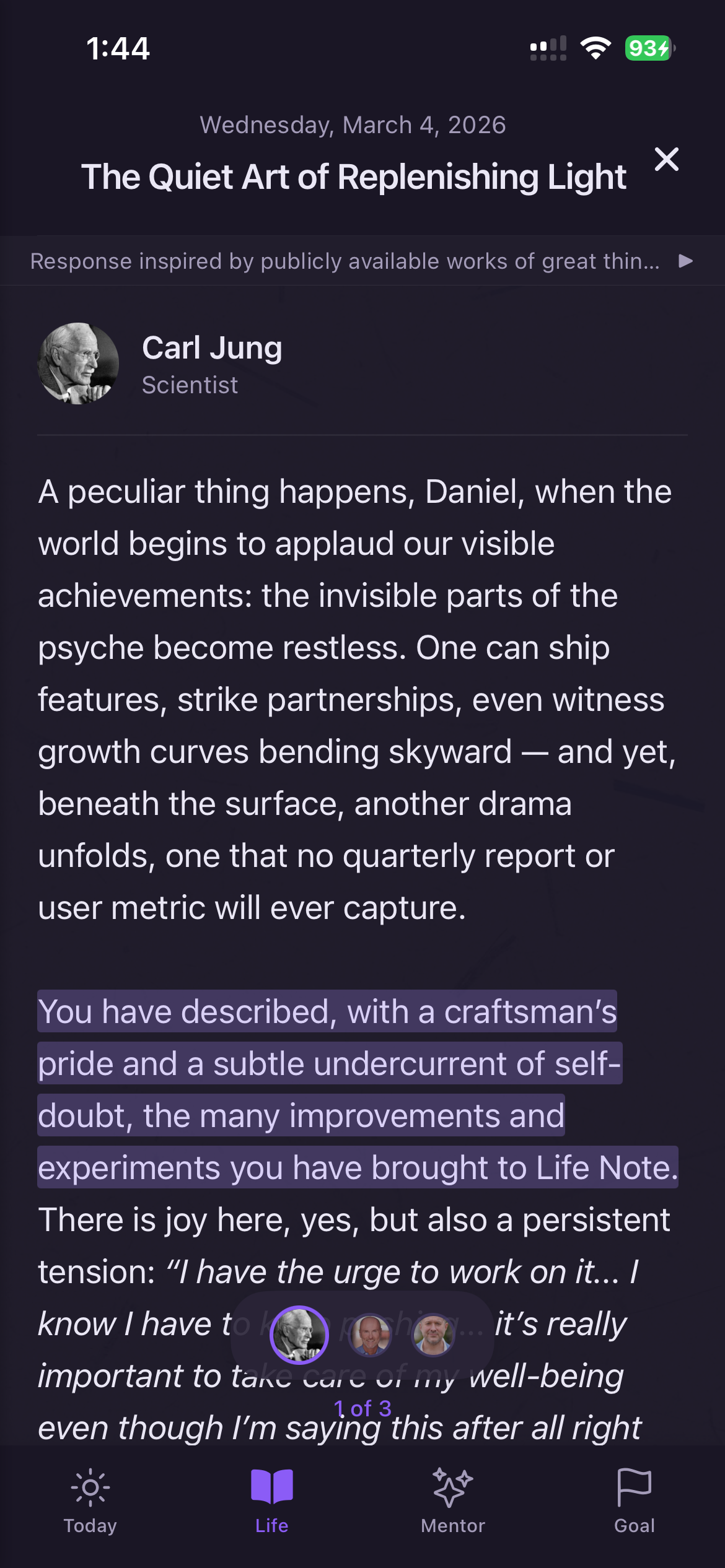
Life Note approaches journaling through the lens of 1,000+ AI mentors — thinkers like Carl Jung, Marcus Aurelius, and Virginia Woolf who guide your reflection through specific philosophical and psychological frameworks. If Reflectly tracks what you feel, Life Note helps you understand why you feel it.
The contrast with Reflectly is fundamental: Reflectly asks structured questions and logs your answers. Life Note's mentors actively engage with your writing through a specific analytical lens. A session with the Stoic mentor feels different from one with the Jungian mentor — each surfaces different aspects of the same experience.
Strengths:
- 1,000+ AI mentors with distinct frameworks (Jungian analysis, Stoicism, CBT)
- Depth of reflection that goes far beyond mood logging
- iOS, Android, and web — with desktop access Reflectly lacks
- 350+ guided journaling articles for context and learning
- Focus on self-understanding rather than habit tracking
Limitations:
- No structured mood check-in format like Reflectly's — you need to choose a mentor and start writing
- Mentor-based approach has a learning curve for users accustomed to guided prompts
- Smaller community than Reflectly's 10M+ user base
- $99.99/year is higher than Reflectly's pricing
Pricing: Free plan available. Premium: $99.99/year.
3. Daylio — Best for Mood Tracking Without Writing
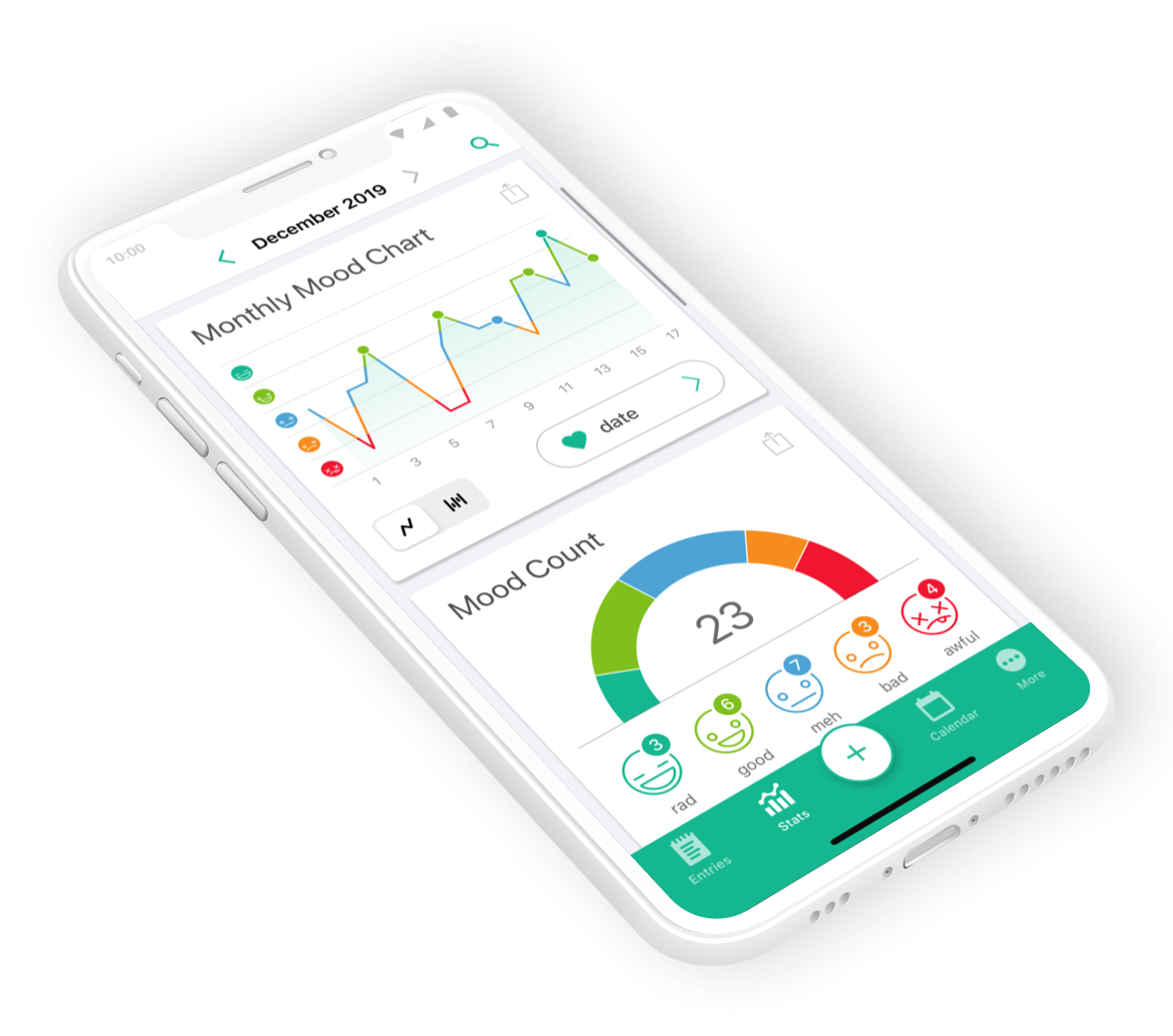
Daylio — log your mood in 30 seconds with taps, no text required
Daylio is the app for people who love Reflectly's mood tracking but don't want to write at all. You log your mood and activities with taps — no text required. The app generates charts, correlations, and streak data automatically.
If Reflectly is the gateway drug to journaling, Daylio is the alternative for people who tried the gateway and decided they prefer tracking to writing. It does mood logging better than Reflectly while removing the parts some users find tedious.
Strengths:
- Fastest mood logging available — tap mood + activities, done in 30 seconds
- Rich analytics (mood charts, correlations, weekly/monthly/yearly views) — no paywall on core insights
- No writing required — purely visual and quantitative
- Customizable activities and moods with your own categories
- Affordable: $35.99/year or occasional lifetime deals on sale
Limitations:
- No journaling depth — this is tracking, not reflection. You'll know your mood patterns but not why they exist.
- No AI features — no prompts, no analysis, no conversation
- Optional text notes are minimal and have no search
- Mobile only (iOS and Android)
Pricing: Free plan. Premium: $35.99/year.
4. Day One — Best for Multimedia Life Archives

Day One — rich multimedia journaling with automatic metadata
Day One is the most established journaling app, optimized for long-term life documentation. Automatic location and weather metadata, multiple journals, photos, videos, and even physical book printing. It's the opposite of Reflectly's structured simplicity — a full-featured archival tool for people who want to preserve memories, not track moods.
Where Reflectly asks "how do you feel?", Day One preserves where you were, what the weather was like, how many steps you took, and what photos you captured — automatically. It's a life logger, not a self-improvement tool.
Strengths:
- 10+ years of development — the most mature and stable journaling app available
- Physical book printing from your journal entries — unique in the category
- Automatic weather, location, and health metadata on every entry
- End-to-end encryption (optional per journal)
- Multiple journals, shared journals, and map view for geographic browsing
Limitations:
- $49.99/year with no monthly option
- AI features are basic (Labs prompts, not conversational or therapeutic)
- Android experience significantly lags behind iOS
- No mood tracking or emotional pattern analysis whatsoever
Pricing: Free plan. Premium: $49.99/year.
5. Mindsera — Best for Analytical Thinkers

Mindsera — cognitive analysis and mental model frameworks
Mindsera uses AI to analyze your journal entries through cognitive frameworks — mental models, thinking patterns, and decision-making quality. It's journaling for people who think in systems and want their journal to help them think better, not just feel better.
While Reflectly tracks emotions at a surface level, Mindsera digs into cognitive patterns — identifying biases, evaluating decision quality, and applying mental models from psychology and business strategy. It's less warm than Reflectly but substantially more analytical.
Strengths:
- Cognitive analysis identifies thinking patterns and biases in your writing
- Mental model library with frameworks you can apply to any entry
- AI-generated art based on your writing — a creative touch
- Academic precision in emotional and cognitive analysis
- Web-based — works on any device including desktop
Limitations:
- Analytical tone may feel cold or clinical for emotional processing
- Less conversational than Rosebud — more like getting a cognitive assessment than having a dialogue
- Smaller user base and less polish than larger competitors
- Mobile experience is less refined than the web version
Pricing: Free plan. Pro: $9.99/month or $69.99/year.
6. Reflection — Best for Privacy-Conscious AI Journaling

Reflection — conversational AI with end-to-end encryption and no data training
Reflection offers conversational AI journaling with a strong privacy-first posture. Entries are end-to-end encrypted and the company explicitly commits to never using your content for AI model training — a direct contrast to Rosebud's data practices and a significant upgrade from Reflectly's standard cloud storage.
For Reflectly users who want deeper AI but are uncomfortable with how AI companies use personal data, Reflection is the natural choice.
Strengths:
- End-to-end encryption for all journal entries
- Explicit no-training policy — entries never used to train AI models
- Conversational AI with contextual follow-up questions
- Clean, minimalist interface with low friction
- iOS, Android, and web — broader platform coverage than Reflectly
Limitations:
- AI depth may not match Rosebud's long-term pattern recognition
- Smaller feature set — no therapist-designed workbooks or guided programs
- Newer app with less proven track record
- Content ecosystem and community still developing
Pricing: Free plan. Premium: $9.99/month or $79.99/year.
7. Notion for journaling — Best for Building Your Own System
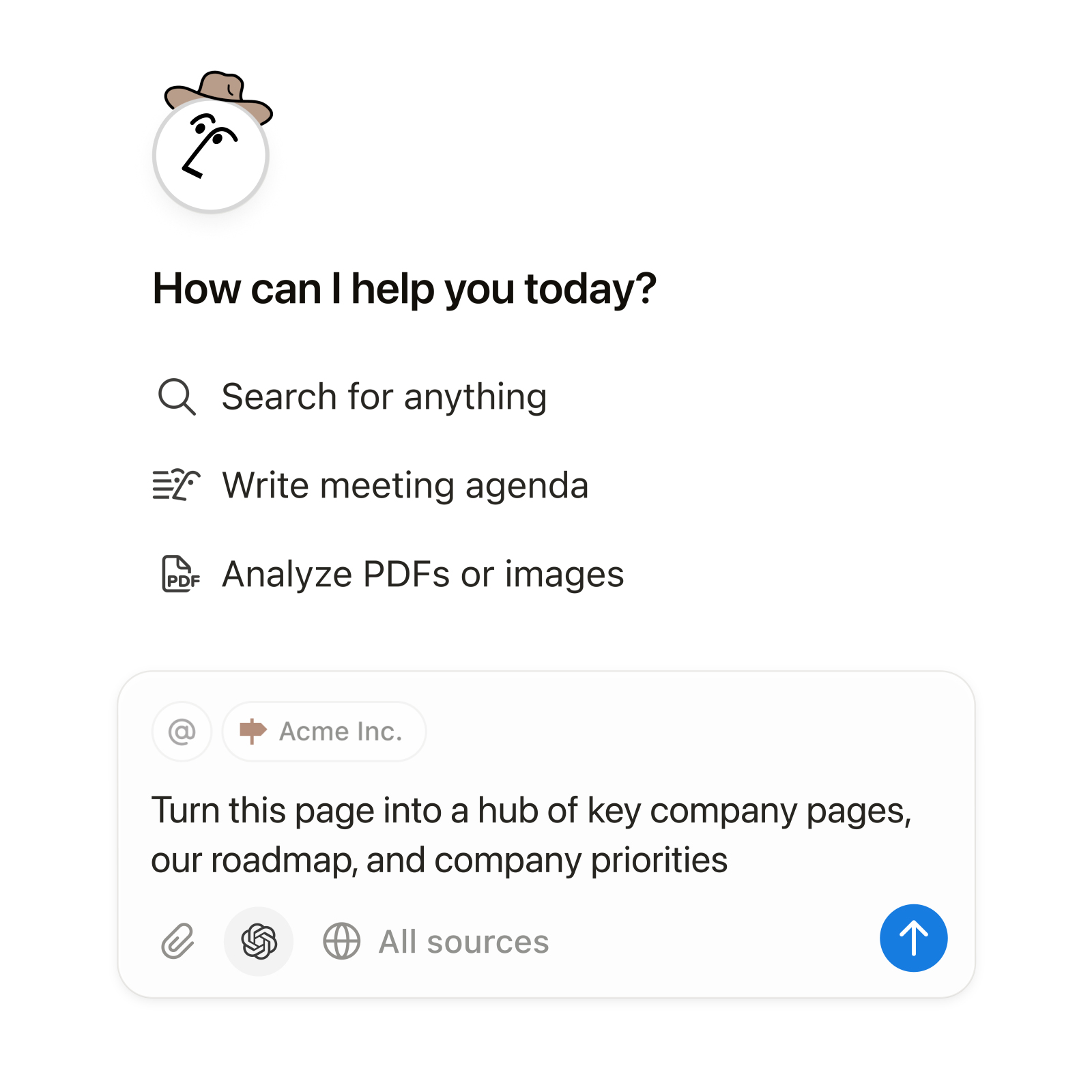
Notion — build your own journaling system with databases, templates, and AI
Notion appeals to Reflectly users who want to design their own journaling workflow. With databases, templates, and AI, you can build a mood tracker, gratitude log, and free-form journal in one system. It's the ultimate tool for people who find Reflectly's structure limiting and want complete control.
The tradeoff is effort. Reflectly works out of the box in 30 seconds. Notion requires hours of setup to build a comparable system — but once built, it's infinitely more flexible and powerful.
Strengths:
- Total customization — build any journaling database, template, or view you want
- Notion AI for summarization, analysis, and prompt generation
- Available on every platform including desktop
- Free for personal use
- Combines journaling with task and life management in one workspace
Limitations:
- Requires significant setup time — not a journaling app out of the box
- Not purpose-built for journaling or mood tracking — you're building from scratch
- No end-to-end encryption — Notion can access your content
- AI is general-purpose, not therapeutic or reflective
Pricing: Free for personal use. Plus: $10/month.
Side-by-Side Comparison
| App | AI Type | Mood Tracking | Free-Form Writing | Price/Year |
|---|---|---|---|---|
| Rosebud | Conversational LLM | Via conversation | Chat-based | $107.99 |
| Life Note | Mentor-guided LLM | Through reflection | Yes | $99.99 |
| Daylio | None | Core feature | Minimal notes | $35.99 |
| Day One | Basic (Labs) | No | Yes | $49.99 |
| Mindsera | Analytical LLM | Emotion analysis | Yes | $69.99 |
| Reflection | Conversational LLM | Through AI | Yes | $79.99 |
| Notion | General-purpose | Build your own | Yes | Free/$120 |
What Research Says About Digital Journaling
The journaling apps in this comparison use different approaches — guided prompts, conversational AI, mood tracking, and free-form writing. Research supports all of these methods, with important nuances:
| Study | Finding | Implication | Limitation |
|---|---|---|---|
| Pennebaker & Beall (1986) | Expressive writing reduced physician visits by 43% over 6 months | Free-form emotional writing has measurable health benefits | Lab setting; participants wrote about trauma specifically |
| Smyth et al. (2018), JAMA | Online expressive writing reduced PTSD symptoms in 1,497 participants | Digital journaling can be as effective as pen-and-paper | Self-selected population; 6-week follow-up only |
| Ullrich & Lutgendorf (2002) | Cognitive processing (not venting) drove health improvements in journaling | AI prompts that encourage analysis outperform simple mood logging | Small sample (122 students); short intervention period |
| Baikie & Wilhelm (2005), Advances in Psychiatric Treatment | Meta-review: expressive writing improved immune function, mood, and well-being across 200+ studies | Consistent evidence that regular journaling benefits mental health | Effect sizes vary; not all populations benefit equally |
| Krpan et al. (2013), British Journal of Health Psychology | Expressive writing reduced depressive symptoms and rumination in clinically depressed adults | Guided reflection may help with depression when paired with professional treatment | 40 participants; 3-day writing protocol only |
Key takeaway: The research consistently shows that how you journal matters more than where you journal. Cognitive processing — making meaning from experiences, not just describing them — produces the strongest outcomes. Apps with AI prompts that encourage deeper reflection may have an advantage over simple mood trackers, though direct comparative studies between journaling apps are still limited.
What to Look for in a Reflectly Alternative
The right alternative depends on why you're leaving Reflectly. Here's what to prioritize:
- If you want deeper AI: Look for apps with LLM-based conversation (Rosebud, Life Note, Reflection) rather than just prompt personalization. The difference between pre-LLM and post-LLM journaling AI is night and day.
- If you want mood tracking that works: Daylio does mood-activity correlation better than Reflectly and costs less. But if you want the why behind your moods, you need an AI app.
- If you want to write freely: Day One, Notion, and Life Note all support blank-page journaling. Reflectly's structure is a feature for beginners but a cage for advanced journalers.
- If you want desktop access: Reflectly is mobile-only. Day One, Notion, Mindsera, Reflection, and Life Note all work on desktop.
- If you care about privacy: Reflection's E2E encryption and no-training policy is the strongest guarantee. Day One offers per-journal encryption. Notion and Reflectly store unencrypted data on their servers.
How to Choose the Right Reflectly Alternative
- Want deeper AI? Rosebud (conversation-based) or Life Note (mentor-guided) both offer genuine AI engagement that goes beyond Reflectly's prompt personalization.
- Want mood tracking without writing? Daylio is the purest mood tracker — tap and go, no text required, better analytics than Reflectly.
- Want a life archive? Day One's multimedia journaling with photos, metadata, and book printing serves a fundamentally different purpose than mood tracking.
- Want privacy-first AI? Reflection offers conversational AI with end-to-end encryption and a commitment to never train on your data.
- Want total control? Notion lets you build exactly the system Reflectly won't let you customize — mood tracker, journal, and all.
What Reflectly Still Does Best
Reflectly's core strength is its accessibility. The structured 3-part check-in genuinely reduces the barrier to daily journaling. If you're someone who would never open a blank page, Reflectly's guided format gets you writing in under a minute. It's also one of the most visually polished journaling apps available — the design quality, animations, and overall feel are consistently praised even by critics of its depth.
For many people, Reflectly is the gateway drug to journaling. The alternatives listed here are for those who've graduated from the gateway and want something more — more depth, more AI, more flexibility, or more control.
Limitations of This Comparison
- Bias disclosure: This article is published on Life Note's blog. Life Note is one of the alternatives listed. We've applied identical evaluation criteria to every app.
- Pricing platform variance: Reflectly charges $59.99/year on iOS but $19.99/year on Android — an unusual platform discrepancy. Other apps listed here maintain consistent pricing across platforms.
- Self-reported metrics: User counts (Reflectly's 10M+, Rosebud's 100K+) are company-reported and may not reflect current active users.
- No app replaces therapy: Journaling apps — even those with AI — are reflective tools, not mental health treatments. If you're in crisis, contact a professional or call 988 (Suicide & Crisis Lifeline).
- AI evolves fast: Capability assessments reflect March 2026. Every app on this list will have different features within months.
Frequently Asked Questions
Can I transfer my Reflectly data to another app?
Reflectly offers PDF export for premium users. However, PDFs are not importable into most other journaling apps, so migration typically means starting fresh. This is a common limitation across guided journaling apps that use proprietary data formats.
Is Reflectly worth paying for?
Multiple independent reviewers (ChooseTherapy, BestieAI, TechRadar) note that the premium experience is not dramatically different from free. The main premium benefit is mood analytics and trend views. If trend data matters to you, it's worth the price. If you just want daily prompts, the free version covers that.
Which Reflectly alternative has real AI?
Rosebud, Life Note, Mindsera, and Reflection all use large language models (LLMs) for genuine AI interaction. Rosebud and Life Note offer the deepest engagement — Rosebud through conversation, Life Note through mentor-guided frameworks. Reflectly's AI is pattern matching from 2017, not a modern LLM.
What's the best free alternative to Reflectly?
Daylio (free tier) for mood tracking without writing. Notion (free for personal use) for customizable journaling with AI. Apple Journal (completely free) for simple iOS journaling. Rosebud, Life Note, and Reflection all have free tiers with limited AI usage.
Last updated: March 2026. Have a correction or suggestion? Contact us.
For a broader comparison of all AI journaling apps, see our comprehensive AI journaling app comparison.
Journal with 1,000+ of History's Greatest Minds
Marcus Aurelius, Maya Angelou, Carl Jung — real wisdom from real thinkers, not internet summaries. A licensed psychotherapist called it "life-changing."
Try Life Note Free