Morning Pages: The Complete Guide to Julia Cameron's Life-Changing Practice (2026)

Morning Pages are 3 handwritten pages of stream-of-consciousness writing done every morning. Learn Julia Cameron's method, the science behind it, and modern alternatives.
📌 TL;DR — Morning Pages
Morning Pages are 3 handwritten pages of stream-of-consciousness writing done first thing in the morning, created by Julia Cameron in The Artist's Way (1992). Research on expressive writing shows this practice reduces stress, improves immune function, and unlocks creativity. The practice takes 30-45 minutes daily and has helped millions overcome creative blocks. Life Note offers an AI-enhanced alternative that captures the same benefits for those who prefer digital journaling. For a more minimal alternative, try one-line-a-day journaling.
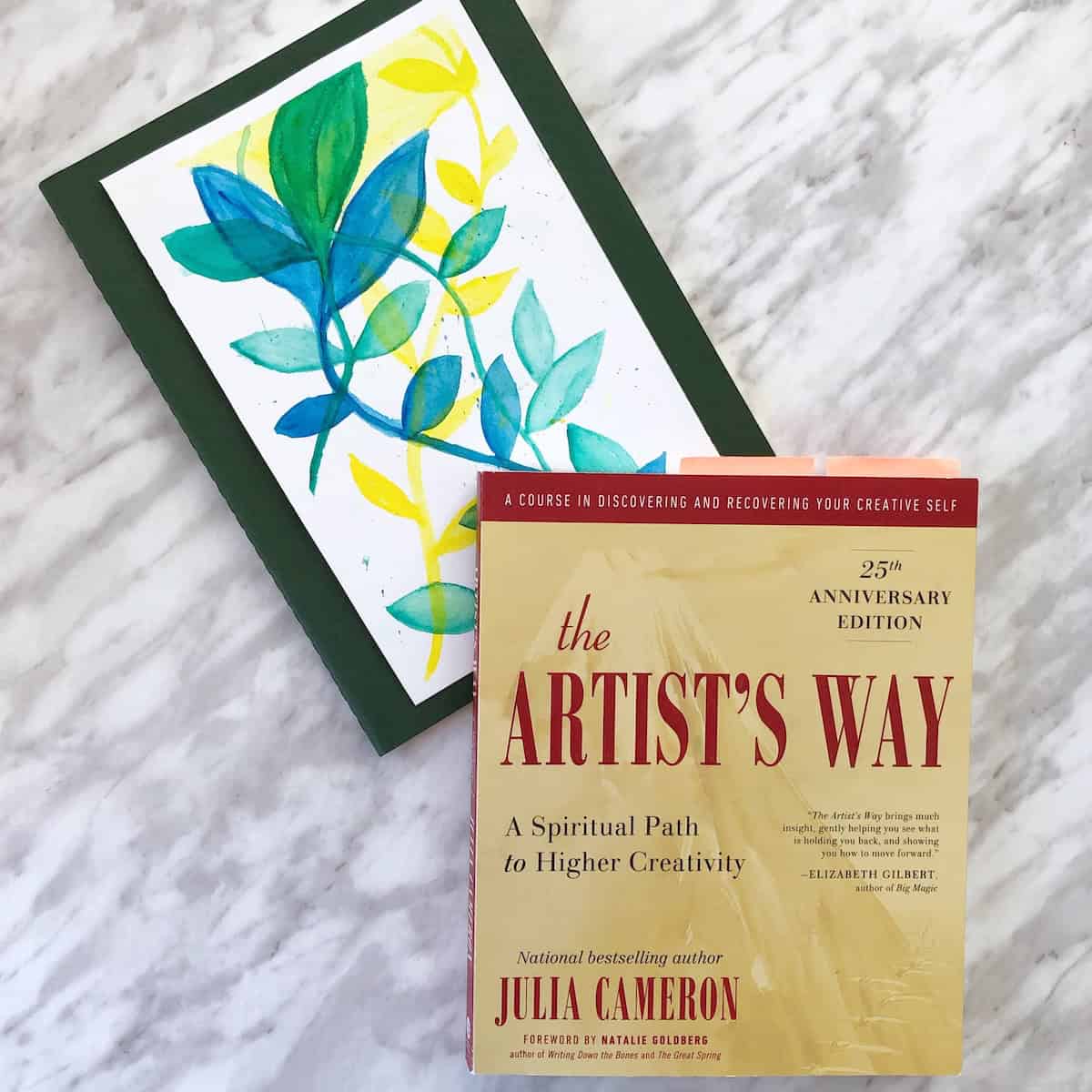
In 1992, Julia Cameron published The Artist's Way—a book that would go on to sell over 5 million copies and be translated into 40+ languages. At its heart was a deceptively simple practice: write three pages by hand, first thing every morning, about anything and everything on your mind.
She called it Morning Pages.
Three decades later, this practice has helped millions of people—not just artists, but lawyers, executives, parents, and anyone seeking clarity—discover their creativity and quiet their inner critic. The practice is so powerful that it directly inspired the creation of Life Note, an AI journaling app built on the same principles of honest self-reflection.
In this guide, you'll learn exactly what morning pages are, the science behind why they work, how to do them correctly, and modern alternatives for those who prefer digital tools.
What Are Morning Pages?
Morning Pages are three pages of longhand, stream-of-consciousness writing done first thing in the morning. That's it. No fancy technique, no special prompts, no rules about what to write—just you, a pen, and paper, capturing whatever crosses your mind before your ego wakes up.
Julia Cameron describes them in The Artist's Way:
"Morning Pages are three pages of longhand, stream of consciousness writing, done first thing in the morning. There is no wrong way to do Morning Pages—they are not high art. They are not even 'writing.' They are about anything and everything that crosses your mind—and they are for your eyes only."
The key elements are:
- Three pages exactly — Not two, not four. Three pages (approximately 750 words) is the sweet spot Cameron discovered through years of teaching.
- Handwritten — Cameron insists on longhand because "velocity is the enemy." The slower pace of handwriting connects you to your emotional life in a way typing cannot.
- First thing in the morning — Before coffee, before email, before the day's demands flood your mind. You want to catch yourself before your defenses are up.
- Stream of consciousness — No planning, no editing, no rereading. If you can't think of anything to write, write "I can't think of anything to write" until something emerges.
- Private — These pages are for your eyes only. Never share them. This privacy allows radical honesty.
Why "Morning"?
Cameron explains the timing isn't arbitrary:
"We are aiming to catch ourselves before our ego is awake, before its defenses are in place. We want to be vulnerable... Writing first thing in the morning, we lay down the track for the day that looms ahead of us. Caught off guard, we are apt to be honest."
In the early morning, your inner critic—what Cameron calls the "Censor"—is still half-asleep. This allows your authentic voice to emerge without the usual self-editing and judgment.
The Science Behind Morning Pages
While Morning Pages as Cameron designed them haven't been directly studied in clinical trials, the underlying practice—expressive writing—has been researched extensively since the 1980s. The findings are remarkable.
| Study | Key Finding | Source |
|---|---|---|
| Pennebaker & Beall (1986) | Students writing about trauma showed improved physical health 4 months later | Journal of Abnormal Psychology |
| Smyth et al. (1999) | Asthma and arthritis patients showed clinical improvement after expressive writing | JAMA |
| Pennebaker Meta-Analysis (2018) | Effect size d=0.16 across 100+ studies showing health benefits | Psychological Science |
| Klein & Boals (2001) | Writing about stress reduces working memory load, freeing cognitive resources | Memory & Cognition |
| Baikie & Wilhelm (2005) | 15-20 min/day of writing reduces stress and improves immune function | Advances in Psychiatric Treatment |
| Lepore & Smyth (2002) | Expressive writing helps process trauma and emotional experiences | The Writing Cure |
How It Works: The Cognitive Load Theory
Dr. James Pennebaker, the pioneer of expressive writing research at the University of Texas, discovered that suppressing thoughts and emotions takes significant mental energy. When you write about what's on your mind—especially unresolved experiences—you free up cognitive resources.
Klein and Boals (2001) found that writing about stressful events reduced intrusive thoughts and improved working memory. In other words: when you get it out of your head and onto paper, your brain can finally let it go.
This explains why Morning Pages often feel like "taking out the trash." You're clearing mental clutter so your mind can focus on what matters. (If you want a faster version of this mental clearing, try a brain dump journal — same concept, 15 minutes instead of 45.)
The Handwriting Advantage
Cameron's insistence on handwriting isn't just tradition—there's neuroscience behind it. Studies show that handwriting engages different neural pathways than typing:
- Slower processing — Handwriting forces you to slow down, allowing emotional content to surface
- Better retention — The physical act of forming letters creates stronger memory traces
- Reduced editing — You can't easily delete what you've written, encouraging raw honesty
As Cameron puts it: "Typing gives us speed—but longhand gives us depth."
How to Do Morning Pages: Step-by-Step
Getting started with Morning Pages is simple, but doing them correctly requires understanding a few key principles.
What You'll Need
- A notebook (any kind works—spiral, composition, journal)
- A pen you enjoy writing with
- 30-45 minutes of uninterrupted time
- Commitment to doing this daily
The Process
- Prepare the night before — Set your notebook and pen on your nightstand or wherever you'll write. Set your alarm 30-45 minutes earlier than usual. (If you prefer writing at the end of the day instead, explore our evening journal prompts.)
- Wake up and write immediately — digital detox. Don't make coffee first. Don't talk to anyone. Go directly to your writing spot and begin.
- Write three full pages — Fill three pages with whatever comes to mind. Complaints, worries, dreams, to-do lists, random observations—anything counts. (If dreams keep surfacing in your pages, a dedicated dream journal can help you decode the patterns.)
- Don't stop writing — If you get stuck, write "I don't know what to write" repeatedly until something else emerges. Keep the pen moving.
- Don't censor yourself — No one will read these pages. Write the petty thoughts, the embarrassing fears, the unfiltered truth.
- Don't reread them — Cameron recommends not reading your Morning Pages for at least eight weeks. This prevents you from writing "for an audience."
- Be consistent — Do this every single day. The practice works cumulatively.
Common Questions
How long does it take? Most people take 30-45 minutes to write three pages. Don't rush—the point isn't efficiency.
What if I miss a day? Don't beat yourself up. Just start again tomorrow. But know that consistency is where the magic happens.
What do I write about? Literally anything. "I'm tired. I don't want to write. The cat is meowing. I'm worried about the meeting today. Why did I say that stupid thing yesterday?" This is exactly right.
Morning Pages Benefits
After three decades of people practicing Morning Pages worldwide, certain benefits appear consistently:
| Benefit | How It Works | Research Support |
|---|---|---|
| Mental Clarity | Externalize swirling thoughts so your mind can rest | Klein & Boals (2001) - reduced cognitive load |
| Reduced Anxiety | Process worries on paper instead of ruminating | Baikie & Wilhelm (2005) - stress reduction |
| Creative Unblocking | Silence the inner critic; access intuition | Cameron's 30+ years of teaching artists |
| Problem Solving | Unexpected solutions emerge through freewriting | Pennebaker (2018) - improved cognitive function |
| Emotional Processing | Acknowledge and release difficult feelings | Lepore & Smyth (2002) - trauma processing |
| Self-Awareness | Discover patterns, desires, and fears | Consistent practitioner reports |
| Better Decisions | Clarity on what you actually want | Pennebaker - improved life outcomes |
What Practitioners Say
Julia Cameron has been writing Morning Pages for over 30 years. She describes them as "a sort of cleaning process" and "a way of putting myself directly in contact with what I would call a higher power."
Chris Winfield, who documented 241 consecutive days of Morning Pages, reported: "On the two days I missed, I noticed a marked increase in anxiety."
The practice has helped lawyers become more effective in court, dancers improve their balance, and executives make clearer decisions. As Cameron notes: "Morning Pages will work for painters, for sculptors, for poets, for actors, for lawyers, for housewives, for anyone who wants to try anything creative."
Morning Pages vs Traditional Journaling
People often confuse Morning Pages with journaling, but they're distinct practices with different purposes. For a structured growth-focused approach, see our self-help journaling techniques guide.
| Aspect | Morning Pages | Traditional Journaling |
|---|---|---|
| Timing | First thing in the morning only | Any time of day |
| Length | Exactly 3 pages (750 words) | Variable—whatever feels right |
| Format | Stream of consciousness, no structure | Can be structured (prompts, gratitude lists, etc.) |
| Purpose | Mental clearing, silencing the critic | Reflection, record-keeping, self-improvement |
| Rereading | Discouraged (at least for 8 weeks) | Often part of the practice |
| Quality | Deliberately "bad"—not meant to be good writing | Can be polished or creative |
| Rules | Strict protocol (3 pages, handwritten, morning) | Flexible—whatever works for you |
Think of Morning Pages as "taking out the mental trash" and journaling as "organizing your mental home." Both are valuable, and many people do both—Morning Pages to clear the mind, and separate journaling for reflection and growth.
Can You Type Morning Pages? The Digital Debate
Julia Cameron is clear: she recommends handwriting only. "Velocity is the enemy," she says. "Typing on a computer is a more detached process than writing by hand."
However, many modern practitioners have adapted the practice for digital tools. Here's the honest breakdown:
Arguments for Handwriting (Cameron's Way)
- Slower pace allows emotional content to surface
- No distractions (notifications, internet)
- Physical act engages different brain pathways
- Can't easily delete—encourages raw honesty
- More "embodied" experience
Arguments for Typing/Digital
- Faster for those whose handwriting can't keep up with thoughts
- Searchable archives for finding insights later
- Accessible across devices
- Easier for people with hand pain or disabilities
- Can be enhanced with AI guidance
The Verdict
If you can handwrite, try it Cameron's way first. Give it at least 30 days before deciding it doesn't work for you.
If handwriting truly doesn't work for your life—whether due to time constraints, physical limitations, or simply a strong preference for digital—typed Morning Pages still provide benefits. The core principle matters more than the medium: show up daily and write without censoring yourself.
Morning Pages Apps & Digital Tools
For those who prefer digital, several tools have emerged to support the practice:
| Tool | Price | Key Features | Best For |
|---|---|---|---|
| Pen & Paper | Free | No distractions, traditional experience | Purists, Cameron's method |
| 750words.com | $5/month | Word tracking, badges, streaks | Gamification lovers |
| Life Note | Free | AI guidance, 1,000+ mentor voices, prompts when stuck | Those wanting guidance + modern approach |
| Pagi | Free | Privacy-focused, minimal interface | Minimalists, privacy-conscious |
| Day One | Freemium | Beautiful design, photo integration | Aesthetic-focused journalers |
| Write Honey | Free | Simple, Germany-based (strict privacy) | Privacy-conscious writers |
How The Artist's Way Inspired Life Note
Life Note exists because of Morning Pages.
The founder discovered The Artist's Way during a period of creative stagnation and burnout. Morning Pages became a lifeline—a daily practice that brought clarity, reduced anxiety, and surfaced insights that had been buried under the noise of daily life.
But a question emerged: What if Morning Pages had a guide?
Julia Cameron's practice is powerful precisely because it's unstructured. But for many people, facing a blank page every morning is intimidating. They don't know where to start. They wonder if they're "doing it right." They give up before experiencing the benefits.
Life Note was built to solve this problem. It's an AI journaling app that captures the essence of Morning Pages—honest, daily self-reflection—while providing gentle guidance when you need it.
The AI isn't there to tell you what to think. It's trained on the actual writings of over 1,000 of history's greatest minds—including Carl Jung (who pioneered the concept of shadow work that Cameron references), Marcus Aurelius, Maya Angelou, and modern psychologists. When you're stuck, it offers a perspective. When you're processing something difficult, it asks the question a wise friend might ask.
Think of it as Morning Pages meets a thousand mentors.
A licensed psychotherapist called Life Note "life-changing." Users have credited it with helping them through grief, career transitions, and creative blocks—the same challenges Morning Pages address.
If you love the traditional pen-and-paper Morning Pages practice, keep doing it. It works.
But if you've struggled to maintain the habit, or if you want the benefits of daily reflective writing with AI-enhanced guidance, Life Note offers a modern path to the same destination.
Morning Pages Prompts (When You're Stuck)
Technically, Morning Pages don't require prompts. Cameron's whole point is to write without direction and see what emerges. However, for beginners or on particularly stuck days, prompts can help get the pen moving.
Use these sparingly—the goal is to eventually write without needing a starting point:
Getting Started Prompts
- Right now, I'm feeling...
- I don't want to write about... (then write about it)
- The thing I'm avoiding thinking about is...
- If I'm being completely honest with myself...
- What I really want today is...
When Stuck Mid-Page
- I notice I'm resisting writing about...
- The thing I haven't told anyone is...
- I'm afraid that...
- What would my wisest self say about this?
- If I had no fear, I would...
Deeper Exploration Prompts
- The recurring thought I can't shake is...
- I keep telling myself the story that...
- What I learned from yesterday is...
- The part of me I don't want others to see is...
- If I trusted myself more, I would...
Remember: the "right" Morning Pages prompt is whatever gets you writing. Once you're moving, let go of the prompt and follow wherever your mind leads.
For more guided prompts, explore journal prompts for self-discovery or try shadow work prompts for deeper exploration.
Making Morning Pages Work: Practical Tips
For Early Resistance
Almost everyone resists Morning Pages at first. Common thoughts include "This is pointless," "I don't have time," and "Nothing interesting is coming out." This resistance is normal—and often a sign the practice is working. Push through the first two weeks before judging.
For Time Constraints
If 45 minutes feels impossible, start with one page. It's better to do one page consistently than three pages sporadically. You can build up to three pages over time.
For Perfectionism
Morning Pages are supposed to be bad. Embrace terrible handwriting, incomplete sentences, and embarrassing thoughts. The worse your pages look, the more honestly you're writing.
For Privacy Concerns
If you're worried about someone reading your pages, find a secure place to store them—or destroy them after writing. The writing itself provides the benefit; you don't need to keep the pages.
For Maintaining Consistency
Tie Morning Pages to an existing habit. "After I wake up, before I do anything else, I write." Remove all friction—have your notebook open and ready. Track your streak if gamification motivates you. If you're journaling for goals, our New Year resolution journal prompts can add structure to your practice.
Frequently Asked Questions
What are morning pages?
Morning Pages are three pages of longhand, stream-of-consciousness writing done first thing in the morning. Created by Julia Cameron in her 1992 book The Artist's Way, the practice involves writing whatever comes to mind without editing or censoring. The goal is to clear mental clutter, silence your inner critic, and access deeper creativity and self-knowledge.
How long should morning pages take?
Most people complete three pages in 30-45 minutes. However, don't rush—the slower pace is part of what makes the practice effective. If you're significantly faster, you may be writing too superficially. If you're taking over an hour, you may be overthinking or editing as you go.
Can I type morning pages instead of handwriting?
Julia Cameron recommends handwriting only, arguing that the slower pace connects you to your emotional life. However, typed Morning Pages (using tools like 750words.com or Life Note) still provide benefits for those who can't or prefer not to handwrite. The core principle—daily, uncensored writing—matters more than the medium.
What's the difference between morning pages and journaling?
Morning Pages follow a strict protocol (3 pages, handwritten, first thing in morning, stream of consciousness, no rereading) and focus on mental clearing. Traditional journaling is flexible—you can write any time, any length, with any structure, and often involves reflection or record-keeping. Morning Pages are like "taking out the trash"; journaling is like "organizing your home."
Do morning pages really work?
While Morning Pages specifically haven't been clinically studied, the underlying practice of expressive writing has extensive research support. Studies by Dr. James Pennebaker and others show that regular expressive writing reduces stress, improves immune function, and enhances cognitive performance. Millions of practitioners over 30+ years report benefits including reduced anxiety, increased creativity, and greater self-awareness.
Start Your Morning Pages Practice
Morning Pages are one of the simplest and most powerful personal development tools available. Three pages. Every morning. About anything.
The research is clear: expressive writing works. And millions of practitioners—from artists to executives to parents—have experienced the benefits firsthand.
You have two paths:
Traditional: Get a notebook, set your alarm 30 minutes earlier, and start tomorrow morning. Write three pages of whatever comes to mind. Do this every day for 30 days before judging the results.
Modern: If you prefer digital tools or want AI-enhanced guidance, try Life Note. It's free to start and captures the same benefits—daily honest reflection—with the support of AI trained on 1,000+ mentors.
Either way, the invitation is the same: show up for yourself every morning, write without censorship, and watch what emerges.
As Julia Cameron writes: "Anyone who faithfully writes morning pages will be led to a connection with a source of wisdom within."
That wisdom is waiting for you.
Start AI-Guided Journaling with Life Note →
Last updated: February 2026
Journal with 1,000+ of History's Greatest Minds
Marcus Aurelius, Maya Angelou, Carl Jung — real wisdom from real thinkers, not internet summaries. A licensed psychotherapist called it "life-changing."
Try Life Note Free