
12 Best Apps for Anxiety in 2026 (Therapist-Approved + Free Options)

Discover the best apps for anxiety in 2026, including AI journaling, CBT tools, and breathing exercises. Free and paid options reviewed by mental health experts.

TL;DR — Best Apps for Anxiety 2026
- Best overall: Life Note — AI journaling that processes anxiety with wisdom from great thinkers
- Best for panic attacks: Rootd — grounding exercises designed for acute anxiety
- Best free: Wysa — FDA-recognized CBT chatbot, completely free
- Best for meditation: Headspace — structured anxiety courses backed by research
- Best for journaling: Reflectly — AI-guided anxiety journal prompts
- These apps work best as complements to therapy, not replacements
Anxiety isn't just "worrying too much." It's your nervous system stuck on high alert — racing heart, tight chest, intrusive thoughts on repeat, and a mind that won't quiet down. If you've tried to just "calm down," you know it doesn't work that way.
The good news? Research shows that specific techniques genuinely help: cognitive behavioral therapy (CBT), mindfulness meditation, breathing exercises, and journaling for anxiety. And now there are apps that put these evidence-based tools in your pocket.
This guide covers the 12 best anxiety apps in 2026 — from AI chatbots to panic attack tools to meditation programs. We've tested each one and included both premium and free apps for anxiety.
Understanding Anxiety: Why Your Brain Gets Stuck
Before diving into apps, it helps to understand what's happening in your brain. Anxiety isn't a character flaw — it's a misfiring of your threat detection system.
What happens during anxiety:
- Amygdala activation: Your brain's alarm center fires, even when there's no real danger
- Cortisol flood: Stress hormones surge, creating physical symptoms (racing heart, shallow breathing)
- Prefrontal cortex goes offline: Your rational brain struggles to override the alarm
- Thought loops: Without the rational brain's input, anxious thoughts spiral
This is why "just think positively" doesn't work. You need tools that work with your nervous system, not against it.
Types of Anxiety These Apps Address
| Type | Symptoms | Best App Approach |
|---|---|---|
| Generalized Anxiety | Constant worry, difficulty relaxing, restlessness | CBT apps, journaling apps |
| Panic Disorder | Panic attacks, fear of attacks, avoidance | Grounding apps (Rootd, Dare) |
| Social Anxiety | Fear of judgment, avoidance of social situations | CBT apps with exposure tools |
| Health Anxiety | Excessive worry about illness, body scanning | Thought-challenging apps |
| Nighttime Anxiety | Racing thoughts at bedtime, insomnia | Sleep-focused apps (Calm) |
The Science Behind Anxiety Apps
These aren't just wellness trends. Research shows specific app-based interventions genuinely reduce anxiety:
| Finding | Impact | Source |
|---|---|---|
| App-based CBT | 43% reduction in anxiety symptoms | Youper clinical trial (2021) |
| Mindfulness meditation | Equivalent to medication for anxiety | JAMA Psychiatry (2023) |
| Expressive writing | Reduces worry and rumination | Pennebaker (1997) |
| AI chatbot therapy | Comparable to in-person counseling | FDA (Wysa recognition) |
| Breathing exercises | Activates parasympathetic nervous system | Multiple studies (2020-2024) |
How We Evaluated These Anxiety Apps
| Criteria | Why It Matters for Anxiety |
|---|---|
| Evidence-based techniques | CBT, DBT, ACT, and mindfulness have research backing — we prioritized apps using proven methods |
| In-the-moment tools | Anxiety peaks need immediate intervention — SOS buttons, breathing exercises, grounding techniques |
| Long-term skill building | Managing anxiety requires building habits — apps should teach skills that transfer to real life |
| Privacy & security | Anxiety content is sensitive — encryption and data practices matter |
| Free tier quality | Many people need anxiety help but can't afford subscriptions — we evaluated free offerings |
The 12 Best Apps for Anxiety
1. Life Note — Best Overall
Price: Free tier | Premium $10.99/month, $99.99/year
Platforms: iOS, Android, Web
Approach: AI wisdom journaling
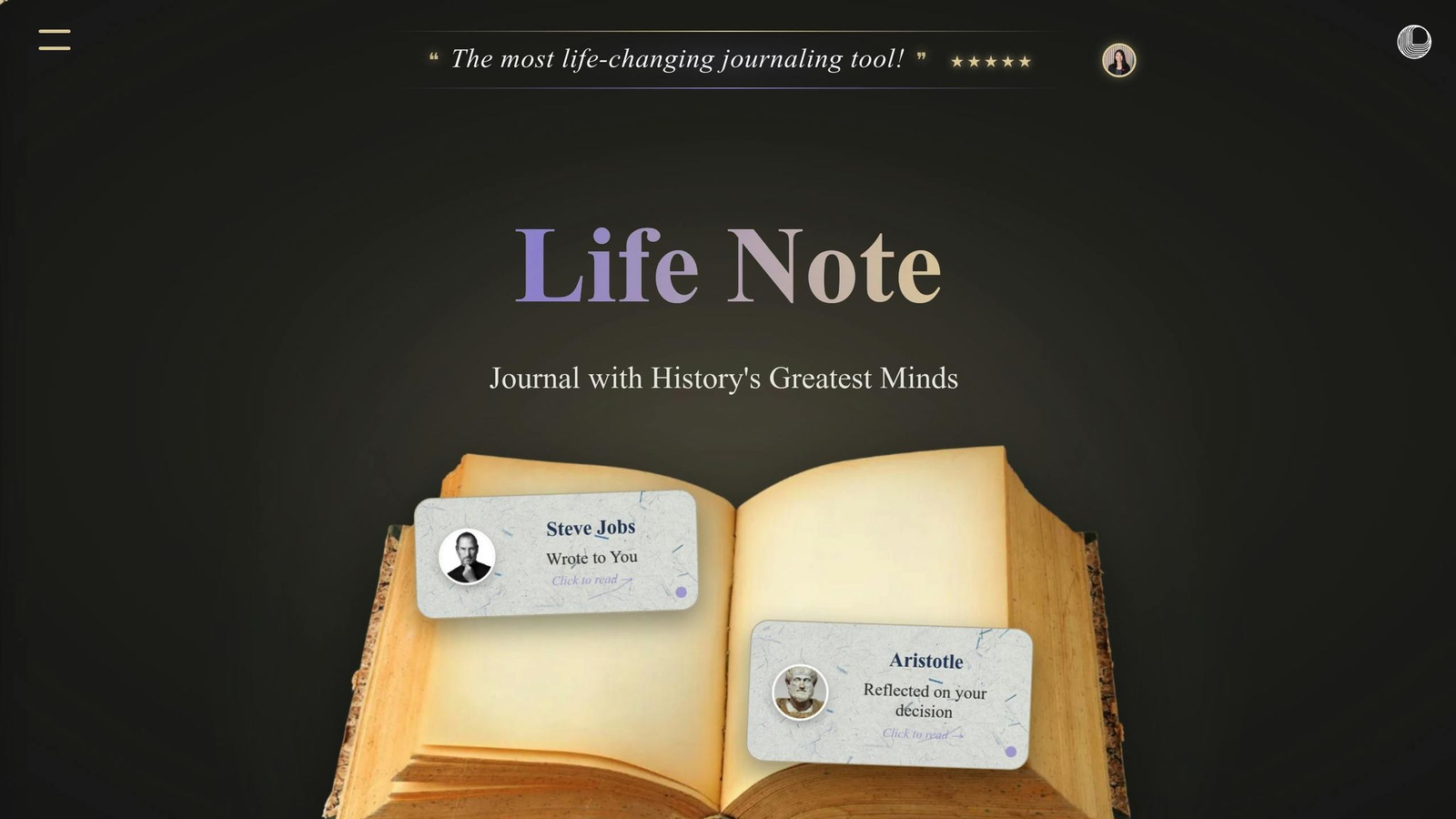
Life Note takes a different approach to anxiety: instead of just breathing exercises, it helps you understand what's driving your anxiety. Journal with AI mentors trained on history's greatest thinkers: including therapists, Stoic philosophers, and psychologists like Carl Jung.
What makes Life Note powerful for anxiety journaling is the depth of its responses. When you write about racing thoughts or anxious spirals, the AI doesn't just offer platitudes. It asks questions that help you examine the thoughts, find their roots, and develop new perspectives.
Key Features:
- Deep processing: AI helps you examine anxious thoughts and find their roots
- Multiple perspectives: Get wisdom from Stoics (who mastered fear), therapists, and mindfulness teachers
- Pattern recognition: Identifies recurring anxiety triggers over time
- Anxiety journal prompts: Prompts designed to process worry, not just describe it
- End-to-end encryption: Your anxious thoughts stay completely private
Pros: Deepest processing of any anxiety app; multiple wisdom traditions; excellent privacy.
Cons: Requires engagement to get value; not designed for acute panic attacks.
Best for: People who want to understand their anxiety patterns, not just manage symptoms.
2. Wysa — Best Free CBT Chatbot
Price: Free | Premium $99.99/year
Platforms: iOS, Android
Approach: CBT + DBT chatbot
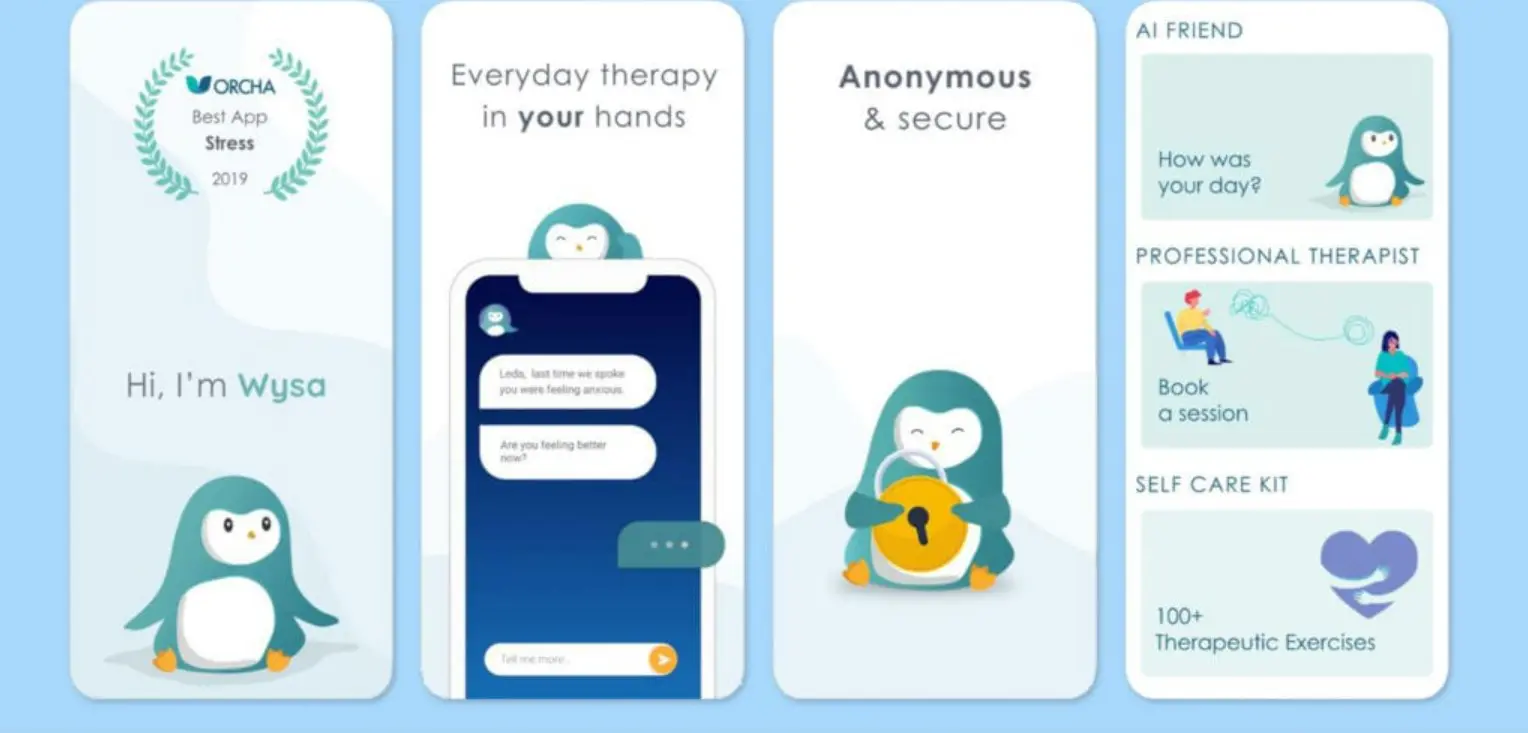
Wysa is a free AI chatbot backed by clinical studies and FDA-recognized as comparable to in-person psychological counseling for anxiety and depression. The friendly blue penguin guides you through CBT and DBT exercises whenever anxiety strikes.
What sets Wysa apart is its accessibility. The core features — thought reframing, breathing exercises, mood tracking — are completely free. This makes it one of the best free apps for anxiety available.
Key Features:
- Catches and challenges cognitive distortions in real-time
- Guided breathing and grounding exercises for acute anxiety
- Mood tracking with pattern visualization over time
- Optional human coach add-on for deeper support
- Crisis support resources built in
Pros: Genuinely free core features; FDA recognition; evidence-based CBT.
Cons: AI responses can feel generic; premium required for human coaching.
Best for: People who want free, evidence-based CBT without cost barriers.
3. Rootd — Best for Panic Attacks
Price: Free | Premium $69.99/year
Platforms: iOS, Android
Approach: Grounding + breathing
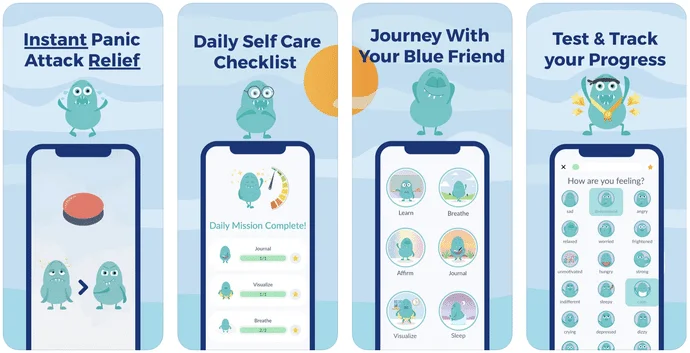
Rootd was designed specifically for panic attacks. When anxiety escalates into physical symptoms — racing heart, tight chest, can't breathe — Rootd provides immediate intervention with grounding exercises and guided breathing.
The app's signature feature is its "panic button" — a single tap launches an emergency intervention designed to interrupt the panic cycle. For people who experience intense physical anxiety, this is invaluable.
Key Features:
- Panic button: One-tap emergency intervention for acute anxiety episodes
- Body scan exercises: Reconnect with physical sensations to interrupt spiraling
- Breathing techniques: Visual guides for 4-7-8, box breathing, and more
- Post-episode journaling: Track triggers after the panic subsides
- Progress tracking: See panic frequency decrease over time
Pros: Purpose-built for panic; immediate intervention tools; tracks progress.
Cons: Less useful for generalized anxiety; limited journaling depth.
Best for: People who experience panic attacks or intense physical anxiety symptoms.
4. Headspace — Best for Meditation
Price: Free trial | Premium $69.99/year
Platforms: iOS, Android, Web
Approach: Guided meditation
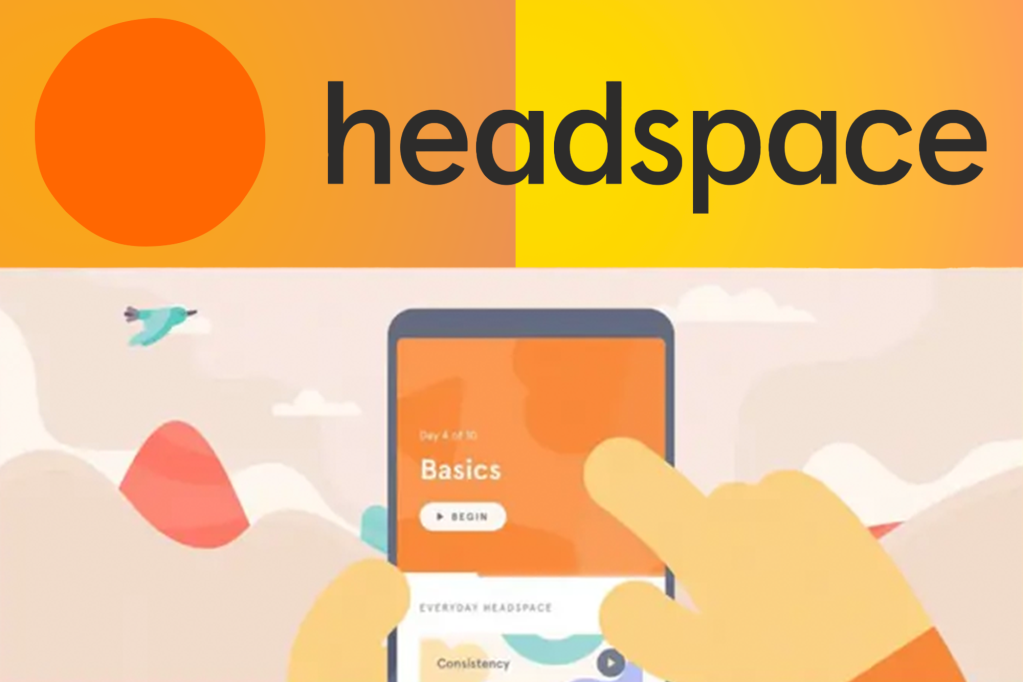
Headspace's anxiety-specific courses teach you to observe anxious thoughts without getting caught in them. The "Managing Anxiety" and "Letting Go of Stress" series are backed by research showing reduced stress in regular users.
The approach isn't about stopping thoughts — it's about changing your relationship with them. Over time, you learn to notice anxious thoughts without automatically believing them.
Key Features:
- Anxiety-specific courses: Multi-day programs designed for worry and stress
- SOS sessions: 3-minute exercises for acute anxiety moments
- Sleep content: Extensive library for nighttime anxiety
- Focus music: Background audio for anxious distraction
- Progress tracking: Streak and meditation minutes visualized
Pros: Best-in-class meditation guidance; research-backed; excellent production quality.
Cons: Subscription required for most content; less personalized than AI apps.
Best for: People new to meditation who want structured guidance.
5. Calm — Best for Nighttime Anxiety
Price: Free trial | Premium $69.99/year
Platforms: iOS, Android, Web
Approach: Sleep stories + meditation
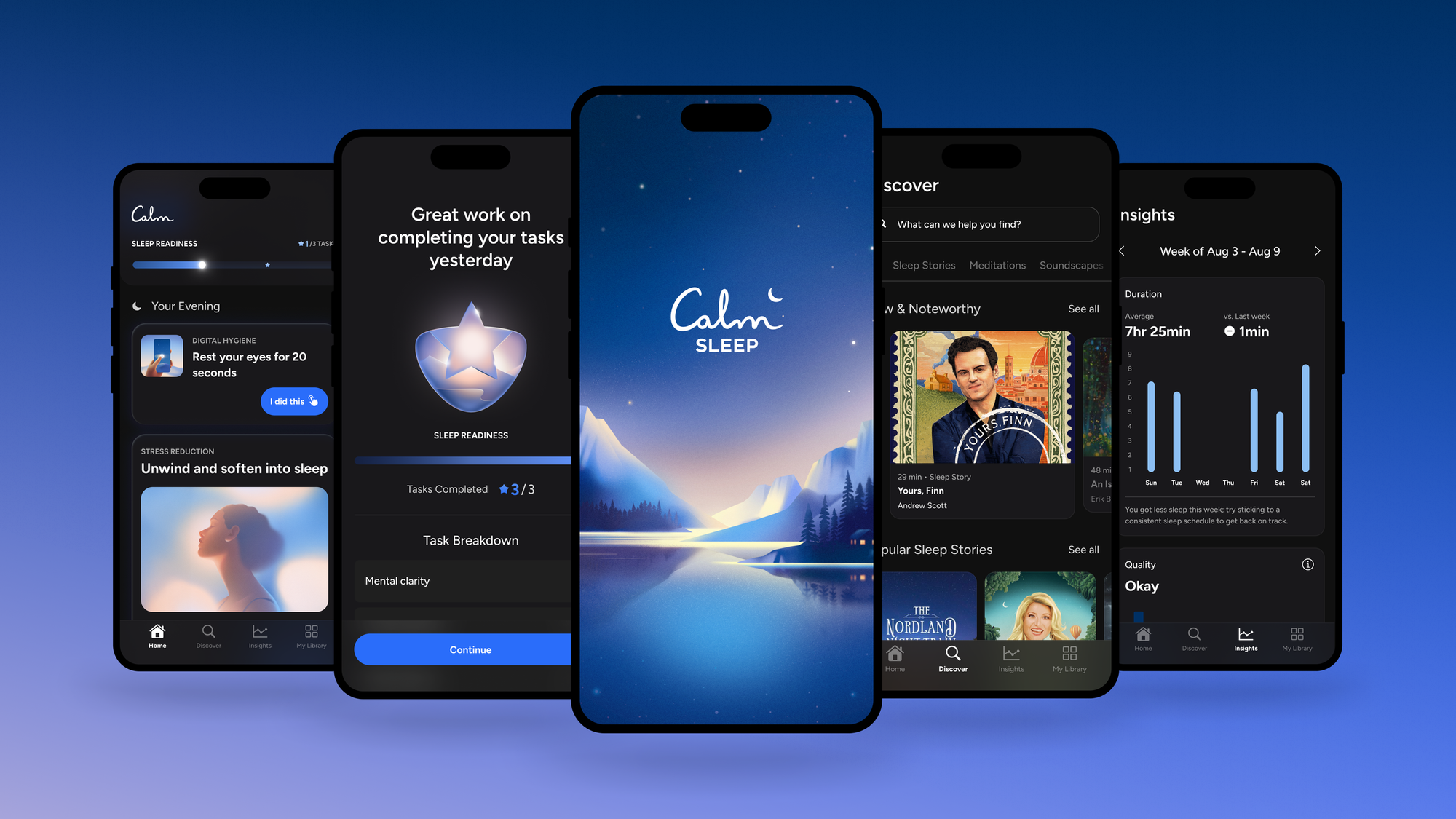
If your anxiety spikes at night, Calm's Sleep Stories are remarkably effective. Celebrity narrators (Matthew McConaughey, Stephen Fry, Harry Styles) tell soothing stories that redirect your mind from anxious thoughts to gentle imagery.
The mechanism is simple: your brain can't maintain two thought streams simultaneously. By engaging with a story, you interrupt the anxious loop.
Key Features:
- Sleep Stories: 100+ hours of bedtime content
- Daily Calm: New meditation every day
- Emergency calm: Quick exercises for acute anxiety
- Nature soundscapes: Background audio for focus
- Masterclasses: Deep dives on anxiety management
Pros: Exceptional sleep content; celebrity narrators; beautiful design.
Cons: Less structured than Headspace; expensive without family plan.
Best for: People whose anxiety peaks at bedtime or disrupts sleep.
6. Reflectly — Best for Anxiety Journaling
Price: Free trial | Premium $59.99/year
Platforms: iOS, Android
Approach: AI-guided journaling
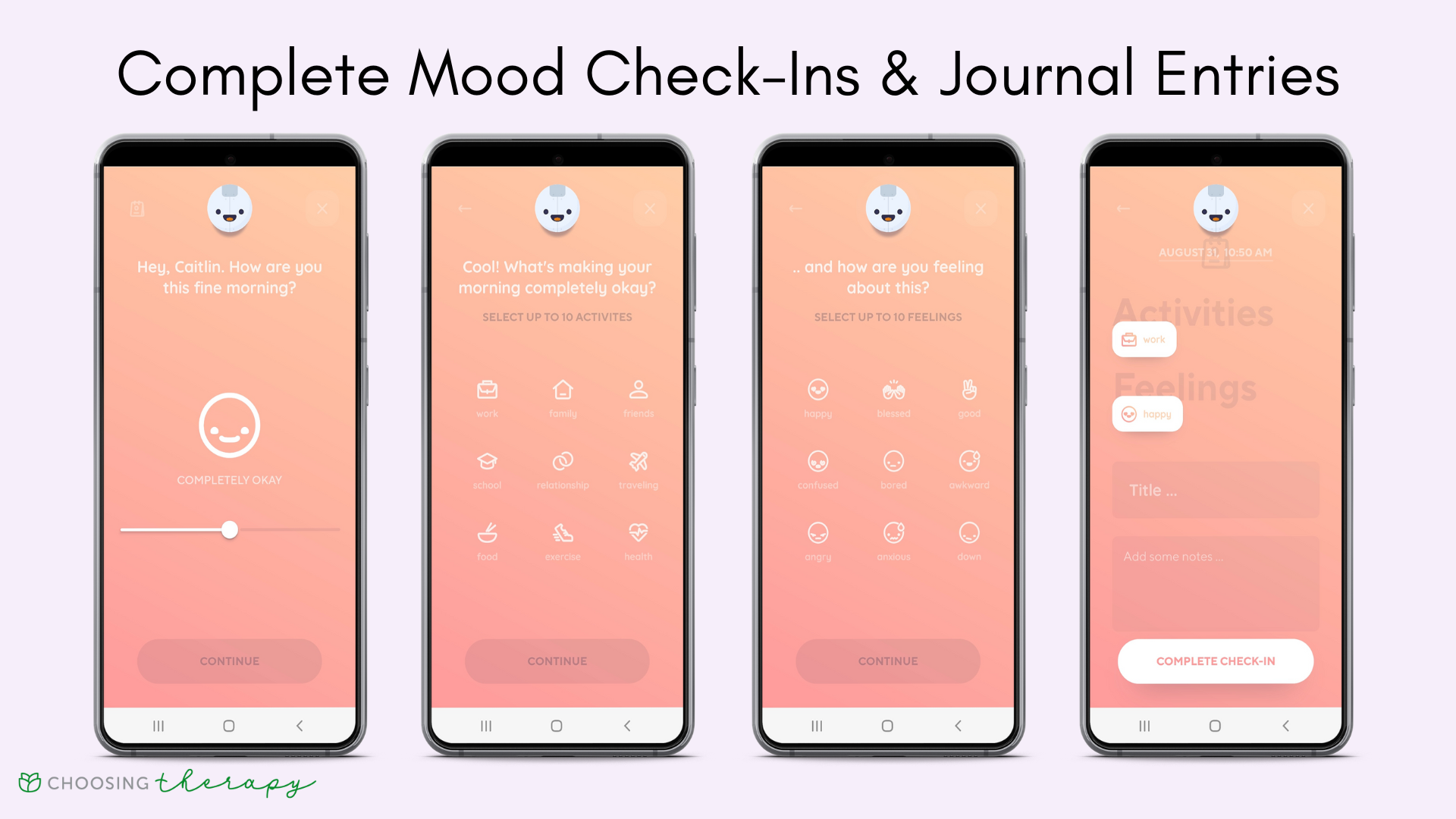
Reflectly provides AI-guided journaling prompts designed to process anxious thoughts. The cheerful interface makes it less intimidating than traditional therapy journals, while still guiding you toward meaningful reflection.
The app excels at journal prompts for anxiety — questions like "What's the worst case scenario, and how likely is it?" that help you examine worries rather than spiral in them.
Key Features:
- Anxiety-specific prompts: Questions designed to interrupt worry spirals
- Mood tracking: Correlate anxiety levels with situations and triggers
- AI responses: Gentle reframes of anxious thoughts
- Streak tracking: Gamification to build journaling habits
Pros: Best anxiety journaling prompts; cheerful design; AI guidance.
Cons: Less depth than Life Note; subscription required for full features.
Best for: People who want structured journaling prompts for anxiety without overwhelming depth.
7. Finch — Best Gentle Approach
Price: Free (premium available)
Platforms: iOS, Android
Approach: Gamified self-care
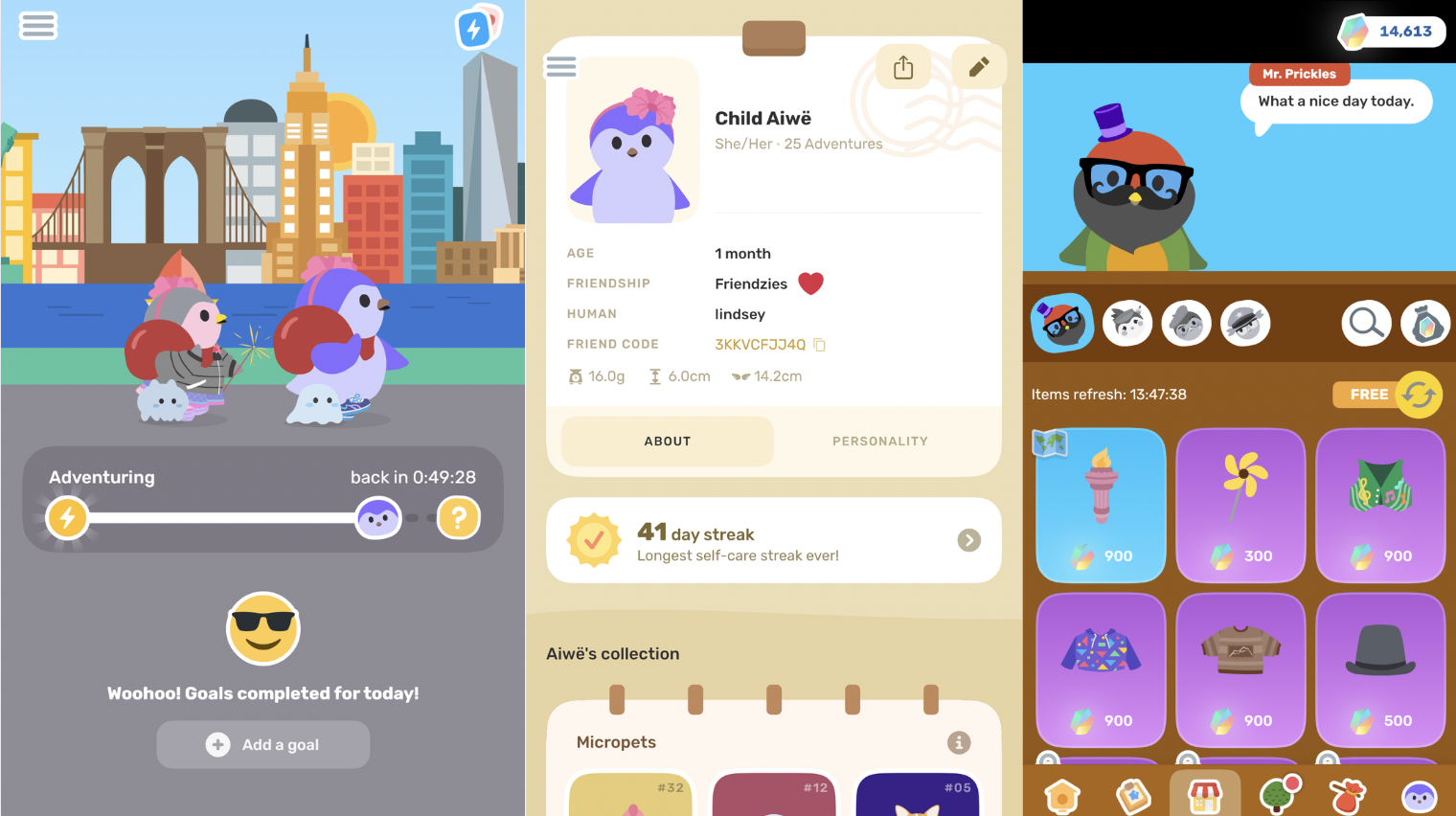
Finch gamifies self-care by having you raise a virtual pet bird. It sounds childish. It works. Completing breathing exercises, journaling, or mood check-ins helps your bird grow and explore.
For people who find traditional mental health apps overwhelming or clinical, Finch provides anxiety tools wrapped in a gentler package.
Key Features:
- Simple daily check-ins: Low-pressure mood tracking
- Gentle breathing exercises: Short, accessible techniques
- Goal setting: Break anxiety-inducing tasks into small steps
- Rewards that motivate: Your bird's progress reflects yours
Pros: Excellent free tier; non-clinical approach; genuinely engaging.
Cons: Less depth for serious anxiety; gamification may not appeal to everyone.
Best for: People who feel overwhelmed by complex mental health apps.
8. MindShift CBT — Best Free CBT Tools
Price: Completely free
Platforms: iOS, Android
Approach: CBT thought challenging
Developed by Anxiety Canada specifically for anxious thinking. MindShift teaches you to challenge "what if" thoughts and test whether your anxiety predictions actually come true.
The app is 100% free — no premium tier, no ads. It's one of the best free anxiety apps for people who want structured CBT without any cost.
Key Features:
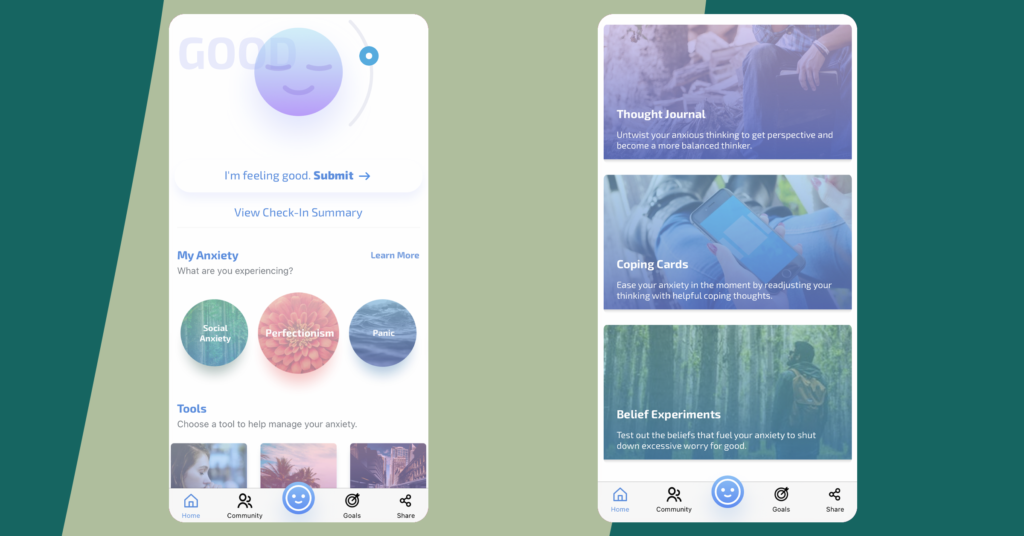
- Thought journals: Log anxious thoughts and reframe them using CBT
- Belief experiments: Test whether anxious predictions come true
- Coping cards: Quick-reference cards for anxiety moments
- Goal setting: Gradual exposure plans for avoided situations
Pros: Completely free; evidence-based CBT; no subscription required.
Cons: Interface is dated; no AI personalization.
Best for: People who want structured CBT techniques at no cost.
9. Dare — Best for Acceptance-Based Approach
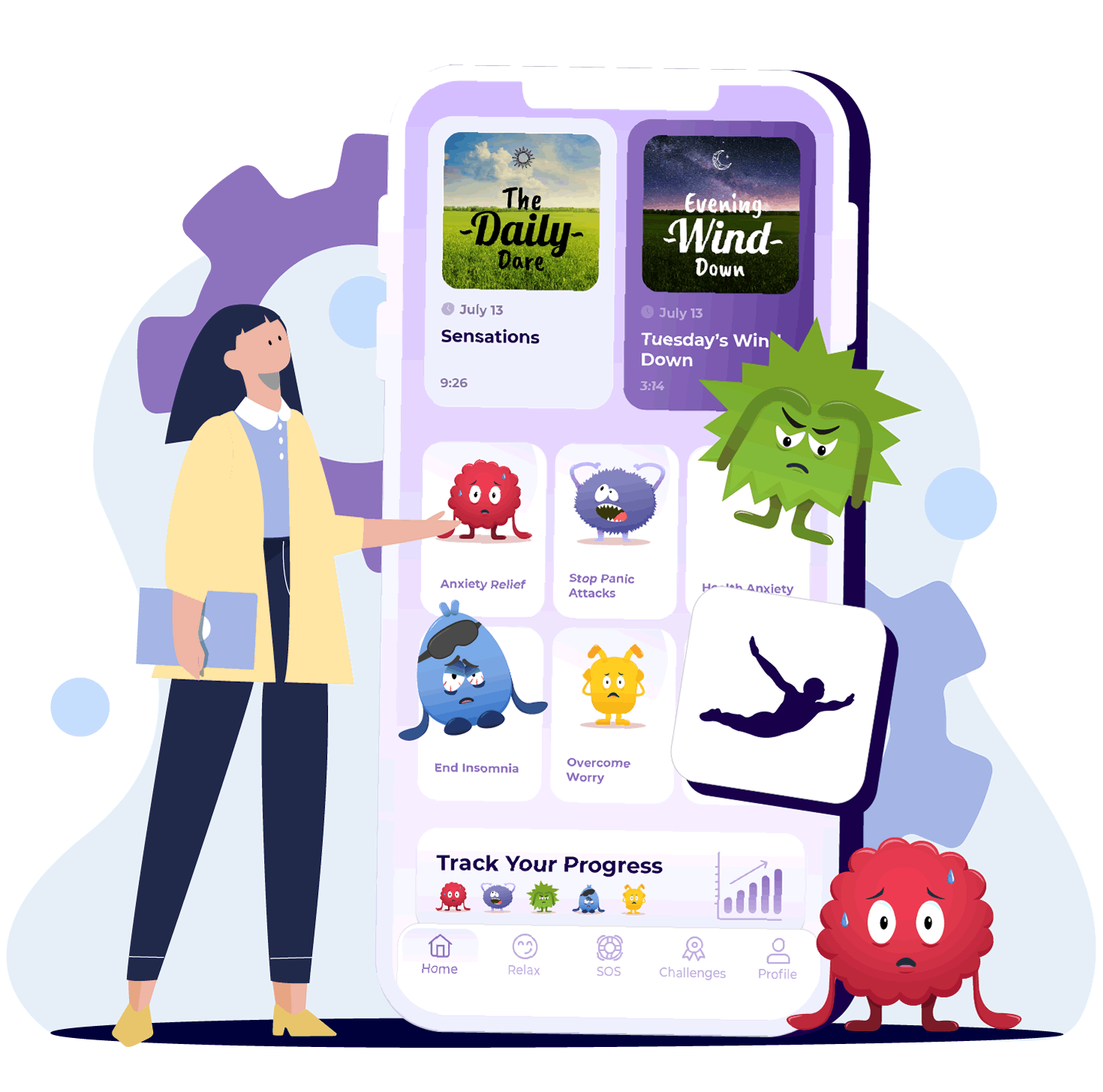
Price: Free | Premium $99.99/year
Platforms: iOS, Android
Approach: DARE method (acceptance)
Dare uses a counterintuitive approach: instead of fighting anxiety, you welcome it. Based on Dr. Barry McDonagh's DARE method, the app guides you to accept anxious sensations rather than resist them.
The philosophy: resistance creates tension, which amplifies anxiety. Acceptance paradoxically reduces it.
Key Features:
- Audio guides: Talked-through exercises for panic attacks
- SOS button: Immediate intervention for acute anxiety
- Daily dare challenges: Gradually expand your comfort zone
- Community support: Connect with others using the method
Pros: Unique approach that works when others haven't; good for chronic anxiety.
Cons: Counterintuitive method takes practice; requires mindset shift.
Best for: People who've tried fighting anxiety without success.
10. Sanvello — Best for Tracking Patterns
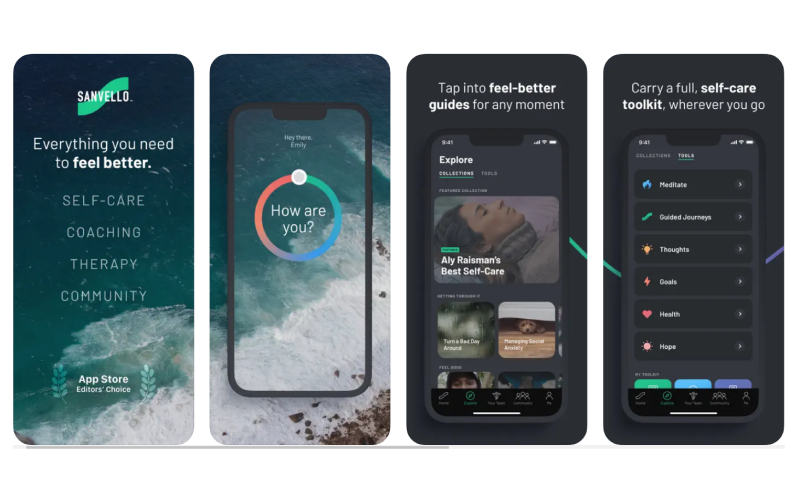
Price: Free | Premium $53.99/year
Platforms: iOS, Android
Approach: Mood tracking + CBT
Sanvello combines mood tracking, CBT tools, and community support. For anxiety, the value is in tracking — seeing correlations between your anxiety levels and sleep, situations, people, or time of day.
The pattern visualization helps you identify triggers you might not consciously recognize.
Key Features:
- Mood and anxiety tracking: Multiple daily check-ins
- Pattern visualization: Charts showing anxiety over time
- Guided journeys: Multi-week programs for anxiety
- Peer community: Anonymous support from others
Pros: Best pattern tracking; combines multiple approaches; peer support.
Cons: Can feel overwhelming; requires consistent logging.
Best for: Analytical people who want to understand their anxiety patterns through data.
11. Youper — Best AI Therapy
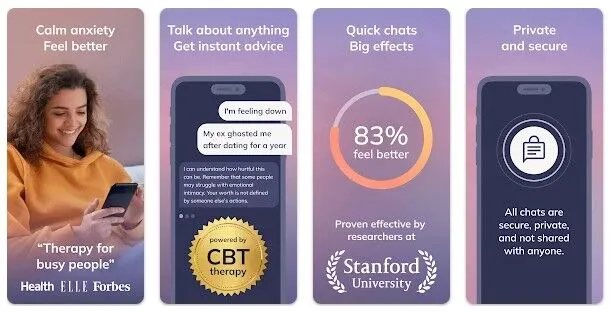
Price: Free | Premium $69.99/year
Platforms: iOS, Android
Approach: CBT + ACT + DBT
Created by therapists, Youper uses AI to deliver personalized CBT, ACT, and DBT techniques. Clinical studies show 48% decrease in depression and 43% decrease in anxiety symptoms.
The AI adapts to your specific anxiety patterns, offering increasingly personalized interventions over time.
Key Features:
- Personalized CBT conversations: AI learns your specific thought patterns
- Thought challenging exercises: Identify and reframe cognitive distortions
- Mood tracking with insights: AI-generated observations
- Multiple therapy modalities: CBT, ACT, and DBT techniques
Pros: Most sophisticated AI therapy; clinically validated; multi-modality.
Cons: Can feel clinical; subscription for full features.
Best for: People who want therapist-designed AI guidance.
12. Rosebud — Best for Structured Prompts
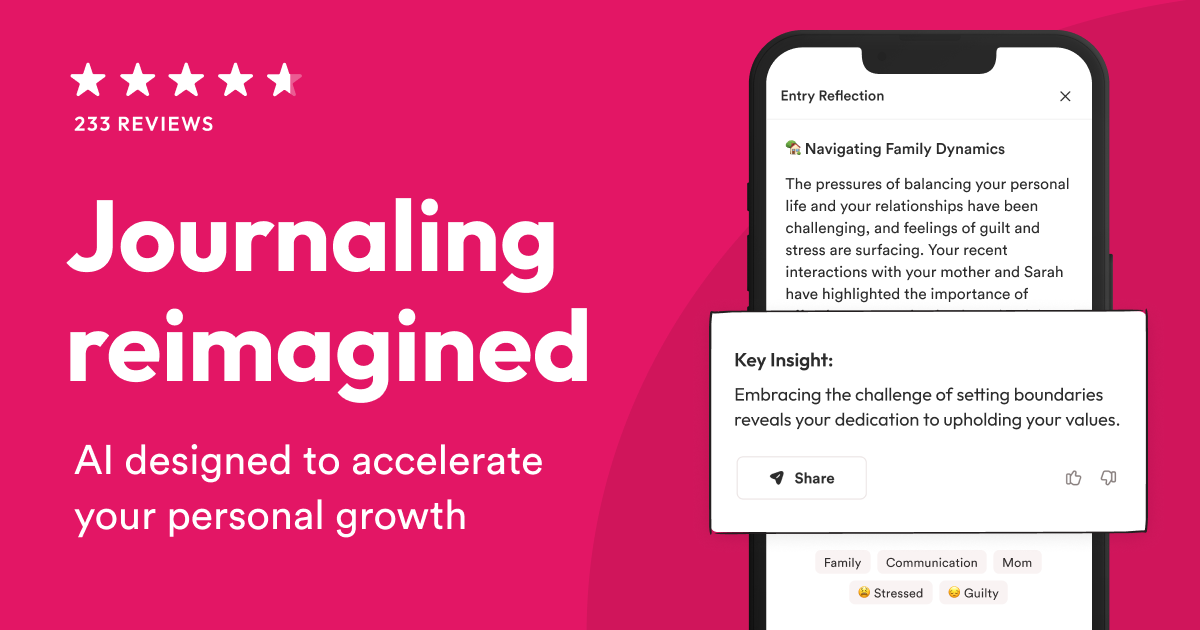
Price: Free | Premium $109.99/year
Platforms: iOS, Android
Approach: Therapist-designed journaling
Rosebud offers structured anxiety journal prompts designed by therapists. While not specifically an anxiety app, its emotional processing prompts work well for worry and rumination.
Key Features:
- Therapist-designed prompt library: High-quality questions for self-exploration
- AI-generated insights: Pattern recognition across your entries
- Voice journaling: Speak when typing feels like too much
- Weekly summaries: AI synthesis of your reflections
Pros: High-quality prompts; pattern recognition; voice option.
Cons: Not anxiety-specific; subscription required for full features.
Best for: People who want therapist-quality journaling prompts.
Quick Comparison: Best Anxiety Apps
| App | Best For | Price | Approach | Free? |
|---|---|---|---|---|
| Life Note | Understanding anxiety | $9.99/mo | AI wisdom journaling | ✓ Yes |
| Wysa | Free CBT chatbot | Free | CBT + DBT | ✓ Yes |
| Rootd | Panic attacks | $69.99/yr | Grounding | ✓ Yes |
| Headspace | Meditation | $69.99/yr | Guided meditation | Trial only |
| Calm | Nighttime anxiety | $69.99/yr | Sleep stories | Trial only |
| Reflectly | Anxiety journaling | $59.99/yr | AI journal prompts | Trial only |
| Finch | Gentle approach | Free | Gamified self-care | ✓ Yes |
| MindShift | Free CBT tools | Free | Thought challenging | ✓ 100% |
| Dare | Acceptance method | $99.99/yr | DARE method | ✓ Yes |
| Sanvello | Pattern tracking | $53.99/yr | Mood tracking + CBT | ✓ Yes |
| Youper | AI therapy | $69.99/yr | CBT + ACT + DBT | ✓ Yes |
| Rosebud | Structured prompts | $59.99/yr | Therapist prompts | ✓ Yes |
15 Anxiety Journal Prompts to Try Today
Journaling for anxiety works because it moves worried thoughts from your head onto paper — where you can examine them objectively. Here are prompts that actually help:
For Examining Anxious Thoughts
- What am I actually worried about? (Be specific — not "everything" but the exact fear)
- What's the worst case scenario? How likely is it, really?
- What evidence supports this worry? What evidence contradicts it?
- If my best friend had this thought, what would I tell them?
- What would I do if the worst case actually happened? (You'd survive)
For Understanding Triggers
- When did this anxiety start? What happened just before?
- What situation, person, or thought triggered this feeling?
- Have I felt this exact anxiety before? When?
- What does this anxiety remind me of from my past?
- Is this anxiety about the present moment, or something that might happen?
For Grounding
- What do I need right now that I'm not giving myself?
- What's one thing I can control in this situation?
- What would help me feel 10% calmer right now?
- What would I tell my future self who's looking back at this moment?
- What has helped me through anxious moments in the past?
For more prompts, see our 75+ Journaling Prompts for Mental Health.
How to Choose the Right Anxiety App
With 12 options, how do you choose? Match your anxiety type to the right approach:
- If you want to understand your anxiety patterns: Life Note, Sanvello
- If you experience panic attacks: Rootd, Dare
- If you need free options: Wysa, MindShift CBT, Finch
- If your anxiety spikes at night: Calm
- If you want structured meditation: Headspace
- If you want AI therapy: Youper, Wysa
- If you want journaling prompts: Life Note, Reflectly, Rosebud
Start with one or two apps. Use them consistently for 2-4 weeks before adding more. That's where the change happens.
When to Seek Professional Help
Apps are tools, not replacements for professional care.
Seek a therapist or psychiatrist if:
- Anxiety significantly interferes with work, relationships, or daily functioning
- You experience panic attacks regularly
- You have thoughts of self-harm
- You're using substances to cope with anxiety
- Your anxiety hasn't improved after 4-6 weeks of consistent app use
- You have a history of trauma that underlies the anxiety
Many therapists actively recommend these apps as homework between sessions. The combination of professional support and daily practice is more effective than either alone.
Related Reading
- 75+ Journaling Prompts for Mental Health
- Journaling for Anxiety: How to Start
- 100+ Shadow Work Prompts
- 8 Best AI Journaling Apps
- Best Apps for Overthinking
Frequently Asked Questions
What is the best app for anxiety?
Life Note is best for understanding anxiety patterns through AI-guided journaling. Rootd is best for panic attacks. Wysa is the best free option with CBT and DBT techniques.
Can apps really help with anxiety?
Yes. Clinical research shows that CBT-based apps, meditation apps, and journaling apps can significantly reduce anxiety symptoms. Apps like Youper have demonstrated 43% reductions in anxiety in clinical trials. They work best as complements to professional therapy, not replacements.
What is the best free anxiety app?
Wysa offers the most comprehensive free experience with CBT and DBT techniques and is FDA-recognized. MindShift CBT (by Anxiety Canada) is 100% free with excellent thought-challenging tools. Finch provides a gamified approach that's completely free.
How do I calm anxiety quickly?
Use Rootd's panic button for immediate grounding exercises and breathing techniques. Calm and Headspace also have SOS features for acute anxiety moments. The 4-7-8 breathing technique (inhale 4 seconds, hold 7, exhale 8) works for most people within 3 cycles.
Does journaling help with anxiety?
Yes. Research by Pennebaker and others shows that expressive writing reduces worry and rumination. Journaling for anxiety works by moving worried thoughts from your head onto paper, where you can examine them objectively. Apps like Life Note and Reflectly provide structured prompts to guide this process.
What are good anxiety journal prompts?
Effective anxiety journal prompts help you examine worried thoughts objectively: "What am I actually worried about?" "What's the worst case, and how likely is it?" "What evidence supports or contradicts this worry?" See our full list of journaling prompts for mental health.
Related Reading
- Anxiety Journaling Prompts — 30+ CBT-informed prompts to break rumination loops
- Best AI Therapy Apps 2026 — Evidence-based alternatives for mental health support
- Journaling Prompts for Mental Health — Research-backed prompts for depression, anxiety, and emotional regulation
Journal with 1,000+ of History's Greatest Minds
Marcus Aurelius, Maya Angelou, Carl Jung — real wisdom from real thinkers, not internet summaries. A licensed psychotherapist called it "life-changing."
Try Life Note Free