
10 Best AI Tools for Self-Improvement in 2026

Discover the 10 best AI tools for self-improvement in 2026, led by Life Note. Compare ChatGPT, Headspace Ebb, Tiimo, Reclaim.ai, Mindgrasp, Khanmigo, Duolingo Max, WonsultingAI, and Dexa.

📌 TL;DR — Best AI Tools for Self-Improvement
Top AI self-improvement tools in 2026: Life Note (AI journaling for self-discovery), ChatGPT (general learning), Calm/Headspace (AI-enhanced meditation), Noom (behavior change), and Replika (emotional support). Key criteria: privacy, personalization, and evidence-based approaches. AI enhances self-improvement by providing 24/7 availability, pattern recognition, and personalized guidance.
(Related: the best AI apps for students)
A practical, human-centered guide to becoming healthier, calmer, sharper, and more you
As of March 2026, AI self-improvement is finally leaving its awkward teenage phase.
March 2026 Industry Update
Notion launched Custom Agents (February 2026) — fully autonomous AI teammates that run 24/7, connect to Slack, email, GitHub, and execute tasks without prompting. Over 21,000 agents built within weeks of public beta. Todoist launched Ramble (January 2026) — voice-to-tasks powered by Gemini 2.5 Flash that converts natural speech into structured tasks across all platforms. New AI coaching research: a peer-reviewed study compared GROW, Solution-Focused, and CBT approaches in AI chatbots, while a systematic review found AI coaching effective for structured goals but notes hybrid AI+human approaches are optimal for long-term change.
In 2026, we’re moving past:
- “Look what this chatbot can write!”
- “This app can summarize stuff!”
- “This tool can plan my day!”
And we’re entering the era of:
- emotionally intelligent guidance
- behavioral scaffolding
- identity-level change
- learning that sticks
- systems that reduce the need for willpower
Most people approach self-improvement like collecting swords.
They buy tools and hope personality magic happens.
But the easiest way to think about AI is this:
AI won’t change your life because it’s smart. AI changes your life when it repeatedly reduces friction between who you are and who you want to become.
That means the best tools aren’t necessarily the flashiest.
They’re the ones that:
- Make self-honesty easier
- Turn reflection into action
- Protect your time and attention
- Help you learn faster without fooling yourself
- Support emotional regulation before you spiral
This list ranks tools based on actual transformation potential, not hype.
How we ranked these AI self-improvement tools
Most “best AI tools” lists are secretly just popularity contests.
This one is built on a simpler question:
Does this tool help you become someone you respect?
To get there, each tool is scored across 6 dimensions:
- Transformation Depth
Does it only help with surface actions (task, summary, schedule)?
Or does it influence identity, emotional patterns, and long-term behavior? - Friction Reduction
Great tools don’t demand heroism.
They reduce the awkward gap between intention and action. - Personalization That Matters
Not just “custom plans,” but real adaptation to your goals, mood, pace, and context. - Behavior Loop Support
Can you realistically use it weekly without burning out?
Does it create a clear loop: insight → decision → action → reflection? - Emotional Safety & Boundaries
A self-improvement tool should stabilize you, not hook you.
It should support reflection without pretending to be a replacement for professional care. - Signal-to-Noise Ratio
Does it create clarity
or does it produce endless “helpful” outputs that never change your life?
Why Life Note ranks #1:
Because most tools optimize the outside of your life. Life Note upgrades the inside—your self-honesty, your patterns, your meaning, and your next courageous move. In other words, it has the strongest identity-grade feedback loop.
Choose your tool by your real bottleneck
Self-improvement doesn’t fail because you lack options.
It fails because you pick tools for the wrong problem.
Use this quick diagnostic:
If your bottleneck is emotional instability
You’re not lazy. You’re dysregulated.
Start here:
- Life Note for pattern + meaning
- Ebb for daily emotional resets
You don’t need more discipline.
You need a calmer nervous system and a clearer inner narrative.
If your bottleneck is inconsistency
You’re trying to win with motivation instead of structure.
Start here:
- Tiimo (gentle, visual routine support)
- Reclaim.ai (calendar-protected habit reality)
Your calendar is either your ally
or the quiet assassin of your goals.
If your bottleneck is slow learning
You’re consuming too much and encoding too little.
Start here:
- ChatGPT (structured learning + reasoning)
- Mindgrasp or Khanmigo (turn content into practice)
The real flex isn’t reading.
It’s repeated comprehension.
If your bottleneck is career stagnation
You don’t need more hustle.
You need better aim.
Start here:
- ChatGPT for positioning + strategy
- WonsultingAI / NetworkAI for targeted outreach and materials
Great careers are built by direction, not desperation.
If your bottleneck is language confidence
You’re trapped in passive learning.
Start here:
- Duolingo Max for roleplay
- ChatGPT for daily conversation drills
Confidence is rehearsal, not talent.
1) Life Note — Best for inner transformation, self-honesty, and wisdom-guided journaling
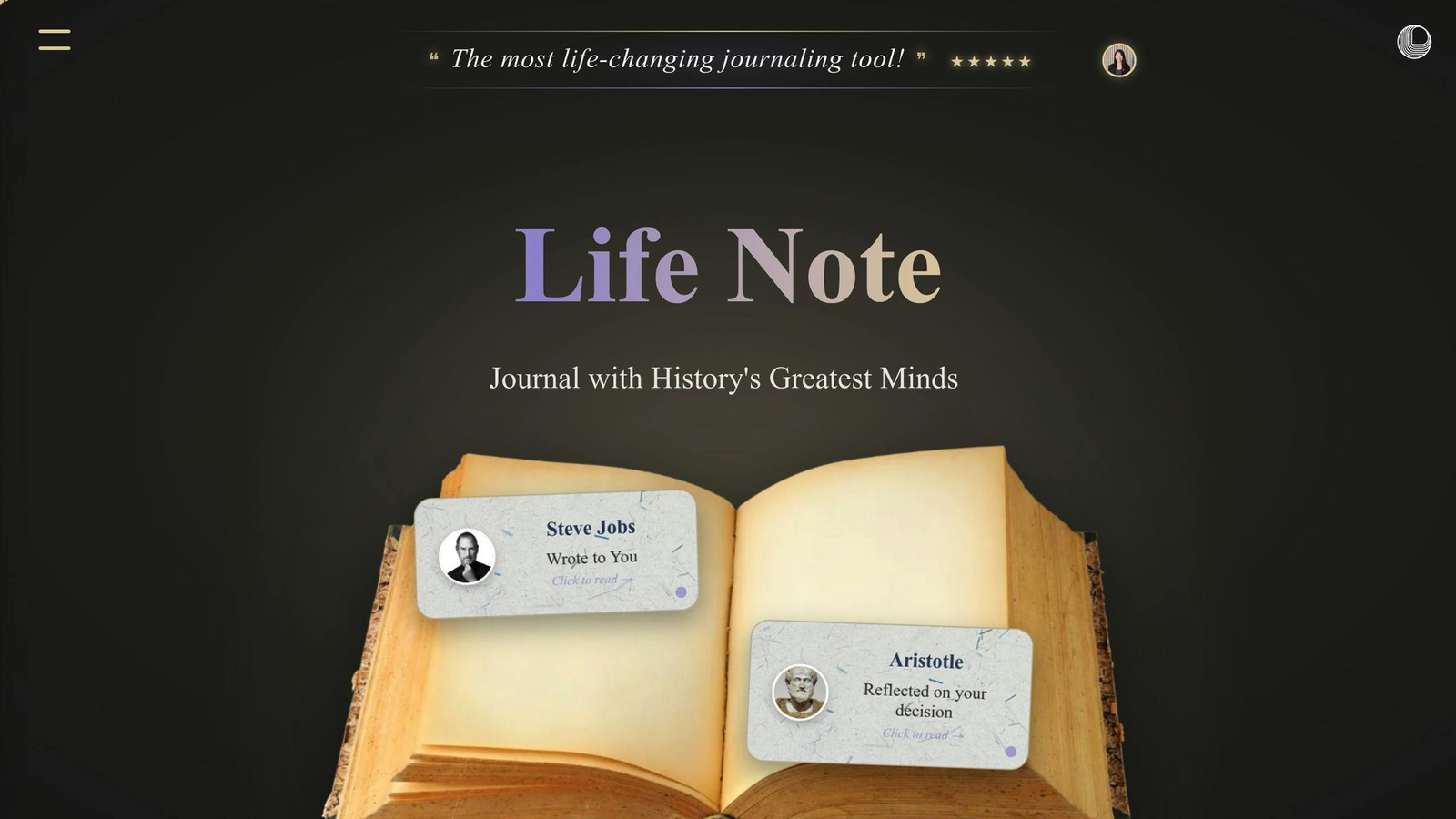
Life Note pairs your journal entries with wisdom from 1,000+ historical mentors — Marcus Aurelius, Maya Angelou, Carl Jung — delivering personalized guidance rooted in real human insight.
Last verified: March 2026. Pricing, features, and rankings reflect our latest testing.
Most productivity tools help you do more.
Life Note helps you become more.
The truth is simple and inconvenient:
- You can’t optimize your way out of a life that needs meaning.
- You can’t habit-stack your way out of a pattern you refuse to name.
- You can’t biohack your way out of emotional avoidance.
Self-improvement fails when it becomes mechanical.
Life Note’s advantage is that it treats growth as inner dialogue + wise friction + compassionate confrontation.
What this category does best
AI-augmented journaling is powerful because it creates a feedback loop that reads your patterns and coaches your habits:
- You reveal the raw truth.
- You receive structured reflection.
- You get a better question than the one you asked.
- You act.
- You return and see the pattern shift.
This is how identity evolves:
not in one breakthrough, but in repeated honest contact with yourself.
Practical weekly uses
The 3-layer clarity method
- Truth dump (5–8 minutes):
Write the version you’d never post or say out loud. - Name the pattern (2 minutes):
Identify one recurring loop: avoidance, perfectionism, people-pleasing, scarcity, resentment. - Mentor mirror:
Ask for:- the root fear
- the invisible cost
- the smallest courageous action this week
The anti-self-deception prompt
- “What am I pretending not to know?”
- “What do I keep calling ‘timing’ that is actually fear?”
The identity rehearsal prompt
- “What would the version of me I respect do next?”
- “What is one action that proves I’m that person—not just dreaming about them?”
Why it deserves #1
Because in the hierarchy of change:
- habits matter
- skills matter
- schedules matter
…but identity and meaning are the gravity beneath everything else.
If you don’t address those, tools become entertainment.
2) ChatGPT — Best general-purpose thinking partner and learning accelerator
ChatGPT serves as a versatile thinking partner for brainstorming, learning, and problem-solving, excelling when you bring specific questions rather than vague self-improvement goals.
ChatGPT remains the most versatile self-improvement engine because it can play multiple roles:
- tutor
- coach
- editor
- planner
- brainstorming partner
- reflective mirror (with appropriate boundaries)
In 2026, OpenAI added Study Mode, aimed at helping learners reason step-by-step rather than simply receiving answers. This supports healthier learning behavior when used as intended.
Best use cases
- learning new domains quickly
- clarifying decisions
- turning vague goals into systems
- practicing difficult conversations
- building mental models
Practical templates
Socratic learning
Instead of:
- “Explain X.”
Use:
- “Teach me X using questions first. Don’t reveal the final answer until I attempt it.”
Skill compression
- “What are the 20% concepts that discover 80% of [skill]?”
- “Create a 14-day practice plan with drills, tests, and feedback prompts.”
Emotional clarity without dramatization
- “Rewrite my thoughts into:
- facts
- feelings
- fears
- requests
- next step”
The “don’t get tricked by your own intelligence” rule
The danger of ChatGPT isn’t misinformation.
It’s false growth:
- you feel smarter
- you feel organized
- you feel motivated
…but nothing changes.
Counter this with:
One output, one action, within 24 hours.
3) Headspace Ebb — Best for daily emotional regulation and micro-support
Headspace Ebb delivers AI-personalized micro-meditations and emotional check-ins throughout your day, adapting in real time to your stress levels and mood patterns.
Headspace introduced Ebb, an AI companion integrated into its app to support self-reflection, emotional processing, and personalized content recommendations. It’s positioned as a support layer, not a substitute for professional mental health care.
Best use cases
- stress
- relationship strain
- sleep-related anxiety
- work burnout
- emotional overwhelm
Practical protocols
The 2-minute rescue
- Name the sensation:
“I feel tight chest + looping thoughts.” - Ask Ebb for:
- a short grounding exercise
- a reframing prompt
- Do it immediately.
The “I’m about to text something dumb” intervention
Before sending an emotional message, ask:
- “Help me de-escalate this.”
- “Give me a version that’s honest but not incendiary.”
Sleep decompression
When your mind is spinning:
- ask for a quick nighttime reflection
- then use a short guided wind-down
Why it matters
Self-improvement depends on nervous system stability.
You can’t build a better life if your system is constantly on fire.
Ebb helps prevent small spirals from becoming identity collapses.
4) Tiimo — Best for ADHD-friendly structure and compassionate follow-through
Tiimo combines visual scheduling with gentle, ADHD-friendly nudges that build structure without shame, making daily routines feel supportive rather than punishing.
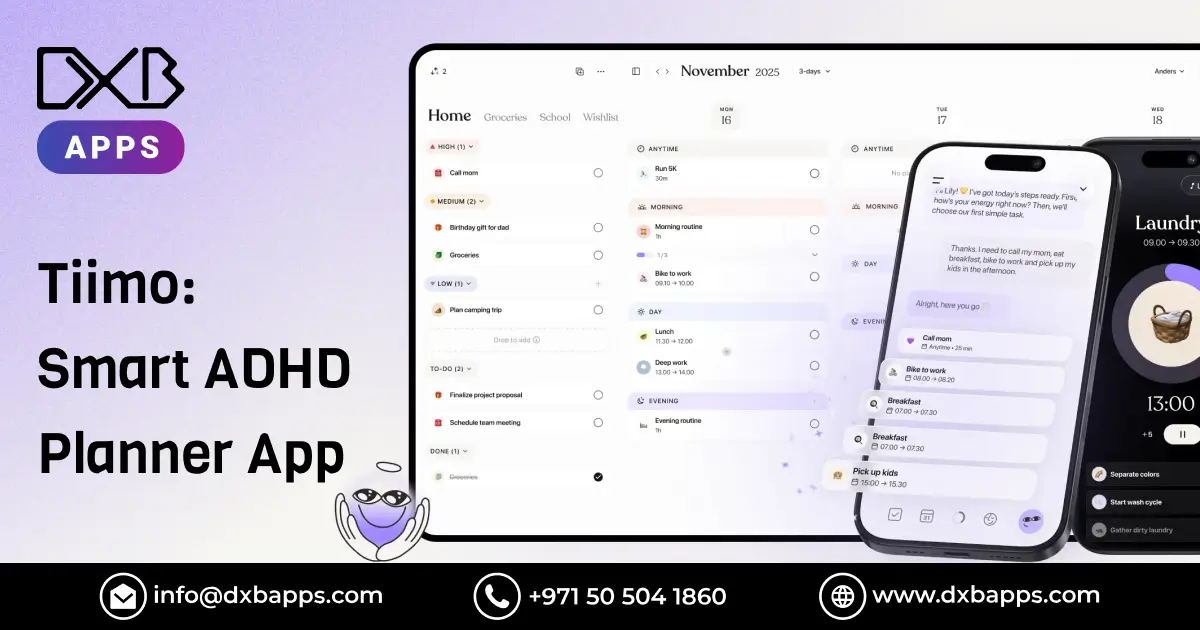
Apple named Tiimo the iPhone App of the Year 2026, highlighting mainstream momentum in AI-supported planning and executive function tools.
Tiimo positions itself as an AI planning partner that reduces mental load and helps users follow through, with strong relevance for neurodivergent needs. App Store
Best use cases
- visual planning
- routine-building
- time blindness / time agnosia
- reducing overwhelm
Practical ways to use it
The 3 anchors day
- Morning anchor: body
- Midday anchor: deep work
- Evening anchor: relationships/rest
The “gentle constraints” approach
Design your day with:
- fewer options
- more defaults
- clearer transitions
This is an underrated secret of consistent people:
they don’t “decide well” every hour—
they design fewer moments of decision.
5) Reclaim.ai — Best for turning values into calendar reality
Reclaim.ai automatically blocks calendar time for your priorities — exercise, learning, deep work — ensuring your values translate into scheduled, protected hours each week.
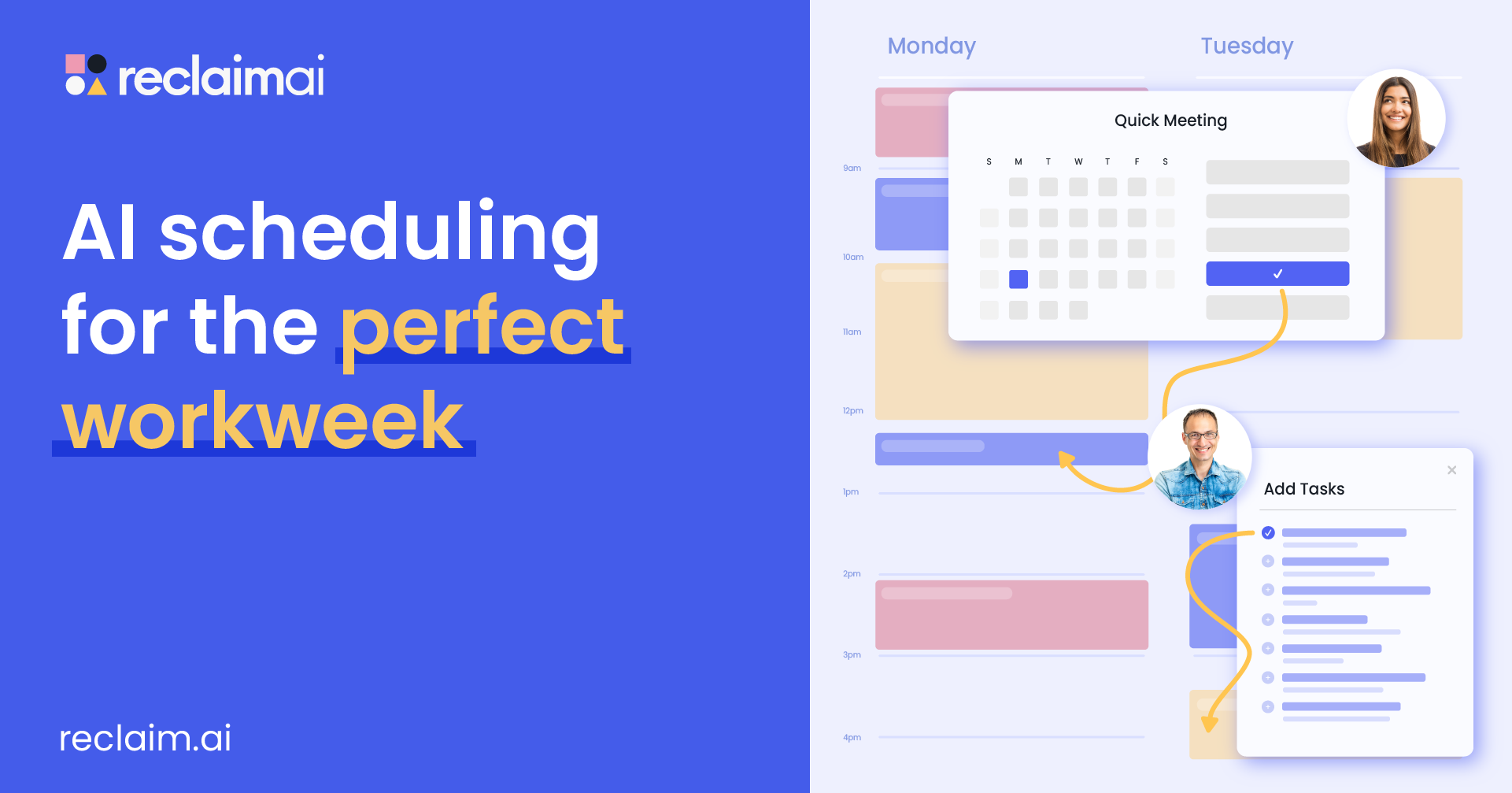
Reclaim.ai is an AI calendar tool that automatically schedules habits, tasks, focus time, and breaks around existing events, and continuously adapts as priorities change.
Best use cases
- protecting deep work
- habit automation
- avoiding schedule collapse
- burnout prevention through structure
Practical workflows
Habit defense
Set 3 non-negotiables:
- exercise
- learning block
- creative output
Reclaim can protect those time blocks using its habit features. Reclaim
The anti-burnout rule
Schedule a minimum recovery quota weekly.
If your calendar doesn’t protect rest, your nervous system will.
Why it’s powerful
Reclaim shifts self-improvement from motivation to environment design.
6) Mindgrasp — Best for turning content into durable learning
Mindgrasp converts podcasts, articles, and videos into structured notes and flashcards, turning passive content consumption into active, retainable learning.
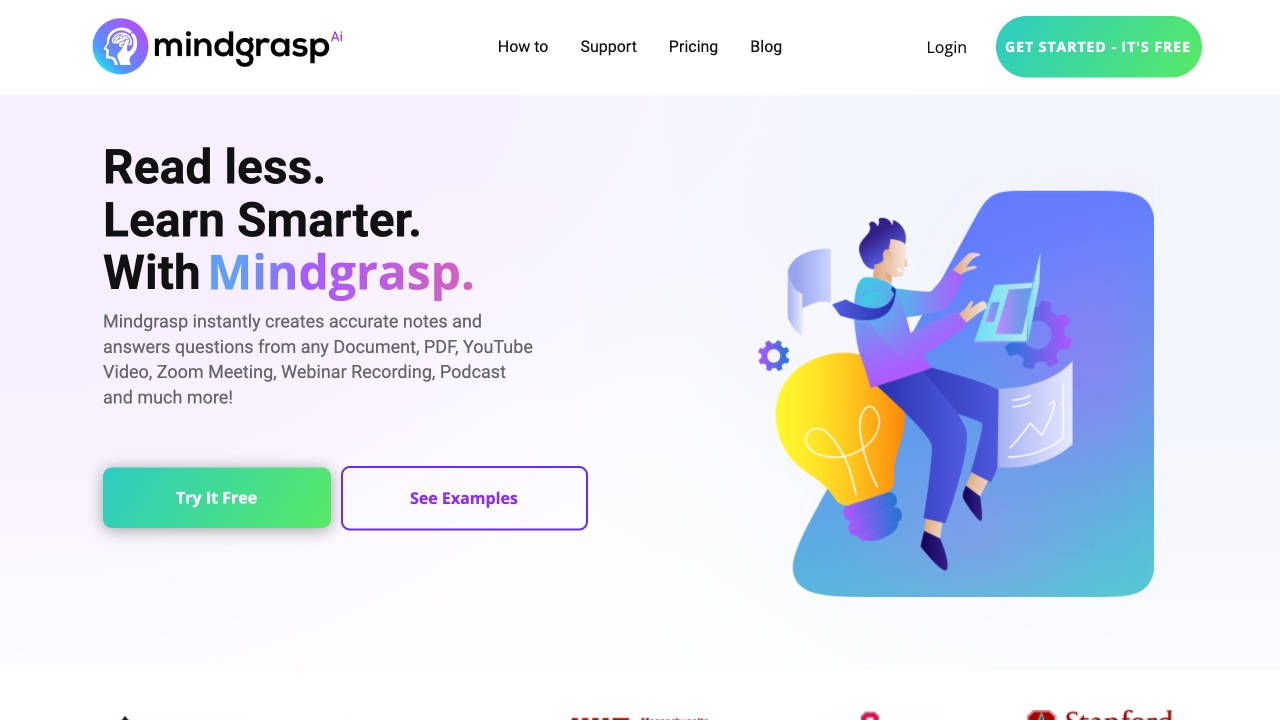
Mindgrasp generates study outputs like summaries, notes, flashcards, and quizzes from user materials and supports multi-format inputs.
Best use cases
- students
- professionals upskilling
- anyone drowning in long-form content
Practical method
The 1-hour mastery loop
- Upload a lecture or chapter.
- Generate:
- 10 key ideas
- 10 flashcards
- 10 quiz questions
- Re-test yourself the next day.
This transforms passive consumption into memory.
7) Khanmigo — Best for safe, guided, non-cheaty tutoring
Khanmigo tutors through guided questions instead of handing you answers, building genuine understanding across math, science, and humanities without enabling shortcut-taking.

Khanmigo is Khan Academy’s AI tutor designed to guide learners toward answers rather than just giving them away, with a strong emphasis on learning, safety, and building real understanding step by step. It’s especially good at keeping learners engaged without letting them shortcut the cognitive work that actually creates competence.
Best use cases
- Math, science, and core fundamentals
- Younger learners who benefit from guided structure
- Adults who want a clean, curriculum-style path
- Structured competency growth without overwhelm
Practical approach
The “no illusions of competence” ladder
- Diagnostic quiz
Quickly reveal what you think you know vs. what you can actually do. - Guided practice
Ask Khanmigo to nudge you with hints, questions, and partial steps rather than full solutions. - Short confidence test
A tight set of problems to confirm the concept is internalized. - Real-world application prompt
“Show me how this concept appears in everyday life or a simple project.”
Khanmigo’s philosophy is aligned with how real skill is built:
struggle + guidance + repetition + transfer.
That last part—transfer—is the difference between passing practice questions and actually owning the skill in the wild.
8) Duolingo Max — Best for language confidence via AI practice
Duolingo Max adds AI conversation practice and mistake explanations to gamified lessons, bridging the gap between vocabulary drills and real-world speaking confidence.
Duolingo Max adds AI features like Explain My Answer and Roleplay, and recent iterations have expanded AI-enabled interactions that make practice feel more like real conversation than a gamified drill. The value isn’t just “learning words,” but reducing the fear and friction of actually using the language out loud.
Best use cases
- Speaking confidence for beginners to intermediate learners
- Practical scenario rehearsal before travel, relocation, or work
- Low-stakes daily consistency when you don’t have a tutor
- Building reflexes in common social and professional contexts
Practical use
Scenario repetition
Pick one weekly scenario:
- Ordering food
- Negotiating price
- Interviewing
- Introducing yourself and your work
Roleplay it 3 times in a week.
On the third run, add constraints:
- “Make me respond with shorter sentences.”
- “Add a surprise question.”
- “Speed this up like a real conversation.”
Your brain becomes fluent by rehearsal, not wishful thinking.
And the hidden win: you’re training identity—the version of you who speaks, not the version of you who just studies.
9) WonsultingAI (ResumAI + NetworkAI) — Best for career clarity and networking precision
WonsultingAI combines resume optimization with networking message generation, helping you articulate career strengths and build professional connections with targeted outreach.
.png)
WonsultingAI provides tools for resume building/scoring and AI-assisted networking guidance, helping people turn vague career intent into crisp positioning and less painful outreach. It’s not magic, but it’s a strong advantage for anyone who’s capable yet under-selling themselves—or freezing when it’s time to network.
Best use cases
- Job transitions and role pivots
- Early-career momentum and first “real” upgrades
- People who dread outreach but know it matters
- Anyone needing faster iterations on resume + messaging
- International or non-traditional candidates who need clearer framing
Practical system
The 10-message experiment
- Generate 10 targeted outreach messages
Split them into:- 5 warm-ish (mutuals, communities, alumni)
- 5 cold-but-relevant (role-adjacent, same function)
- Connect with role-adjacent humans
Aim for people one step ahead of you, not celebrities. - Track responses
Note which messages get:- Replies
- Calls
- Referrals
- Refine tone and specificity
Iterate on:- Clear ask
- 1-line credibility
- Short, human warmth
Career growth is a social game.
AI reduces the awkwardness tax—so your competence has a cleaner path to being seen.
10) Dexa — Best for extracting trusted expert knowledge
Dexa lets you ask questions directly to expert-hosted podcasts, surfacing trusted answers from specific episodes instead of generic internet search results.

Dexa positions itself as a way to ask questions and get answers grounded in trusted experts’ long-form content, effectively creating a “personal AMA” layer over podcasts, interviews, and creator knowledge you already respect. Instead of hunting across fragmented clips and summaries, it helps you extract structured answers from deep archives. Dexa has also supported experiences around major creators and shows, including integrations and partnerships in this ecosystem, which suggests it’s aiming to become a reliable front door to expert-driven audio intelligence rather than just another summary tool.
Best use cases
- Health protocols with nuance (sleep, focus, training, recovery)
- Neuroscience and applied behavior change
- Deep domain exploration without searching 40 episodes manually
- People who want evidence-aware takeaways, not influencer-level certainty
Practical approach
Protocol compression
Ask:
- “Summarize the sleep protocol in 7 bullets.”
- “What’s the minimum viable version to start this week?”
- “What uncertainties or caveats does the expert mention?”
- “What would be a 2-week experiment to test this safely?”
This does two important things:
- Turns information into an experiment instead of a lifestyle overhaul.
- Protects you from dogma. You get the protocol and the limits of the protocol.
In other words, Dexa helps you treat health like engineering, not religion.
How to choose the right tool (without becoming a tool addict)
Pick one tool that addresses your biggest current bottleneck, use it daily for thirty days, then evaluate before adding another — stack depth beats breadth every time.
Most people don’t need 10 tools.
They need a stack that matches their bottleneck.
Use this diagnostic:
If your problem is…
Confusion, anxiety, identity drift
→ Life Note + Ebb
Time chaos, inconsistent habits
→ Tiimo or Reclaim.ai
Slow learning, scattered knowledge
→ ChatGPT + Mindgrasp or Khanmigo
Career stagnation
→ ChatGPT + WonsultingAI
Language goals
→ Duolingo Max + ChatGPT conversation practice
The 4-layer “anti-chaos” self-improvement stack
Layer your tools across four functions — reflection, learning, structure, and action — so each tool serves a distinct role without overlapping or creating busywork.
1) Awareness
Life Note
You can’t change patterns you won’t name.
2) Regulation
Headspace Ebb Headspace
Emotional stability precedes consistent action.
3) Execution
Tiimo or Reclaim.ai
Structure beats raw willpower. For a detailed walkthrough of assembling your AI productivity stack, see our dedicated guide.
4) Skill growth
ChatGPT Study Mode, Mindgrasp, Khanmigo, Duolingo Max, Dexa
Choose one lane at a time.
A 30-day plan that actually changes you
Spend days one through ten on a single reflection tool, days eleven through twenty adding a learning tool, and days twenty-one through thirty integrating a structure tool.
This is the missing piece in most “best tools” lists.
Tools don’t change you.
Routines that use tools change you.
Week 1 — Build self-honesty
- 3 Life Note sessions
- focus on one recurring pattern
- ask for one behavior experiment
- Use Ebb once when you feel emotionally flooded
Goal:
Spot the real pattern instead of chasing surface fixes.
Week 2 — Fix your calendar reality
- Pick Tiimo or Reclaim.ai
- Add 3 anchors:
- body
- deep work
- relationship/rest
Goal:
Reduce decision fatigue.
Week 3 — Choose one skill lane
Pick one:
- career skill
- writing
- language
- technical subject
- health knowledge
Use:
- ChatGPT Study Mode for structured learning khanmigo.ai
- or Mindgrasp for material conversion Mindgrasp
- or Khanmigo for fundamentals khanmigo.ai
Goal:
Move from “interested” to “competent.”
Week 4 — Integrate identity with action
Return to Life Note:
- “What has changed in me?”
- “Where am I still performing growth instead of living it?”
- “What does my calendar reveal about my real values?”
Goal:
Make your self-image match your behavior.
The contrarian truth that will save you years
The most transformative self-improvement tool is the one you actually use consistently — a simple journal beats ten sophisticated apps you open once and abandon.
AI won’t be the reason you win.
Your willingness to be honest will.
Because the real obstacle isn’t:
- lack of knowledge
- lack of tools
- lack of plans
It’s usually one of these:
- fear of disappointing people
- fear of looking foolish
- fear of discovering you want a different life than the one you’ve been building
The best self-improvement tools in 2026 aren’t just smart.
They’re mirrors with teeth.
Final ranking recap
Life Note leads for deep personal transformation, ChatGPT for versatile thinking, and Reclaim for turning intentions into scheduled action — choose based on your primary gap.
Rankings and pricing verified as of March 2026.
- Life Note — identity, meaning, pattern change
- ChatGPT — universal learning and thinking engine, now with Study Mode support khanmigo.ai
- Headspace Ebb — everyday emotional processing support
- Tiimo — compassionate structure, iPhone App of the Year 2026
- Reclaim.ai — auto-protect habits and deep work time
- Mindgrasp — convert content into study systems
- Khanmigo — guided learning with safety and pedagogy focus
- Duolingo Max — AI explanation and roleplay for language confidence
- WonsultingAI — resume + networking acceleration
- Dexa — ask experts’ content directly with faster retrieval
Frequently Asked Questions
1) What’s the best AI tool if I feel stuck and unmotivated?
Start with Life Note.
When motivation is missing, it’s often not a productivity problem—it’s a meaning problem.
Use it to identify the pattern beneath your stuckness and define one weekly action that restores self-trust.
A simple prompt:
- “What am I avoiding that’s costing me the most self-respect?”
2) Can AI replace a therapist or coach?
AI can be a powerful support for reflection and structure, but it shouldn’t replace professional care — see our guide on personal growth coaching alternatives for more — when you’re dealing with severe anxiety, depression, trauma, or risk.
Think of AI as training wheels for awareness and consistency, not a medical authority.
3) How do I avoid becoming dependent on AI?
Use this rule:
AI should shorten action time, not expand thinking time.
If you spend 30 minutes prompting and 0 minutes doing, you’re not improving—you're consuming guidance.
4) What’s the best AI stack for ADHD?
A simple and effective combo:
- Tiimo for visual structure
- Reclaim.ai for automatic habit protection
- Life Note weekly for reflection and emotional pattern tracking
The goal is to reduce decision fatigue and create gentle, repeatable structure.
5) What’s the best AI stack for founders?
Founders need clarity under pressure:
- Life Note to protect identity, meaning, and emotional truth
- ChatGPT for fast strategy and learning
- Reclaim.ai to defend deep work
- Ebb for nervous system containment
The founder’s hidden job is not just building a product.
It’s staying psychologically stable enough to build it well.
6) How much time should I spend on these tools daily?
Aim for 20–30 minutes total:
- 5–10 minutes of reflection
- 10–15 minutes of focused learning
- 2 minutes of emotional regulation when needed
- 3 minutes to check your schedule anchors
More tools won’t fix a lack of rhythm.
7) What’s the best tool for long-term identity change?
Life Note.
Identity change requires:
- pattern recognition
- emotional honesty
- aligned action
- repeated reflection
Most tools help you move faster.
Life Note helps you move truer.
8) How do I measure whether AI is truly improving my life?
Track outcomes, not outputs:
- Are you calmer under stress?
- Are you shipping more consistently?
- Are you avoiding fewer hard conversations?
- Do your weekly decisions feel clearer?
- Is your self-trust increasing?
The best metric is simple:
Are you becoming someone you respect more each month?
9) What’s the biggest mistake people make with AI self-improvement?
Confusing insight with change.
A brilliant summary doesn’t count as growth.
A perfect plan doesn’t count as courage.
Only behavior does.
10) If I only choose two tools, which should they be?
For most people:
- Life Note (inner transformation)
- ChatGPT (learning + execution support)
That combo covers meaning + skill—the two forces that quietly shape everything else.
Research: Can AI Actually Help With Self-Improvement?
Research indicates AI tools can enhance self-improvement through personalized feedback, pattern recognition, and evidence-based interventions tailored to individual goals.
| Study | Sample | Finding | Source |
|---|---|---|---|
| Fitzpatrick et al. (2017) | 70 adults | AI chatbot (Woebot) reduced depression symptoms significantly in just 2 weeks | JMIR Mental Health |
| Bai et al. (2024) | Meta-analysis | AI-powered habit tracking apps increased goal completion rates by 27% vs. manual tracking | Computers in Human Behavior |
| Pennebaker & Smyth (2016) | 200+ studies reviewed | Expressive writing (now AI-enhanced) improves immune function, emotional clarity, and goal attainment | Opening Up by Writing It Down |
| Linardon (2020) | Meta-analysis, 66 RCTs | Smartphone mental health apps produce small-to-moderate improvements in depression and anxiety | Journal of Affective Disorders |
| Seligman et al. (2005) | 411 adults | Daily gratitude and strengths exercises increased happiness for 6+ months — now automatable via AI | American Psychologist |
| Eurich (2018) | 5,000 participants | Structured self-reflection tools dramatically improve self-awareness, which only 10-15% of people naturally possess | Insight (book) |
Key insight: AI self-improvement tools work best when they combine structured reflection with personalized feedback — not when they simply automate generic advice.
Explore More
Explore our full library of self-improvement guides covering journaling techniques, reflection practices, and personal growth strategies beyond AI tools.
 Daniel W. Chen
 Daniel W. Chen
📚 Beyond tech: Complement AI tools with timeless wisdom from the best self-help books for men.
For a broader look at online learning beyond AI tools, see our guide to the best online resources for personal growth.
Journal with 1,000+ of History's Greatest Minds
Marcus Aurelius, Maya Angelou, Carl Jung — real wisdom from real thinkers, not internet summaries. A licensed psychotherapist called it "life-changing."
Try Life Note Free