
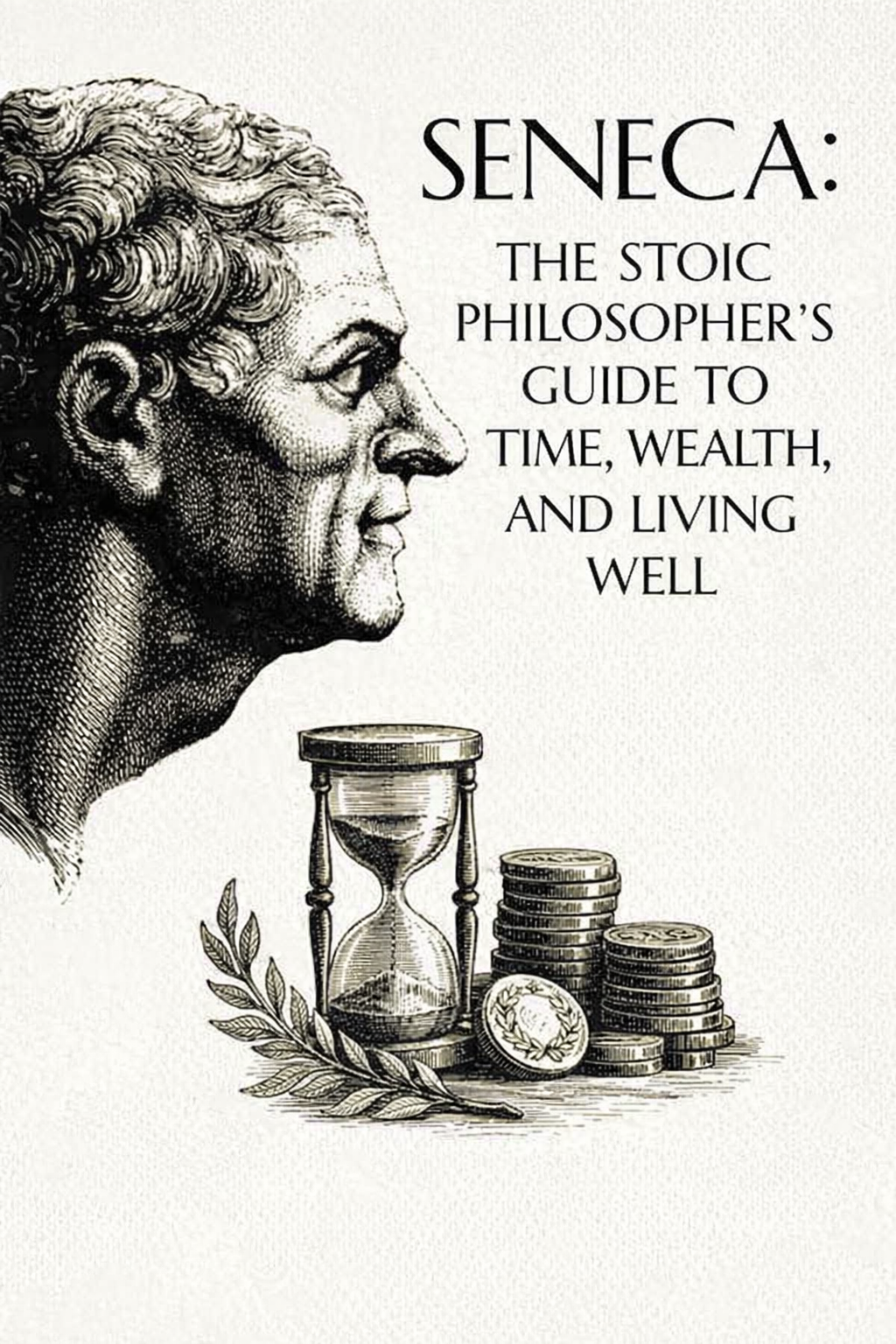
Seneca: The Stoic Philosopher's Guide to Time, Wealth, and Living Well

Discover Seneca's Stoic philosophy: his dramatic life, essential quotes, and practical wisdom on time, anger, and living well. A complete guide to the Roman philosopher.
📌 TL;DR — Seneca and Stoicism
Seneca (c. 4 BCE – 65 CE) was a Roman Stoic philosopher who lived as advisor to Emperor Nero and one of the wealthiest men in Rome. His practical essays on time, anger, wealth, and death remain remarkably relevant today. Key teachings include treating time as our most valuable resource, practicing negative visualization, and understanding that being busy isn't the same as living well.
He was one of the richest men in the Roman Empire. He tutored an emperor. He wrote philosophy in the morning and managed vast wealth in the afternoon. And in the end, his own student ordered him to kill himself.
Seneca the Younger (c. 4 BCE – 65 CE) lived one of history's most dramatic lives—and left behind some of its most practical wisdom. While Marcus Aurelius wrote private meditations, Seneca wrote letters intended to teach. While Marcus struggled with power he inherited, Seneca struggled with power he accumulated. His contradictions make him human. His insights make him timeless. Seneca's work forces us to confront what wisdom actually means — beyond mere knowledge.
Two thousand years later, Seneca's essays on time, anger, wealth, and death remain startlingly relevant. He wrote about procrastination before the word existed. He diagnosed our anxious relationship with time before smartphones made it worse. He understood that being busy isn't the same as living well.
This is your introduction to Seneca—his extraordinary life, his practical philosophy, and why his words still cut through modern noise.
Who Was Seneca?
Seneca was a Roman Stoic philosopher, statesman, and advisor to Emperor Nero who transformed abstract Greek philosophy into practical wisdom for daily life.
Lucius Annaeus Seneca (c. 4 BC–65 AD) was a Roman Stoic philosopher, statesman, and dramatist who served as advisor to Emperor Nero. Despite immense wealth and political power, Seneca devoted his writing to practical wisdom—how to manage anger, face death, use time well, and live with virtue amid adversity.
Lucius Annaeus Seneca was born around 4 BCE in Corduba (modern-day Córdoba, Spain) to a wealthy Roman family. His father, Seneca the Elder, was a renowned rhetorician. Young Seneca was brought to Rome as an infant and educated in rhetoric and philosophy.
He suffered from poor health throughout his life—likely severe asthma—which nearly killed him as a young man and gave him an intimate relationship with mortality that infuses his writing.
Rise to Power
Seneca became a successful orator and entered political life, rising to the position of quaestor. But his prominence attracted dangerous attention. In 41 CE, the Emperor Claudius—likely at the instigation of Empress Messalina—exiled Seneca to Corsica on charges of adultery with the emperor's niece. The charges were probably false, politically motivated.
Seneca spent eight years in exile on that rocky island. Far from breaking him, exile became a philosophical laboratory. He wrote some of his most profound works during this period, including consolations that grappled with loss, injustice, and the proper response to circumstances beyond one's control.
Tutor to Nero
In 49 CE, Claudius's new wife Agrippina recalled Seneca from exile to tutor her son—the future Emperor Nero. When Nero became emperor at age sixteen in 54 CE, Seneca and the prefect Burrus essentially ran the empire. The first five years of Nero's reign, guided by Seneca, were remembered as a golden age of good governance.
Seneca became extraordinarily wealthy during this period—so wealthy that critics accused him of hypocrisy for writing about the unimportance of riches while amassing a fortune. He addressed this criticism directly in his essay "On the Happy Life," arguing that a philosopher can possess wealth without being possessed by it.
Fall and Death
As Nero aged, he became increasingly unstable and violent. Seneca tried to retire from public life multiple times, even offering to return his wealth to the emperor. Nero refused.
In 65 CE, after a failed conspiracy against Nero (the Pisonian conspiracy), Seneca was implicated—probably falsely—and ordered to commit suicide. He accepted the sentence with remarkable composure, reportedly discussing philosophy with friends as he opened his veins. When death came too slowly, he took poison; when that failed, he was placed in a hot bath to speed the bleeding.
According to Tacitus, Seneca's last words were an offering to Jupiter the Liberator. He died as he had tried to live—philosophically, with death transformed into a final act of teaching.
Why Seneca Still Matters Today
Seneca's writings on time management, anxiety, and emotional resilience address the same struggles modern people face — with sharper clarity than most self-help.
Seneca wrote two thousand years ago, but his concerns are uncannily modern:
He Understood Our Relationship with Time
Seneca's essay "On the Shortness of Life" could have been written yesterday. We complain life is short while wasting most of it. We're too busy to live. We postpone what matters for someday that never arrives.
"It is not that we have a short time to live, but that we waste a lot of it. Life is long enough, and a sufficiently generous amount has been given to us for the highest achievements if it were all well invested." — On the Shortness of Life
This diagnosis of busyness without purpose, of full calendars and empty lives, resonates more now than ever.
He Wrote Accessibly
Unlike many ancient philosophers, Seneca wrote to be understood. His Letters to Lucilius—124 letters of philosophical advice to a younger friend—feel like emails from a wise mentor. They're conversational, practical, and often funny. He uses everyday examples: bad weather, annoying neighbors, dealing with difficult people at dinner parties.
He Admitted His Struggles
Seneca didn't pretend to be a sage. He called himself a "patient, not a doctor"—someone working on the same problems as his readers. This honesty makes him relatable in ways that purer philosophers aren't.
"I am not wise, and I shall not be wise in order to feed your spite. So demand of me, not that I be equal to the best, but that I be better than the bad." — On the Happy Life
He Faced Real Contradictions
Seneca wrote about simple living while owning 500 tables of citrus wood. He wrote about retirement while advising a tyrant. He wrote about accepting fate while lobbying for recall from exile. These contradictions don't invalidate his philosophy—they prove that philosophy is for humans, not saints. Seneca shows what it looks like to struggle with wisdom rather than simply possess it.
Seneca's Core Philosophy
Seneca taught that a good life comes from focusing only on what you can control — your judgments, actions, and character — while accepting everything else.
Seneca was a Stoic, part of a philosophical tradition that emphasized virtue, reason, and acceptance of what we cannot control. But he made Stoicism practical and personal. Here are his central teachings:
Time Is Our Most Precious Resource
No theme appears more consistently in Seneca's work than time. We guard our money but waste our hours. We're protective of our property but careless with our days.
"We are not given a short life but we make it short, and we are not ill-supplied but wasteful of it." — On the Shortness of Life
"People are frugal in guarding their personal property; but as soon as it comes to squandering time they are most wasteful of the one thing in which it is right to be stingy." — On the Shortness of Life
Seneca's solution isn't to cram more in but to spend time on what matters. Shallow busyness isn't living; it's avoiding life.
Prepare for Adversity
Bad things will happen. The Stoic doesn't pretend otherwise—they prepare. Seneca practiced what he called "premeditatio malorum" (premeditation of evils): imagining difficulties in advance so they don't catch you unprepared.
"What is quite unlooked for is more crushing in its effect, and unexpectedness adds to the weight of a disaster... Nothing ought to be unexpected by us. Our minds should be sent forward in advance to meet all problems, and we should consider, not what is wont to happen, but what can happen." — Letters to Lucilius, 91
This isn't pessimism—it's emotional insurance. When you've imagined losing your job, your health, or your loved ones, you appreciate them more and handle loss better when it comes.
Focus on What You Can Control
Like all Stoics, Seneca distinguished between what's "up to us" (our judgments, intentions, and responses) and what isn't (external events, other people's actions, our reputation). Freedom comes from focusing on the former.
"We suffer more often in imagination than in reality." — Letters to Lucilius, 13
"True happiness is to enjoy the present, without anxious dependence upon the future." — Letters to Lucilius, 15
Wealth Should Serve, Not Rule
Seneca didn't condemn wealth—he had plenty of it. He condemned being enslaved to wealth, pursuing it obsessively, or letting it corrupt your character.
"It is not the man who has too little, but the man who craves more, that is poor." — Letters to Lucilius, 2
"Wealth is the slave of a wise man and the master of a fool." — On the Happy Life
The test is whether you could lose your fortune and remain yourself. If not, your wealth owns you.
Anger Is Temporary Madness
Seneca wrote an entire treatise on anger—"De Ira" (On Anger)—analyzing its causes and cures. (For a modern journaling practice inspired by Seneca's approach, see our anger journal prompts.) He saw anger as uniquely dangerous because it feels justified while it lasts.
"The greatest remedy for anger is delay." — On Anger
"Anger, if not restrained, is frequently more hurtful to us than the injury that provokes it." — On Anger
His practical advice: when angry, delay action. Wait. The feeling will pass, and you'll see the situation more clearly. Most things that seem outrageous in the moment seem trivial by morning.
Death Gives Life Meaning
Seneca returned constantly to mortality—not morbidly, but clarifyingly. Death is coming; this is just reality. Accepting it transforms how you spend your limited time.
"Let us prepare our minds as if we'd come to the very end of life. Let us postpone nothing. Let us balance life's books each day." — Letters to Lucilius, 101
"It takes the whole of life to learn how to die." — On the Shortness of Life
Essential Seneca Quotes
Seneca's most powerful quotes distill complex philosophical truths into memorable phrases covering time, adversity, anger, wealth, and the art of living well.
Seneca was a master of the memorable phrase. Here are some of his most powerful insights, organized by theme:
On Time and Life
"Begin at once to live, and count each separate day as a separate life." — Letters to Lucilius, 101
"While we wait for life, life passes." — On the Shortness of Life
"Life is very short and anxious for those who forget the past, neglect the present, and fear the future." — On the Shortness of Life
On Difficulty and Resilience
"Difficulties strengthen the mind, as labor does the body." — Letters to Lucilius, 78
"A gem cannot be polished without friction, nor a man perfected without trials." — On Providence
"It is not because things are difficult that we do not dare; it is because we do not dare that they are difficult." — Letters to Lucilius, 104
On Character and Virtue
"Associate with those who will make a better man of you. Welcome those whom you yourself can improve." — Letters to Lucilius, 7
"No man is good by chance. Virtue is something that must be learned." — Letters to Lucilius, 123
"He who is brave is free." — Letters to Lucilius, 77
On Peace of Mind
"True happiness is to enjoy the present, without anxious dependence upon the future." — Letters to Lucilius, 15
"If you really want to escape the things that harass you, what you need is not to be in a different place but to be a different person." — Letters to Lucilius, 104
"We suffer more often in imagination than in reality." — Letters to Lucilius, 13
On Learning and Wisdom
"As long as you live, keep learning how to live." — Letters to Lucilius, 76
"Every night before going to sleep, we must ask ourselves: what weakness did I overcome today? What virtue did I acquire?" — On Anger
"The mind that is anxious about future events is miserable." — Letters to Lucilius, 98
Key Works by Seneca
Start with Letters to Lucilius for daily wisdom, On the Shortness of Life for time philosophy, and On Anger for emotional mastery — all remain accessible today.
Seneca left behind a substantial body of philosophical writing. Here are the essential works:
Letters to Lucilius (Epistulae Morales)
124 letters of practical philosophy addressed to his friend Lucilius. This is where most people should start with Seneca—they're accessible, varied, and immediately applicable. Topics range from dealing with crowds to preparing for death, from managing time to choosing friends.
On the Shortness of Life (De Brevitate Vitae)
Seneca's most famous essay, arguing that life is long enough if we use it well. A devastating critique of busyness, postponement, and living for an imaginary future. Reading it feels like being gently slapped awake.
On Anger (De Ira)
A three-book treatise analyzing anger's causes, effects, and remedies. Seneca examines why we get angry, why it's almost never justified, and practical techniques for managing it. Remarkably relevant for road rage, online arguments, and workplace frustrations.
On the Happy Life (De Vita Beata)
Seneca's defense of his own wealth and his argument that happiness comes from virtue, not circumstances. He addresses accusations of hypocrisy and articulates what it means to live well while living comfortably.
On Tranquility of Mind (De Tranquillitate Animi)
Practical advice for achieving inner peace amid life's chaos. Seneca diagnoses the restlessness that makes us constantly seek novelty and offers remedies for finding contentment.
On Providence (De Providentia)
Why do bad things happen to good people? Seneca's answer: adversity is training, not punishment. The universe isn't hostile—it's educational.
How to Practice Seneca's Philosophy
Practice Seneca's Stoicism through three daily habits: morning mental rehearsal of challenges, intentional action during the day, and evening self-examination.
To practice Seneca's Stoicism, begin with three daily habits: morning preparation (mentally rehearse potential challenges), evening review (examine what went well and what didn't), and negative visualization (briefly imagine losing what you value to build gratitude and resilience). Seneca emphasized that philosophy must be lived, not just studied.
Seneca wasn't interested in philosophy as theory. He wanted practical wisdom—philosophy you could use. Here's how to apply his teachings:
Audit Your Time
Track how you actually spend your hours for a week. Not how you think you spend them—how you actually do. Seneca would ask: how much was truly living, and how much was merely existing? How much went to what matters, and how much was frittered away?
Practice Negative Visualization
Regularly imagine losing what you value: your health, your job, your relationships, your life. Not to become depressed, but to appreciate what you have and prepare emotionally for inevitable loss. Seneca did this daily.
Evening Review
Each night, review your day. Seneca asked himself three questions:
- What bad habit did I curb today?
- What virtue did I practice?
- In what way am I better than yesterday?
This practice builds self-awareness and compounds improvement over time.
Delay When Angry
When you feel anger rising, do nothing. Wait. Give yourself an hour, a day, a night. Seneca's greatest practical insight about anger: time is its natural cure. Act while angry, and you'll likely regret it. Wait, and you'll often wonder what the fuss was about.
Practice Voluntary Discomfort
Periodically experience hardship voluntarily: skip meals, sleep on the floor, wear simple clothes. Seneca recommended this not as punishment but as training—proving to yourself that you can handle difficulty makes you less afraid of it.
"Set aside a certain number of days, during which you shall be content with the scantiest and cheapest fare, with coarse and rough dress, saying to yourself the while: 'Is this the condition that I feared?'" — Letters to Lucilius, 18
Read Slowly and Apply
Seneca criticized people who read philosophy like they're trying to finish a race. Don't read to accumulate—read to transform. Take one letter, one idea, and sit with it. Ask: how does this apply to my life today?
Journaling with Seneca
Seneca practiced nightly self-examination through writing — his Letters to Lucilius model how reflective journaling transforms philosophical ideas into lived experience.
Seneca practiced daily self-examination and recommended it to others. His Letters to Lucilius are themselves a form of written reflection—working out philosophical problems on the page.
You can journal in the Senecan style by asking yourself his evening review questions:
- What weakness did I overcome today?
- What virtue did I practice?
- How did I spend my time—was I truly living or merely existing?
- What did I postpone that I should have faced?
- Where did anger or fear control me?
- What would I do differently if I lived today again?
- If this were my last day, would I be satisfied with how I spent it?
Life Note offers AI-guided journaling with a Seneca mentor who can guide you through this kind of Stoic self-examination. Write about your struggles with time, anger, or fear, and receive thoughtful follow-up questions drawn from Seneca's wisdom. It's like having a philosophical friend asking the questions Seneca asked himself—and his friend Lucilius—two thousand years ago.
Whether you use paper, an app, or AI guidance, the practice remains what Seneca recommended: honest daily reflection that turns experience into wisdom.
For more on building a journaling practice, see our guide on how to start journaling.
Seneca and Other Stoics
Among the three great Roman Stoics, Seneca is the most literary and accessible — more practical than Epictetus, more emotionally honest than Marcus Aurelius.
Seneca is one of the three great Roman Stoics, alongside Marcus Aurelius and Epictetus. Each offers something different:
Seneca is the most literary and accessible. His essays and letters read like good conversation—practical, witty, occasionally self-deprecating. He's best for understanding how to apply Stoicism to everyday challenges. If you're also curious how Stoic ethics intersect with religious thought, the deep-dive on Stoicism and Christianity — which also covers Buddhism — maps the key agreements and fault lines between these traditions.
Marcus Aurelius offers raw authenticity. His Meditations are private journals never meant for publication, showing philosophy as daily practice rather than polished theory.
Epictetus is the most systematic. A former slave who became a philosophy teacher, his Discourses and Enchiridion lay out Stoic principles with clarity and force.
Reading all three gives you Stoicism from different angles: the wealthy advisor, the powerful emperor, and the freed slave all arrived at similar conclusions about what matters and how to live.
For a comprehensive introduction to their shared philosophy, see our guide to what Stoicism is and how to practice it.
FAQ
Common questions cover whether Seneca was a hypocrite, how to start reading his works, and how Stoicism differs from suppressing emotions.
Who was Seneca the philosopher?
Seneca the Younger (c. 4 BCE – 65 CE) was a Roman Stoic philosopher, statesman, and dramatist. He served as tutor and advisor to Emperor Nero, became one of Rome's wealthiest men, and wrote extensively on ethics, time management, anger, and living well. He was forced to commit suicide by Nero in 65 CE.
What is Seneca best known for?
Seneca is best known for his philosophical essays and letters, particularly "On the Shortness of Life" (about using time wisely), "Letters to Lucilius" (practical philosophical advice), and "On Anger" (managing emotions). His accessible writing style made Stoic philosophy practical and applicable to daily life.
What are Seneca's main teachings?
Seneca's main teachings include: time is our most precious resource and shouldn't be wasted; we suffer more in imagination than reality; adversity strengthens character; anger should be managed through delay; wealth should serve us, not rule us; and we should prepare for death by living fully each day.
Was Seneca a hypocrite?
Critics accused Seneca of hypocrisy for preaching simple living while being enormously wealthy. Seneca addressed this directly, arguing that philosophers can possess wealth without being possessed by it, and that he never claimed to be a sage—only someone working toward wisdom. His contradictions make him human and relatable.
What is the best Seneca book to start with?
"On the Shortness of Life" is the best starting point—it's brief, powerful, and immediately applicable. After that, the "Letters to Lucilius" offer varied practical wisdom in digestible portions. Look for translations by modern scholars like Robin Campbell or Margaret Graver for accessibility.
How did Seneca die?
In 65 CE, Seneca was implicated in the Pisonian conspiracy against Nero (probably falsely) and ordered to commit suicide. He accepted the sentence with composure, opening his veins while discussing philosophy with friends. When death came too slowly, he took poison and was finally placed in a hot bath to speed the bleeding.
What is the difference between Seneca and Marcus Aurelius?
Seneca wrote essays and letters intended for readers; Marcus wrote private journal entries for himself. Seneca was more literary and deliberately instructive; Marcus more personal and raw. Seneca struggled with wealth and power he accumulated; Marcus struggled with power he inherited. Both offer profound Stoic wisdom from different perspectives.
Conclusion: The Philosopher in the Arena
Seneca's enduring legacy proves that philosophy is not academic theory — it is the daily practice of living wisely under real pressure and uncertainty.
Seneca wasn't a philosopher in an ivory tower. He was in the arena—advising emperors, managing wealth, navigating political danger, and ultimately facing his own death. His philosophy was tested by life in ways most philosophers avoid.
That's what makes him valuable. He knew the gap between knowing what's right and doing it. He experienced the pull of wealth, the intoxication of power, and the fear of death. He didn't transcend these human struggles—he wrestled with them on the page, leaving us a record of the fight.
His invitation isn't to become a sage but to become better. Not to escape life's difficulties but to meet them philosophically. Not to accumulate wisdom but to practice it.
"Begin at once to live, and count each separate day as a separate life." — Letters to Lucilius, 101
That's Seneca's challenge. Don't wait for the perfect conditions. Don't postpone living until retirement, until the weekend, until someday. Begin now. Today is enough. This moment is where philosophy becomes life.
Seneca's Stoicism is a practical philosophy of self-mastery rooted in the teachings of Lucius Annaeus Seneca (4 BC–65 AD), a Roman Stoic philosopher who wrote extensively on managing emotions, facing mortality, and living with purpose.
For a broader introduction to the philosophy that shaped his thinking, see our guide to understanding Stoicism and its core principles.
Seneca himself was a daily journaler. Learn how to journal like a Stoic philosopher using techniques inspired by Seneca, Aurelius, and Epictetus.
Journal with 1,000+ of History's Greatest Minds
Marcus Aurelius, Maya Angelou, Carl Jung — real wisdom from real thinkers, not internet summaries. A licensed psychotherapist called it "life-changing."
Try Life Note Free