
Bullet Journal Ideas: 65+ Spreads for Clarity, Creativity, and Intentional Living

Return to what makes bullet journaling powerful: intentionality, not aesthetics. 65+ practical spreads for clarity, creativity, and self-reflection.
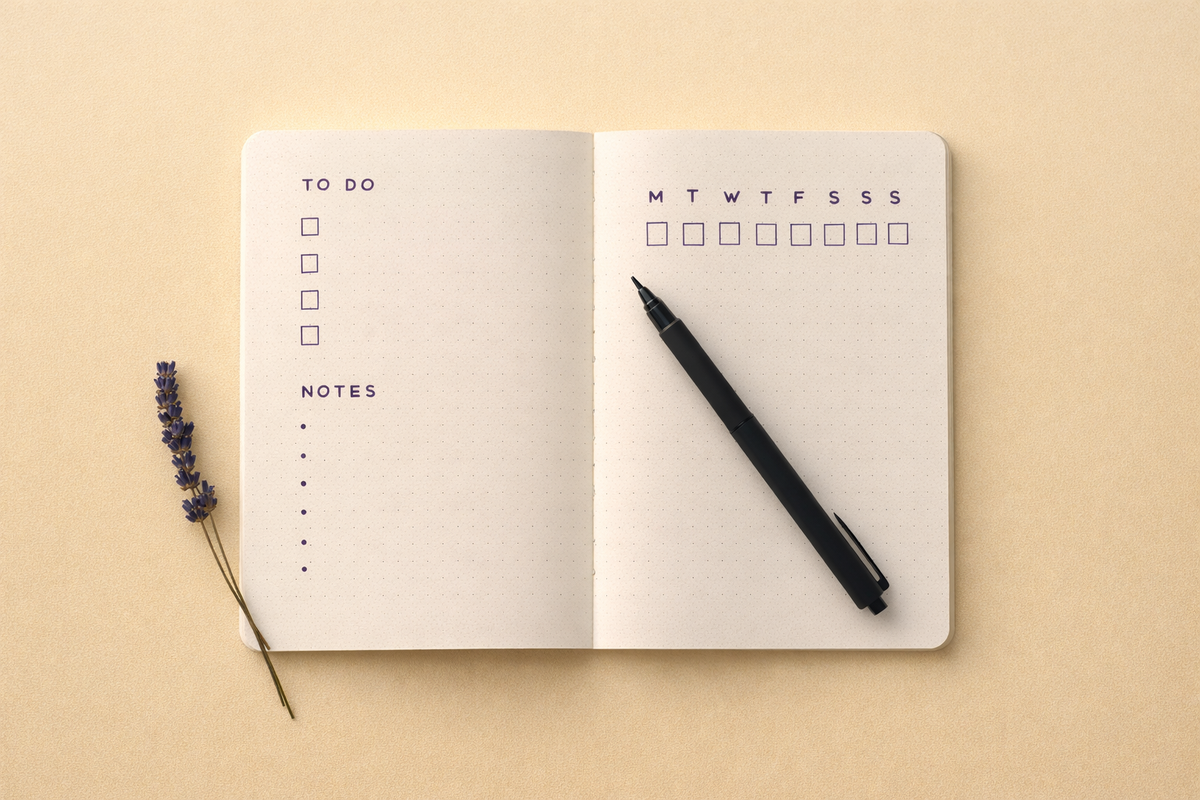
📌 TL;DR — Bullet Journal Ideas
This guide offers 65+ practical bullet journal spreads focused on clarity and intentional living—not Instagram aesthetics. Categories include daily/weekly/monthly layouts, habit trackers, goal planning, self-reflection, and mental health. The key principle: the best bullet journal system is one you actually use. Start simple with rapid logging, then add spreads that serve your specific needs.
The System That Became Its Own Distraction
Bullet journaling was designed as a minimalist productivity system, but social media transformed it into an art project that intimidates the people who need it most.
Something strange happened to bullet journaling. What began as a minimalist system for "track the past, order the present, design the future" became an Instagram aesthetic. The method invented by Ryder Carroll—a digital product designer with attention challenges—to create ruthless simplicity became, for many practitioners, its opposite: another source of complexity, comparison, and overwhelm. The original intent—clear goal tracking and intentional living—got buried under washi tape.
Scroll through #bulletjournal and you'll find intricate spreads that took hours to create. Washi tape arrangements. Elaborate hand-lettering. Trackers for every conceivable metric. These are beautiful. They're also a departure from the original philosophy.
Carroll himself has noticed: "The whole point was to do more with less. Somewhere along the way, it became about having more." His book, The Bullet Journal Method, is less about spreads and more about intentionality—what he calls "the analog system for the digital age."
This guide returns to that intention while offering 75+ practical bullet journal ideas. Not to create more work, but to create more clarity. Whether you're using your bullet journal for mental health tracking or project management, the best system is one you actually use—not one you admire from a distance while continuing to lose track of your life.
The Philosophy Behind the Method
Ryder Carroll created bullet journaling as intentional living through writing, where rapid logging forces you to evaluate what truly deserves your limited time and energy.
Before exploring specific ideas, it's worth understanding what makes bullet journaling different from other planning systems.
Intentional Incompleteness
Most planners come pre-structured. Monday through Friday. January through December. This structure creates waste—blank pages for days when nothing happened, or cramped margins for days when everything did. For an even more flexible approach that abandons planner structure entirely, see our guide to anti-planner journaling.
The bullet journal starts blank. You create structure as needed. This sounds simple but it's philosophically significant: the system adapts to your life rather than forcing your life to fit the system.
Rapid Logging
Carroll's core innovation is rapid logging—using simple symbols to capture information quickly without complete sentences. A dot for tasks. A circle for events. A dash for notes. This reduces friction between thought and capture, which is where most productivity systems fail.
Related: Best Self Journal review
Most of us have more ideas than we can possibly execute. The problem isn't generating ideas; it's deciding which ones deserve our limited time. Rapid logging captures everything, then forces regular review where you must confront what you've committed to and what you're willing to release.
Migration as Meditation
The most underappreciated element of bullet journaling is migration—the monthly practice of reviewing incomplete tasks and consciously deciding whether to move them forward, schedule them for later, or cross them out entirely.
This forced confrontation is uncomfortable. You realize how many things you've avoided. How many tasks you added out of obligation rather than genuine intention. How much of your list represents other people's priorities disguised as your own.
Migration is where bullet journaling becomes self-awareness practice.
Core Bullet Journal Ideas: The Essential Spreads
The six essential spreads are future log, monthly log, daily log, habit tracker, collections, and index, forming a complete analog system that replaces multiple apps.
If you're starting a bullet journal, these foundational spreads form the backbone of the system. Master these before adding complexity.
The Index
The first few pages of any bullet journal serve as a table of contents. As you create collections (themed pages), record their page numbers in the index. This sounds tedious but becomes essential—without it, you'll waste time flipping through pages searching for that idea you had three months ago.
Implementation tip: Leave 4-6 pages for your index. Number every page as you go (a small investment that pays dividends).
The Future Log
A simple overview of the coming months. Carroll's original design divides a page into sections for each month, capturing events and tasks that are time-specific but not immediate. When you remember in March that you have a conference in July, it goes in the future log.
Variations that work:
- The Calendex method (dates on one page, details on referenced pages)
- The Alastair method (simple list with month columns)
- Year-at-a-glance single-page overview for visual thinkers
The Monthly Log
Each month begins with a calendar page (optional) and a task list. The calendar captures appointments and events; the task list captures what you intend to accomplish. This is where migration happens—at month's end, incomplete tasks are either migrated forward or released.
The power move: Before filling in your new monthly log, review the previous month. What patterns do you notice? What kept getting postponed? What drained your energy? Let this inform what you commit to next.
The Daily Log
The heart of bullet journaling. Each day, you create a rapid log of tasks (dots), events (circles), and notes (dashes) as they arise. No pre-designed layouts—just the date and whatever needs capturing.
This is where people often overcomplicate. The daily log doesn't need boxes, trackers, or decorative headers. It needs to be fast enough that you'll actually use it.
Bullet Journal Ideas for Self-Reflection
Self-reflection spreads transform your bullet journal from a task manager into a personal growth tool that tracks emotional patterns alongside daily accomplishments.
Beyond task management, bullet journals can become powerful tools for self-examination. These spreads create structured space for the inner work that productivity systems typically ignore.
1. Weekly Reflection Questions
Create a simple spread with recurring questions you answer each week:
- What went well this week?
- What challenged me?
- What did I learn?
- What will I do differently next week?
For deeper reflection work, explore our comprehensive guide to self-reflection prompts.
2. Monthly Wins and Lessons
At month's end, list your wins in one column and lessons in another. This prevents the common tendency to focus only on what went wrong while ignoring progress.
3. Values Audit Spread
List your core values (honesty, creativity, connection, etc.) and periodically assess how your recent actions align with them. This creates accountability between your stated priorities and lived reality.
4. Wheel of Life Assessment
Divide a circle into life areas (health, relationships, career, finances, growth, etc.) and rate your current satisfaction in each. Do this quarterly to track which areas need attention.
5. Fear Inventory
Tim Ferriss popularized "fear-setting"—explicitly writing out what you fear, what you could do to prevent it, and what you'd do to recover if it happened. A bullet journal spread for this forces clearer thinking about the risks you're avoiding.
6. Belief Tracker
List limiting beliefs you're working to change and counter-evidence you've gathered. Over time, this becomes a record of cognitive shifts.
7. Shadow Work Log
Create space for examining patterns you'd rather ignore—triggers, projections, recurring conflicts. For guidance, see our shadow work journal prompts.
Bullet Journal Ideas for Habit Tracking
Habit tracking spreads use visual consistency chains that leverage loss aversion psychology, making streak-breaking more painful than the habit itself feels difficult.
Habit trackers are perhaps the most popular bullet journal addition—but they're also where people most often overcomplicate. Research on behavior change suggests tracking 1-3 habits at a time is optimal. More than that and you're just creating a visual record of failure.
8. The Minimalist Habit Tracker
One page. One month. 1-3 habits. That's it. List the days across the top, habits down the side, and fill in squares as you complete them. Resist the urge to add more until these are automatic.
9. Keystone Habit Focus
Charles Duhigg's research on "keystone habits" shows that certain habits trigger cascading improvements in other areas. Exercise often leads to better eating, better sleep, and better productivity. Instead of tracking ten habits, identify your keystone and track that intensively.
10. Habit Stacking Spread
Map out your habit stacks—new habits attached to existing routines. "After I pour coffee, I will journal for 5 minutes." Visual mapping helps identify where habits can naturally slot into your day.
11. The Don't Break the Chain Calendar
Inspired by Seinfeld's productivity advice: put an X through each day you complete your habit. Your only job is not to break the chain. This leverages loss aversion—you're not trying to achieve something; you're trying not to lose your streak.
12. Weekly Habit Minimalist
Instead of daily tracking, rate your week on each habit from 1-5. Less granular but more sustainable for people who find daily tracking burdensome.
13. The Anti-Habit Tracker
Track what you're trying to stop rather than start. Days without social media. Days without sugar. Days without complaining. Sometimes elimination is more powerful than addition.
Bullet Journal Ideas for Goals and Projects
Goal spreads break annual ambitions into quarterly milestones with measurable checkpoints, preventing the January enthusiasm that fades into February abandonment every year.
Goal-setting within bullet journals benefits from the system's flexibility. Unlike pre-printed planners, you can design goal spreads that match how you actually think.
14. Level 10 Life Goals
From Hal Elrod: rate ten life areas from 1-10, then set specific goals to raise each rating. The visual gap between current state and desired state creates motivation.
15. Quarterly Goal Sprint
Instead of annual goals (which are easy to postpone), set 90-day goals with monthly milestones. Review and reset each quarter. This creates urgency without overwhelming pressure.
16. The 12-Week Year
Based on Brian Moran's book—treat 12 weeks like a year. Set goals, create weekly plans, and review progress intensively. The compressed timeline prevents procrastination.
17. Project Runway Spread
For multi-month projects: visualize the timeline with key milestones, dependencies, and deadlines. Having the full runway visible prevents the "suddenly it's due tomorrow" panic.
18. Ideal Week Design
Block out your ideal week—when you'd exercise, when you'd do deep work, when you'd rest. Then compare to your actual week. The gap reveals where your intentions diverge from your actions. See our goal journal guide for more.
19. Someday/Maybe List
From David Allen's GTD: a parking lot for ideas you're not ready to commit to. Books to read someday. Trips to take eventually. Skills to learn when you have time. Capturing these clears mental space without creating false commitments.
20. The One Thing Focus Page
Inspired by Gary Keller: each week, identify the ONE thing that, if accomplished, makes everything else easier or unnecessary. Track this focus across weeks to see if you're actually prioritizing what matters.
Bullet Journal Ideas for Mental Health
Mental health spreads combine mood tracking, anxiety triggers, and gratitude logs into a private therapeutic workspace that reveals patterns invisible without consistent daily data.
The intersection of bullet journaling and mental health support has grown significantly. These spreads create structure for emotional awareness and self-care—though they don't replace professional support when needed. For deeper guidance, see our mental health journaling guide.
If visual beauty is what motivates you to stay consistent, explore aesthetic journaling—research shows that making your journal visually pleasing actually increases engagement and mental health benefits.
21. Mood Tracker
Track your mood daily (simple color coding works) to identify patterns. You might discover that Wednesdays are consistently difficult, or that your mood correlates with sleep, exercise, or social contact.
22. Anxiety Log
When anxiety spikes, record: the trigger, the physical sensations, the thoughts that arose, and what helped. Over time, patterns emerge that make anxiety more manageable.
23. Gratitude Log
Research consistently shows gratitude practice improves well-being. But "three things I'm grateful for" gets stale. Vary the prompts: grateful for a person, a challenge, a small pleasure, something you usually take for granted. See our therapist-backed gratitude journaling tips.
24. Self-Care Menu
Create a reference list of activities that genuinely restore you—not performative self-care, but what actually helps. Organize by time available: 5-minute options, 30-minute options, half-day options. When you're depleted, decision fatigue makes this menu invaluable.
25. Cognitive Distortion Tracker
From CBT: track when you notice black-and-white thinking, catastrophizing, mind-reading, or other distortions. Naming the pattern is the first step to changing it.
26. Sleep Log
Track bedtime, wake time, sleep quality, and factors that might influence it (caffeine, screens, exercise). The correlation data can be surprisingly actionable.
27. Energy Level Tracker
Track energy throughout the day to identify your natural peaks and valleys. Schedule important work during peaks; schedule routine tasks during valleys.
28. Wins Wall
A running list of accomplishments, large and small. On difficult days, this becomes a reminder that you've been capable before and will be capable again.
Bullet Journal Ideas for Creativity and Learning
Creative spreads include reading logs, skill trackers, and idea capture pages that transform scattered inspiration into organized projects with visible forward momentum.
For creative professionals, students, and lifelong learners, bullet journals can structure growth in ways that digital tools often can't.
29. Books Read This Year
List books with brief one-line reactions. At year's end, you'll have a record of how your reading shaped your thinking. For book recommendations, see our guide to the best self-help books.
30. Learning Sprint Tracker
Track progress on a skill you're developing—hours practiced, milestones reached, obstacles encountered. The visual record of investment is motivating.
31. Idea Capture Page
A running list of ideas as they occur. Don't judge, just capture. Review monthly and mark the ones worth pursuing.
32. Creative Inspiration Log
What moved you—quotes, images, conversations, experiences? Capturing creative inputs helps when you need inspiration on demand.
33. Project Brainstorm Spread
Dedicated space for messy thinking about a creative project. Mind maps, lists, sketches, questions—whatever helps you think. The lack of structure is the point.
34. Vocabulary/Terms Collection
For language learning or field-specific knowledge: capture new terms with definitions and contexts. The act of writing aids memory better than passive reading.
35. Course/Book Notes
Summarize key insights from courses, books, or podcasts. The constraint of summarizing forces comprehension beyond passive consumption.
Bullet Journal Ideas for Finances
Finance spreads track spending by category, savings milestones, and debt payoff progress using visual charts that make abstract budgeting feel concrete and motivating.
Money anxiety often stems from avoidance. These spreads create visibility into financial reality—uncomfortable perhaps, but necessary.
36. Monthly Expense Tracker
Categorize spending as it happens. The analog format forces awareness—you can't mindlessly swipe when you have to manually record.
37. No-Spend Day Challenge
Track days where you spend nothing except on essentials. Simple gamification that builds spending awareness.
38. Savings Goal Thermometer
Visual representation of progress toward a savings goal. Fill it in as you save. The visual progress is more motivating than spreadsheet cells.
39. Debt Payoff Tracker
List debts with balances and track as you pay down. Crossing off a debt completely is deeply satisfying—and visible in a way that apps don't replicate.
40. Subscription Audit
List every recurring subscription with its cost. Total them. Be horrified. Cancel what you don't actively use. Review quarterly.
Bullet Journal Ideas for Relationships
Relationship spreads track quality time, gift ideas, important dates, and communication patterns that strengthen connections through consistent intentional attention to the people who matter.
Relationships require intention, but they're rarely systematized. These spreads create structure for connection without making it feel transactional.
41. Connection Cadence Tracker
List important people and how often you want to connect. Track when you actually reach out. The gap between intention and action is often larger than we realize.
42. Gift Ideas Collection
Throughout the year, capture gift ideas for people you care about when inspiration strikes. Birthdays and holidays become easier; gifts become more thoughtful.
43. Gratitude for Others Log
Weekly, note something you appreciate about people in your life. Consider sharing these—unexpressed gratitude has no external benefit.
44. Conflict Reflection Pages
After disagreements, journal about what happened, your role in it, and what you'd do differently. This prevents patterns from calcifying.
45. Quality Time Ideas
Brainstorm activities for partners, children, friends, or family. When you're together, decision fatigue often leads to default behaviors (scrolling phones together). The list provides alternatives.
Bullet Journal Ideas for Work and Career
Career spreads organize project timelines, skill development goals, and professional networking into one reference system that makes performance reviews effortless to prepare.
Professional development benefits from the same intentionality as personal growth.
46. Work Wins Log
Document accomplishments as they happen. At review time (or job search time), you'll have evidence rather than relying on memory.
47. Skills Inventory
List skills you have, skills you're developing, and skills you need to acquire. The gaps inform learning priorities.
48. Meeting Notes Template
Consistent structure for capturing meeting decisions, action items, and follow-ups. Most meetings are forgotten within hours; notes make them useful.
49. Project Log
For each major project: timeline, stakeholders, key decisions, obstacles overcome. Useful for future reference and performance reviews.
50. Career Vision Board
Where do you want to be in 5 years? What does that require? Work backward to create developmental milestones.
Bullet Journal Ideas for Daily Life
Daily life spreads handle meal planning, cleaning schedules, and household management with simple checklists that reduce the invisible mental load of running a home.
Sometimes the most valuable spreads are purely practical—reducing friction in the mundane.
51. Meal Planning Spread
Plan meals weekly. Reduces decision fatigue, improves nutrition, cuts food waste. Simple structure: days down the side, meals across.
52. Cleaning Schedule
Assign cleaning tasks to specific days. Prevents both the guilt of a messy space and the overwhelm of "cleaning the whole house" spontaneously.
53. Password/Account Reference
(Use coded references, not actual passwords.) Which email is connected to which account? Where are recovery codes stored? Analog backup for digital chaos.
54. Home Maintenance Log
Track when filters were changed, when appliances were serviced, when batteries were replaced. Prevents catastrophic forgetting.
55. Seasonal Capsule Wardrobe
Document what you actually wear. The patterns inform what to keep, what to donate, and what gaps to fill.
Bullet Journal Ideas for Travel and Experiences
Travel spreads combine packing lists, itineraries, budget tracking, and memory documentation into one portable reference that replaces five separate planning apps.
56. Bucket List Spread
Experiences you want to have. Places to visit. Skills to learn. People to meet. The act of writing commits them differently than daydreaming.
57. Travel Planning Pages
For upcoming trips: logistics, packing lists, itinerary, reservations. All information in one analog location is surprisingly liberating.
58. Trip Memory Log
Post-travel, capture highlights before they fade. Photos don't capture how you felt. Words do.
59. Local Exploration List
Restaurants to try. Parks to visit. Events to attend. Being a tourist in your own city requires the same intentionality as traveling abroad.
60. Experience Rating Page
Rate experiences after having them. Memory is unreliable; ratings help you prioritize what to repeat.
Minimalist Bullet Journal Ideas
Minimalist spreads prove that effective bullet journaling requires only a pen, a notebook, and five minutes daily, with zero artistic talent or expensive supplies needed.
If you've been drawn to elaborate spreads but find them unsustainable, these ideas return to first principles.
61. The Ultra-Minimalist Setup
Index + monthly log + daily logs. Nothing else until you feel genuine need. Let necessity drive additions rather than Pinterest inspiration.
62. One Page Per Week
Constraint as design principle. Everything—tasks, events, notes—fits on a single page. Forces prioritization by limiting space.
63. The Reverse Bullet Journal
Instead of planning forward, log backward. Each evening, record what actually happened. Less about intention, more about awareness.
64. Digital Minimalism Tracker
Track hours spent on phone/computer. No judgment, just data. Awareness often changes behavior without force.
65. The One Metric Spread
Track only one thing per month. Deep attention on one habit rather than scattered attention on many.
How to Start Without Overcomplicating
Start with three spreads only: index, monthly log, and daily log, then add new collections only when you feel a genuine need rather than Pinterest pressure.
The paradox of bullet journal ideas is that too many options creates paralysis. Here's a practical starting sequence:
Week 1: Core Only
Set up your index, future log, and first monthly spread. Use daily logs with simple rapid logging. No trackers, no collections, no decoration. Just the system.
Week 2-4: Notice What's Missing
As you use the basic system, you'll naturally feel pulls. "I wish I could see my habits at a glance." "I keep losing track of ideas." These felt needs—not Pinterest inspiration—should guide additions.
Month 2: Add One Collection
Based on what you noticed, add ONE collection. A habit tracker. A gratitude log. A project spread. Use it for a full month before evaluating.
Month 3+: Iterate Slowly
Each month, assess what's working and what's decorative. Keep what serves you; release what you're maintaining out of obligation or aesthetics.
The Permission You Need
Your bullet journal doesn't have to be beautiful. It doesn't have to be consistent. It doesn't have to impress anyone on Instagram. It has to be useful to you. That's the only metric that matters.
When Bullet Journaling Becomes Its Own Problem
Bullet journaling fails when setup time exceeds usage time, when perfectionism prevents messy entries, or when the system serves aesthetics instead of actual productivity.
A note of caution: for some people, bullet journaling becomes another avenue for perfectionism, comparison, or avoidance. The signs:
- Spending more time planning than doing
- Feeling anxiety about "ruining" pages
- Redoing spreads that look imperfect
- Buying supplies to solve problems practice should solve
- Comparing your journal to others' and feeling inadequate
If this resonates, return to fundamentals. The bullet journal is a tool for living intentionally, not a performance of intentional living. Messy pages that capture real life are infinitely more valuable than pristine pages you're afraid to use.
The Deeper Purpose
The deeper purpose of bullet journaling is mindful engagement with your own priorities, not beautiful spreads, turning scattered intentions into deliberate daily choices.
Ryder Carroll didn't create bullet journaling to help people become more productive. He created it to help people become more intentional—to close the gap between what they say they value and how they actually spend their limited time.
The system works not because of special notebooks or elaborate spreads but because of forced confrontation. Every migration forces you to ask: "Is this still worth my time?" Every blank page asks: "What actually matters today?" Every review reveals the difference between your aspirations and your actions.
This confrontation is uncomfortable. It's supposed to be. Growth lives in that discomfort.
Start simple. Let the practice teach you what you need. And remember—the goal isn't a beautiful journal. The goal is a beautiful life, imperfectly documented.
Frequently Asked Questions
What is a bullet journal?
A bullet journal (or BuJo) is a customizable organization system created by Ryder Carroll. It combines a to-do list, planner, diary, and habit tracker in one notebook. The core method uses rapid logging—short bullets for tasks, events, and notes—but many people expand it with creative spreads, trackers, and collections. It's analog by design, using pen and paper rather than apps.
How do I start a bullet journal for beginners?
Start simple. You need a notebook and a pen—nothing fancy. Create an index (table of contents), a future log (upcoming months at a glance), a monthly log (this month's overview), and a daily log (today's tasks and notes). Learn the basic bullets: dots for tasks, circles for events, dashes for notes. Add complexity only after the basics are habitual.
What should I track in my bullet journal?
Track what matters to you—habits, mood, sleep, water intake, exercise, spending, reading, gratitude. The key is choosing 3-5 things to start, not 20. Popular trackers include habit streaks, mood patterns, energy levels, and goal progress. Let your tracking evolve based on what actually helps you make better decisions.
Do I need to be artistic to bullet journal?
No. The original bullet journal method is purely functional—no decoration required. Many people add artistic elements because they enjoy it, but it's not necessary for the system to work. If perfectionism is stopping you, use a simpler format. The goal is clarity, not aesthetics.
What's the difference between a bullet journal and a planner?
Pre-made planners have fixed structures (dated pages, set sections). Bullet journals are blank notebooks you design yourself, allowing complete customization. Planners are faster to start; bullet journals are more flexible. Many people prefer bullet journals because they can adapt the system to their life rather than adapting their life to the system.
Digital Depth, Analog Soul

Bullet journaling works because it's tactile—pen on paper, your own handwriting, the ritual of the page. But it has limits: you can't search years of entries, spot patterns across months, or get a perspective outside your own head.
Life Note bridges that gap. It's a digital journal that feels like a conversation, not a database. You write, and an AI trained on the world's wisest minds responds—not to tell you what to do, but to help you see what you already know.
Use your bullet journal for daily logistics. Use Life Note for the reflections that need a thinking partner. Features like Your AI Council offer multiple perspectives on any entry, and Talk to Your Past Self creates dialogue across time. Both practices, different purposes—together, a complete system.
“Most AI journaling apps feel like chatbots that flatter you.
Life Note balances empathy and challenge — gentle nudges, thoughtful invitations, and wisdom from many fields.
It’s deepened my self-awareness and changed how I teach reflection.”
— Sergio Rodriguez Castillo, Licensed Psychotherapist & University Professor
Ready to explore deeper journaling practices? See our guides to morning journal prompts, self-discovery journaling, and mental health journaling prompts.
Bullet journaling is a customizable organization system that uses rapid logging, symbols, and collections to track tasks, habits, and goals—combining planning, journaling, and to-do lists in a single notebook.
Journal with 1,000+ of History's Greatest Minds
Marcus Aurelius, Maya Angelou, Carl Jung — real wisdom from real thinkers, not internet summaries. A licensed psychotherapist called it "life-changing."
Try Life Note Free