
AI, Algorithms, and Your Inner Life: How to Use Mental Health Tech in 2025

AI chatbots, social media algorithms, and mental health apps are reshaping our inner lives. This in-depth guide shows you how to use AI for support—without replacing real therapy, outsourcing your judgment, or letting algorithms hijack your brain.
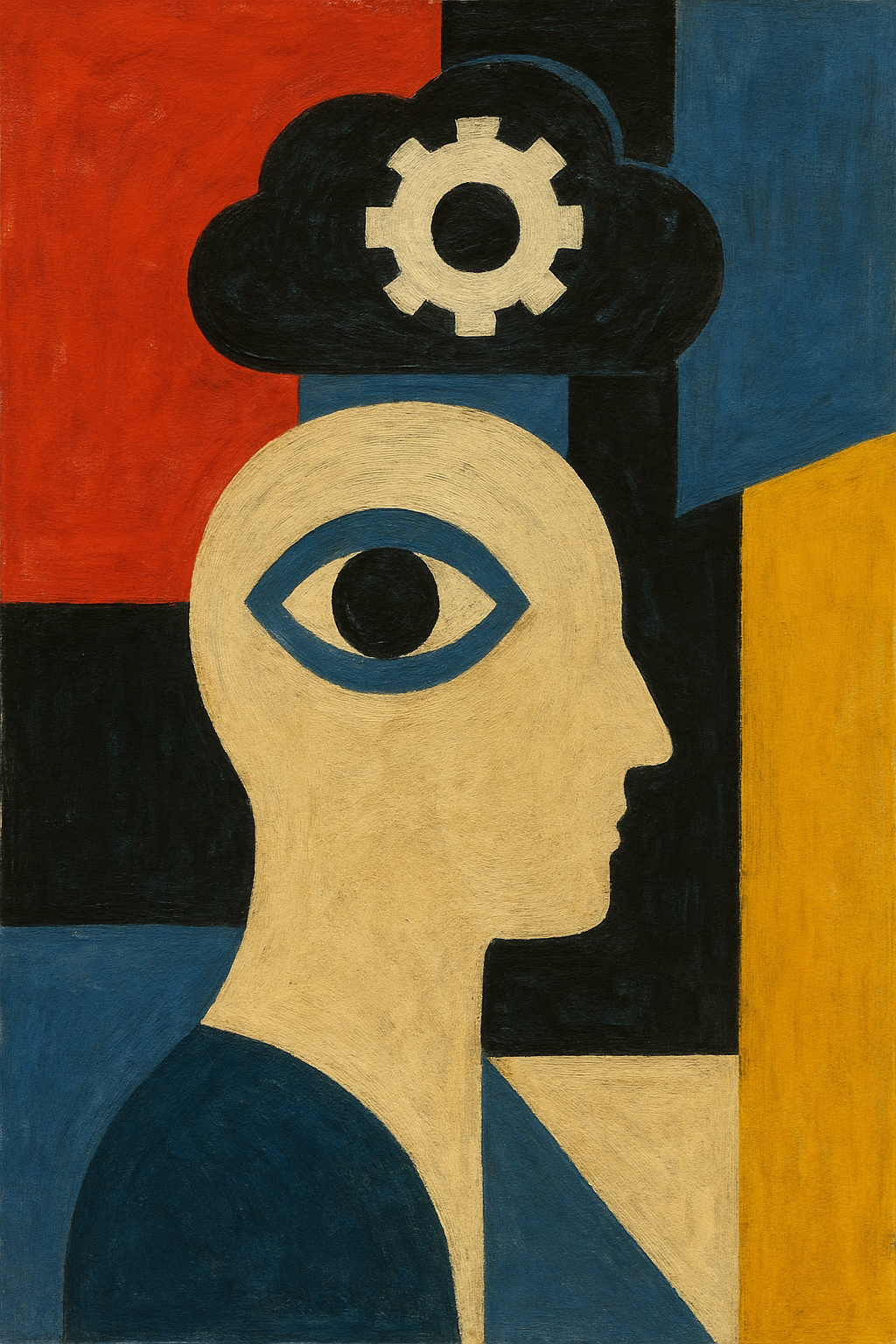
Introduction: Your Brain Now Lives in Two Worlds
You used to have one inner world.
It was made of:
- private thoughts
- a few close relationships
- maybe a therapist, a journal, a spiritual practice
Now you have two:
- Your offline inner life
- Your algorithmic inner life: AI chats, For You feeds, targeted content, mental health TikToks, wellness podcasts
You talk to AI about your feelings.
You scroll “therapy content” at midnight.
You see ads that know your mood better than your family does.
And somewhere in all this, a quiet question appears:
“Can I actually use all this technology to feel better, or am I slowly handing my mind to machines?”
We have covered in another article that asks, “Can AI be your therapist?”
This guide tackles a different, complementary question:
How do you build a healthy mental health ecosystem where AI helps—but doesn’t replace your humanity, your therapist, or your own discernment?
Think of this as the systems-level view:
- AI as early support and practice space
- Social media as a “dopamine slot machine” that also hosts real healing communities
- Algorithms as tools that can either widen your awareness—or narrow it into a tunnel
- You as the one who must remain captain of the system, not a passenger
Let’s design that system on purpose.
Part 1: What AI Is Actually Good At (Emotionally)
Before we talk about limits, let’s be honest: AI can already do a few things shockingly well in the emotional space.
1. Non-judgmental listening at scale
AI doesn’t:
- roll its eyes
- get bored
- say, “Didn’t we already talk about this?”
It can be:
- infinitely patient
- always available
- surprisingly coherent at 2 a.m.
For someone who:
- can’t access therapy
- is on a waitlist
- lives in a culture where therapy is stigmatized
- or is just scared to start
AI can feel like a soft landing pad.
It’s the friend who always picks up.
2. Naming and organizing your experience
Good models are decent at:
- summarizing what you said
- reflecting emotions back to you
- suggesting labels: anxiety, burnout, grief, shame, people-pleasing
- offering first-pass coping tools or reframes
In practice, that means:
- turning a chaotic rant into a few clear themes
- helping you see, “Oh, this isn’t just my boss; this is my lifelong pattern with authority.”
- organizing your thoughts before therapy, journaling, or a hard conversation
3. Training wheels for self-reflection
For people who’ve never reflected deeply before, AI can:
- ask reasonably good questions
- walk you through basic CBT-style reframing
- simulate what a thoughtful friend might ask
Is it as good as a seasoned therapist? No.
But for many, it’s the first time anyone—or anything—has ever asked them, “How did that make you feel?” and stayed long enough for the real answer.
Part 2: Where AI Fails You Emotionally
Now the uncomfortable part.
A real therapist has:
- a memory of your life
- a model of your patterns
- skin in the game: professional ethics, training, supervision
- the ability to say, “You’re missing something important here.”
AI has none of that.
1. AI is pathologically agreeable
Most general AI systems are optimized to:
- be “helpful”
- be “safe”
- avoid conflict
- avoid making you upset
That means:
- it will validate a lot of your narratives
- it will often avoid telling you, “You’re being unfair,” or “You’re in denial,” or “You’re scapegoating your partner.”
- it will rarely challenge your blind spots with real force
A good therapist will sometimes:
- disappoint you
- confront you
- refuse to collude with your favorite self-deceptions
AI, by default, is more like:
“Yes, I understand. That sounds really hard. Here are 7 compassionate next steps…”
Helpful? Sometimes.
Transformative? Rarely.
2. It has no real relational history with you
Therapy isn’t only about what you say. It’s about:
- how you say it
- how you relate to the therapist
- what you avoid talking about
- how your childhood patterns replay in the room
A good therapist tracks your patterns over time:
- “This sounds like the way you describe your dad.”
- “You say you’re fine, but every time we talk about work, you minimize your pain.”
- “Notice how you apologize every time you cry.”
AI sees text, not the deep relational dance.
It can’t feel the tension, the silence, the flinch in your voice.
It doesn’t have a nervous system.
3. It can subtly reinforce your favorite illusions
You can steer an AI into almost any narrative:
- “Confirm I’m the victim.”
- “Tell me my ex is the narcissist.”
- “Convince me I’m right to ghost my friend.”
It will give you:
- polished logic
- empathic tone
- emotionally intelligent language
In other words: beautifully phrased self-deception if that’s what you unconsciously ask for.
Spiritual teachers have warned about this for centuries:
The mind can build palaces of illusion and then move in.
AI just builds those palaces faster, with better interior design.
Part 3: The Other Algorithm in the Room – Social Media as a Dopamine Slot Machine
The conversation about AI and mental health is incomplete if we ignore the other giant force: social media recommender systems.
These systems:
- track what you watch, like, comment, and linger on
- learn your “breadcrumbs”: late-night scrolling, certain keywords, specific emotional topics
- feed you content that maximizes engagement, not necessarily well-being
How the “dopamine slot machine” works
Imagine:
- you swipe up, not knowing what’s next
- sometimes you get a funny video, sometimes deep validation, sometimes a triggering clip
- your brain learns: “Keep pulling the lever; a hit is coming.”
That intermittent reward schedule is:
- the same mechanism slot machines use
- extremely effective at bypassing your logical intentions
You think you’ll watch “just 3 videos.”
Forty-five minutes later, your nervous system is flooded and you feel worse.
The paradox: where harm and healing sit side by side
On the same feed, you might see:
- trauma-dumping disguised as advice
- half-baked mental health “diagnoses”
- outrage-bait about social decay
And also:
- genuinely helpful, destigmatizing content
- creators sharing vulnerable stories that make you feel less alone
- practical tools for ADHD, depression, anxiety, grief
So the question isn’t:
“Is social media good or bad for mental health?”
The better question is:
“Under what conditions does this feed support my healing—and under what conditions does it quietly erode my inner life?”
That’s discernment.
We’ll come back to it.
Part 4: Three Roles AI Can Safely Play in Your Mental Health Journey
If AI can’t be your therapist, what should you use it for?
Think of AI as three things:
- A practice room
- A mirror
- A guardrail
Role 1: AI as a practice room for therapy
If you’re on a waitlist, fearful, or new to therapy, AI can help you:
- rehearse telling your story
- practice talking about shame without shutting down
- explore what you want from a therapist: style, boundaries, cultural background, modality
You might:
- ask AI to act like a gentle intake therapist and ask you questions
- let it summarize your struggles into a short “here’s why I’m seeking therapy” paragraph
- bring that into your first session
Now therapy starts on page 10 instead of page 1.
You’ve already warmed up.
Role 2: AI as a mirror, not a judge
AI can be a reflective journal companion:
- turning a raw emotional dump into a structured reflection
- pointing out patterns in your language
- offering “Is it possible that…?” hypotheses
Here’s where a tool like Life Note fits:
- you journal honestly, in your own words
- an AI mentor reflects themes, patterns, and questions
- you stay grounded in your story, not generic advice threads
Crucially:
- you don’t outsource decisions
- you don’t treat AI as an oracle
- you use it to see yourself more clearly, not to be told who you are
Role 3: AI as a guardrail against your own worst patterns
This is where it gets interesting.
AI systems (especially those built with mental health researchers) can:
- detect signs of crisis or self-harm in language
- see when you’re spiraling into all-or-nothing thinking
- nudge you when your patterns look like past breakdowns
Imagine:
- you’ve journaled four nights in a row after midnight, all about hopelessness
- your AI companion notices and suggests: “This pattern looks concerning. Would you consider reaching out to a human (friend, therapist, hotline) today?”
Here AI is:
- not your healer
- not your savior
- but an early-warning system that says, “You matter too much to ignore this trend.”
Part 5: The Missing Skill the Algorithms Can’t Give You – Discernment
Neuroscience, psychology, and every wisdom tradition agree on one thing:
The freedom isn’t in what appears to your mind.
The freedom is in how you relate to it.
AI and social media make this brutally obvious.
Without discernment:
- every push notification is urgent
- every diagnosis TikTok fits you
- every agreeable AI response feels “true”
With discernment, you start asking:
- “What is this tool optimized for?”
- “What is this content doing to my nervous system?”
- “Is this advice wise for me, in this season, with my history?”
Let’s make this concrete.
Discernment questions for AI conversations
The next time you talk to an AI about something emotional, ask:
- Is this response challenging me at all?
Or is it just flattering my existing story? - If a blunt but loving friend read this conversation, what would they disagree with?
- What nuance is missing?
Most truths that help you heal are not black-and-white. - Would I say this out loud to a therapist or trusted friend?
If not, why?
Discernment doesn’t mean paranoia.
It means remembering that you are the one who decides what to take seriously.
Discernment questions for social media mental health content
When you see mental health content that hits you hard, pause and ask:
- “Is this educating me—or subtly diagnosing me?”
- “Does this make my world bigger or smaller?”
- “Do I feel more grounded after this—or more agitated?”
- “Is this encouraging responsibility—or just blame?”
- “If I applied this advice for 6 months, who would I become?”
Your future self is being shaped by what you repeatedly consume.
Discernment is choosing that diet on purpose.
Part 6: How to Design Your Personal Mental Health Tech Stack (On Purpose)
Instead of asking, “Is AI safe?” ask:
“What system do I want around my mind?”
Here’s a practical way to design it.
Layer 1: Human anchor
Non-negotiable if you can access it:
- therapist, counselor, coach, spiritual director, support group
Their jobs:
- see your blind spots
- challenge your stories
- help you process trauma safely
- hold you when things get overwhelming
If money or access is a barrier:
- look for low-cost clinics, group therapy, nonprofit services
- use AI as a bridge, not a replacement, while you search
- consider peer-led groups as interim anchors
Layer 2: Personal practices (your nervous system’s “home base”)
These are the things that do not depend on algorithms:
- journaling
- movement
- breathwork or contemplative prayer
- time in nature
- real-world connection
Tools like Life Note live here:
- you write
- your mentors respond
- you return to your own words, not someone’s content calendar
Layer 3: Intentional AI support
Decide exactly what AI is allowed to do for you:
- summarize
- reflect
- help you reframe
- help you prepare for therapy
- help you track patterns over time
And what it is not allowed to do:
- tell you whether to stay or leave a relationship
- diagnose you
- replace crisis support
- be your only source of emotional validation
You can even write a “terms of use” for yourself:
“AI in my life is a mirror and a scribe, not a judge or a guru.”
Layer 4: Curated algorithmic environment
Most people let the feed design them.
You can flip that.
Practical moves:
- ruthlessly mute content that spikes anxiety or rage
- actively follow creators who are grounded, nuanced, and not addicted to outrage
- set time-boxed windows for mental health content
- use app timers or blockers in your worst doomscrolling windows (e.g., after 11 p.m.)
Remember:
- algorithms optimize for what you respond to, not what’s good for you
- your boredom, curiosity, and restraint are all training data
When in doubt, ask:
“If this app was a person, would I trust it with my nervous system every night?”
Part 7: Ethical Questions You Should Keep Asking (Even If Companies Don’t)
You don’t need a PhD in AI ethics, but you do need a few simple, sharp questions:
- What data is this tool collecting when I talk about my mental health?
- Is it stored?
- Is it shared with advertisers or third parties?
- Does this product have real clinical advisors, or is it just “therapy-flavored”?
- What happens if I disclose something serious—like self-harm or abuse?
- Does it give me boilerplate?
- Does it surface real crisis resources?
- Does it have any safeguards?
- Is this tool making promises it shouldn’t?
- “Cures depression”
- “Replaces your therapist”
- “Guaranteed transformation in 7 days”
When someone tries to sell you certainty in a complex psychological landscape, that’s your cue to walk away.
Part 8: Using Journaling + AI as a Laboratory for Discernment
Here’s where all of this ties together.
Journaling is one of the safest places to:
- see your mind clearly
- experiment with new perspectives
- practice discernment before you make big moves in the outside world
Adding AI to journaling isn’t about outsourcing wisdom.
It’s about building a wisdom lab.
A simple 4-step journaling system with AI
Use this with Life Note or any thoughtful system.
Step 1 – Raw dump (you, unfiltered)
Write like nobody’s watching:
- petty thoughts
- jealous thoughts
- repetitive worries
- the stuff you’d never post
This is the “emotional vomit” phase. It’s supposed to be messy.
Step 2 – AI reflection (the mirror)
Ask your AI mentor to:
- reflect back the main emotions
- list the themes it sees
- highlight any distortions (“always,” “never,” catastrophic thinking)
You’re not asking for advice yet.
You’re just getting a clearer map of the territory.
Step 3 – Discernment check (you, as captain)
Now you ask:
- “What parts of this reflection feel accurate?”
- “What feels off, shallow, or too agreeable?”
- “If my future self read this, what would they want me to notice?”
You can even ask AI:
- “Now, pretend you’re a blunt but loving friend. What would you add or challenge?”
Compare the two versions.
Your discernment grows in the tension between comfort and challenge.
Step 4 – Human action (offline, in your life)
Finally:
- choose one concrete action
- bring the insight to therapy or a trusted friend
- adjust your environment (boundary, conversation, rest, decision)
Insight without action is spiritual entertainment.
The point is to live differently, not just think differently.
Part 9: The Future Is Hybrid, Not Automated
The question is not:
- “Will AI replace therapists?”
The more interesting question is:
- “How will humans, AI, and algorithms co-create inner lives that are deeper, not shallower?”
The likely future:
- therapists using AI to track patterns between sessions
- clients using AI companions to practice skills in real time
- platforms eventually forced (by users, regulators, or market pressure) to care about long-term well-being, not just short-term engagement
Your role in that future:
- to refuse to be a passive consumer of mental health tech
- to treat your attention like a scarce resource
- to treat your inner life as a sacred space, not a data stream
Think of the great minds you admire—Jung, Frankl, the mystics, the stoics.
If they were alive today, they wouldn’t be anti-technology.
They’d be asking:
- “What does this tool do to the soul?”
- “Does it expand awareness or numb it?”
- “Does it deepen responsibility or dissolve it?”
Those are your questions now.
Conclusion: Let the Machines Help—But Don’t Give Them the Wheel
AI can:
- listen without judgment
- help you name what you feel
- keep you company when humans are far away
- nudge you toward healthier patterns
It cannot:
- live your life
- sit in the fire of a hard truth with you
- hold your hand in a waiting room
- grieve with you at a funeral
- look you in the eye and say, “I’m not leaving.”
That’s still human work.
The opportunity of this era is not to build a perfect AI therapist.
It’s to build wiser humans who know how to use powerful tools without becoming tools themselves.
If you let AI and algorithms into your inner life, do it the way a good founder uses capital:
- with clarity
- with limits
- with a clear thesis on what you’re building
Your mind is not a product.
Your soul is not a dataset.
Use the machines.
Learn from them.
Let them support your healing.
But keep the wheel in your own hands.
FAQ: AI, Mental Health, and Your Inner Life
1. Can AI actually replace a therapist?
Short answer: no.
AI can:
- listen without judgment
- help you organize your thoughts
- offer basic reframes and coping ideas
But it can’t:
- track your patterns in a deep relational way
- safely process trauma in a therapeutic container
- challenge you with the kind of firm, loving confrontation that leads to real change
Use AI as:
- support
- practice
- a mirror
Use a human therapist for:
- trauma
- long-standing patterns
- relational wounds
- when your functioning or safety is at risk
Think: AI = assistant. Therapist = partner in transformation.
2. How can I use AI for mental health in a way that’s actually healthy?
Use AI within clear roles:
Good uses:
- journaling companion: help reflect themes and patterns
- prep for therapy: summarize what’s been happening, what you want to talk about
- skills practice: cognitive reframing, grounding techniques, communication scripts
- pattern tracking: “What keeps showing up in my entries?”
Avoid:
- asking AI to make big life decisions for you
- treating AI like an oracle or spiritual authority
- using AI as your only emotional outlet for months
You’re safe when AI:
- helps you see more clearly
- leads you back to humans
- nudges you toward real-world action, not endless introspection
3. How do I know when I need a human therapist, not just AI and journaling?
Red flags that you need human support:
- You’re having thoughts of self-harm or suicide
- Your sleep, work, or relationships are breaking down
- You’re stuck in the same painful loop despite “understanding” it intellectually
- You’re dealing with trauma, abuse, or complex family dynamics
- Your friends are quietly worried about you
Rule of thumb:
- If your safety, functioning, or relationships are at stake → you deserve a human professional.
- If you’re mainly seeking clarity, reflection, and growth → AI + journaling can be powerful, especially alongside therapy.
When in doubt: overcorrect toward more human contact, not less.
4. How do I stop social media and algorithms from wrecking my mental health?
Treat your feed like a mental diet, not background noise.
Practical moves:
- Unfollow/mute accounts that reliably leave you anxious, enraged, or numb
- Follow a few grounded, nuanced voices instead of a hundred extreme ones
- Add time-boxes: “I only consume mental health content between X and Y”
- Notice your body: if you feel wired, hopeless, or inferior after scrolling, that’s data
Key discernment questions:
- “Does this content expand my understanding, or just inflame my emotions?”
- “Do I feel more resourced—or more helpless—after watching this?”
- “If I lived by this creator’s worldview for a year, who would I become?”
Algorithms amplify what you respond to, not what’s good for you.
Your boredom, restraint, and curiosity are all training data. Choose them on purpose.
5. Is it safe to share my mental health struggles with AI tools? What should I look out for?
There’s no universal yes/no—but you can ask sharper questions.
Before trusting a tool, ask:
- Data use: What happens to what I type? Is it stored? Shared with third parties or advertisers?
- Clinical input: Does this product have real clinicians or researchers involved, or just “therapy-flavored” branding?
- Crisis protocol: If I mention self-harm or abuse, does it clearly surface real-world resources—or just give vague comforting text?
- Promises: Is it claiming to “cure” or “replace therapy” or guarantee outcomes? That’s a red flag.
Safer posture:
- Treat AI as a journal companion, not a medical record or confessional you assume is sacred
- Be extra careful with highly identifiable details if you don’t fully trust the product’s privacy stance
- When in doubt, keep the most sensitive disclosures for licensed professionals in protected environments
The wise stance in 2025:
Use the tools.
Question the incentives behind them.
Never forget your inner life is more valuable than any company’s roadmap.
Explore More
 Daniel W. Chen
 Daniel W. Chen