
10 Journaling Prompts For Mental Health to Help You Respond Instead of React in a Divided World

When the world feels hostile and polarized, your nervous system pays the price. This deep guide explains the difference between reacting and responding, how to pause when triggered, and offers 10 powerful journaling prompts (plus bonus sets) to cultivate clarity, compassion, and strong boundaries.
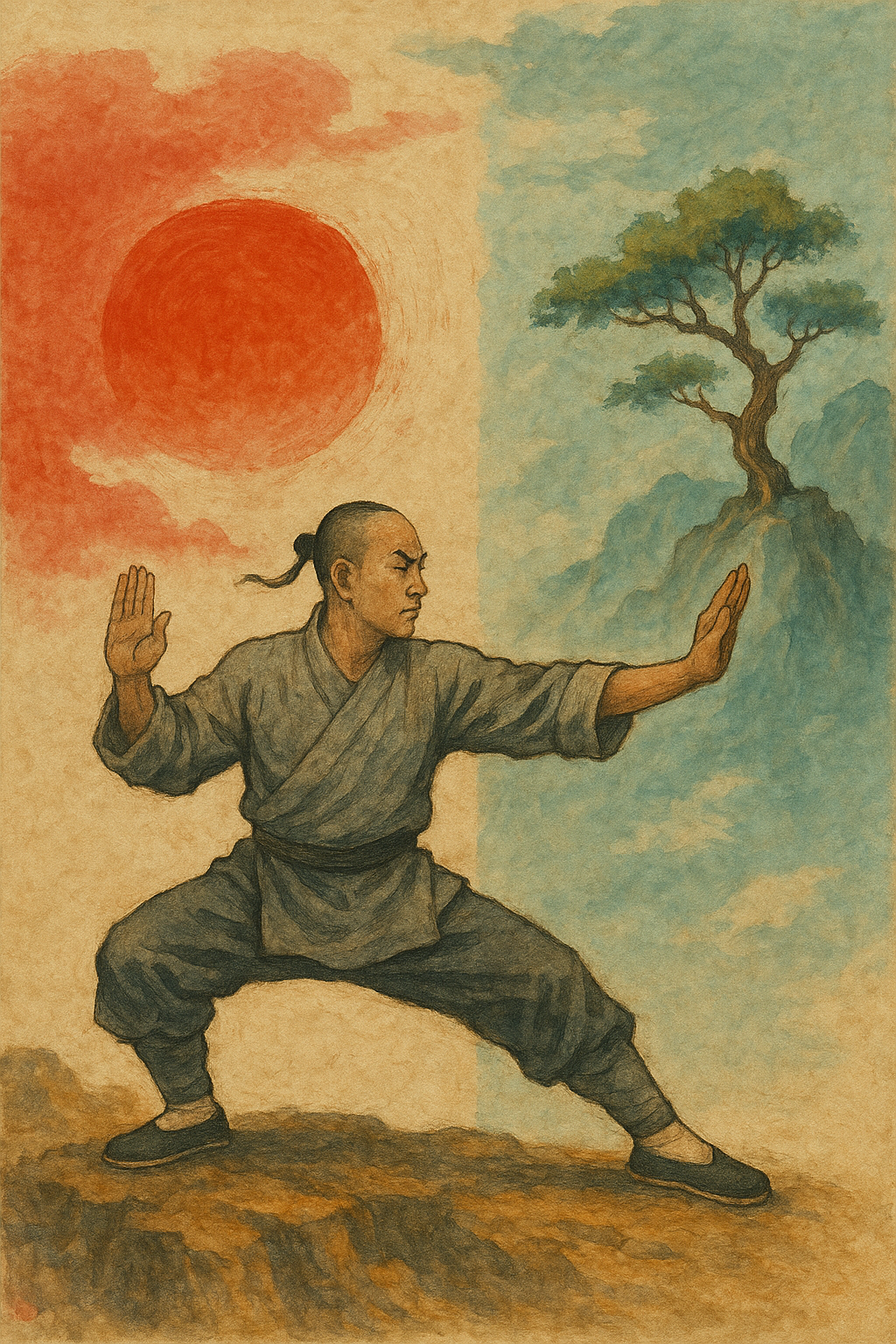
📌 TL;DR — Responding vs Reacting
In a polarized world, the goal is to respond thoughtfully rather than react emotionally. Key practices: pause before engaging, question your triggers (what does this activate in me?), seek understanding before being understood, and recognize shared humanity. Journaling creates space between stimulus and response, helping you engage with curiosity rather than defensiveness.
The loudest conflict of this era isn’t only out there. It’s inside millions of people trying to live decent lives while being bombarded by uncertainty, outrage, and pressure to pick a side fast.
A headline can now reshape your mood in seconds.
A comment can end a friendship in minutes.
A single misunderstanding can harden into a lifetime narrative.
What looks like “public conflict” is often private overwhelm expressed publicly.
When life is unstable, anxiety rises.
When anxiety rises, the mind seeks certainty.
When certainty becomes an addiction, nuance becomes a threat.
When nuance becomes a threat, humans do what humans have always done:
- simplify
- blame
- band together
- attack the enemy-banner
This isn’t a political diagnosis.
It’s a psychological one.
And it explains why good people can become sharp, dismissive, moralistic, and cruel—then later feel shocked by their own tone.
The task is not to become emotionless.
The task is to become unavailable to possession.
Jung would call this reclaiming consciousness from the unconscious.
The Stoics would call it governing impressions before they govern you.
Buddhist thought would call it seeing the arising of desire, aversion, and delusion without becoming them.
Different traditions, same skill:
The pause.
Why Collective Stress Makes Personal Reactivity Worse
A common mistake is thinking your emotional flare-ups are purely personal.
They aren’t.
Humans are social creatures.
We synchronize emotionally.
We absorb the weather of the crowd.
When the collective atmosphere is tense, your baseline shifts:
- you sleep lighter
- you interpret faster
- you tolerate less
- you become more convinced you’re right
This is why periods of mass uncertainty create:
- stronger group identities
- harsher moral condemnation
- quick “us vs them” sorting
- a hunger for simplified narratives
The mind under stress doesn’t want truth.
It wants relief.
And relief often looks like:
- certainty
- an enemy
- a tribe
- a story that makes your fear feel heroic
This is precisely why your inner work matters right now.
Because if you don’t become more conscious, you will be more programmable—by the most emotionally aggressive signal in your environment.
Reaction vs Response: The Fork in the Road
There are two ways to engage reality.
Reaction
Short, hot, fast.
A reflex disguised as a decision.
You know you’re in reaction when:
- your breath narrows
- your tone sharpens
- you feel urgency to “correct”
- the other person becomes a symbol, not a human
Reaction can feel powerful in the moment.
But it’s rarely effective long-term.
It’s like setting your house on fire to prove you dislike smoke.
Response
Slower, clearer, values-led.
A decision that survives the next morning.
You know you’re in response when:
- you can name your emotion without being owned by it
- you can imagine consequences
- you care about outcomes more than dominance
- you’re willing to pause or walk away
Naval tends to reduce it to an economy of attention:
what you “pay” attention to is what grows in your life.
Jobs might frame it as craftsmanship:
don’t ship a version of yourself you wouldn’t sign.
Same principle:
Build a mind you can trust under pressure.
Emotional Possession: When You’re “Not Yourself”
One of the most honest human sentences is:
“I don’t know what came over me.”
What “came over you” was not a demon.
It was an unprocessed wave of emotion that temporarily took the steering wheel.
Emotions are not wrong.
They’re information and energy.
The danger is not feeling anger or fear.
The danger is fusion—when you become the emotion.
When fused, you lose:
- critical thinking
- empathy
- long-term perspective
- proportion
This is why people can be brilliant and still behave irrationally.
Intelligence doesn’t vanish.
It becomes inaccessible under flood conditions.
So the practice is not moral superiority.
The practice is self-recognition.
The Body Is Your Early Warning System
Your mind can justify anything.
Your body is less polite.
Most emotional hijacks begin as physical signals:
- shoulders rise
- breath tightens
- stomach knots
- jaw clenches
- heat moves through the chest or face
If you catch these early, you can interrupt the cascade.
A useful rule:
When the breath goes shallow, wisdom goes shallow.
So your first move isn’t a perfect argument.
It’s a physiological reset.
- slow breaths
- a short walk
- a glass of water
- stepping away from the screen
This is not avoidance.
This is leadership over your own nervous system.
Compassion Without Becoming a Doormat
Many people misunderstand compassion because they associate it with self-erasure.
Real compassion is not self-betrayal.
It’s clarity without hatred.
You can hold two truths at once:
- a person may be suffering
- you do not have to accept mistreatment
The most adult version of compassion begins with self-respect.
If you don’t protect your dignity, you’ll end up calling resentment “virtue.”
So the maturity upgrade is:
warm heart, strong boundary.
You can disengage with a clean conscience.
You can wish someone well without letting them into your life.
That’s not coldness.
That’s emotional hygiene.
The Hidden Skill of Our Era: Strategic Non-Engagement
The internet trained us to believe:
- silence = weakness
- responding fast = strength
- having the last word = victory
In reality, the strongest people often have the best relationship with non-response.
Because some interactions are not conversations.
They are emotional traps.
A good diagnostic question is:
Is this person looking for understanding, or looking for discharge?
If it’s discharge, your clarity will be wasted.
Your peace will be taxed.
Your time will be burned.
Sometimes the best response is:
- no response
- a delayed response
- a short boundary statement
- a graceful exit
A calm life is not built only on good decisions.
It is built on refusing bad contracts.
The Misinformation Problem Is Also an Emotion Problem
We often talk about misinformation as if it’s purely a data issue.
But misinformation spreads because it matches emotional needs.
When you’re anxious:
- you crave certainty
- you want simple villains
- you prefer narratives that validate your fear
This is why selective facts can be as dangerous as outright lies.
A story with missing context can still emotionally hijack you.
A personal antidote:
Slow the emotional tempo before you trust the narrative.
Ask:
- What might be missing?
- What would a careful person verify?
- Am I reacting to a clip without a timeline?
This doesn’t make you passive.
It makes you difficult to manipulate.
Control, Influence, Concern
If you want fewer emotional spirals, you need a better map of power.
What you control
- your attention
- your words
- your boundaries
- your daily actions
What you influence
- your friends
- your team
- your community
- your local environment
What you’re concerned about
- the vast system you can’t steer alone
A lot of suffering comes from spending your control-energy on concern-problems.
So a grounding question is:
What is the smallest real action I can take that actually improves something within my influence?
This converts anxiety into integrity.
The River Practice: Stepping Out of the Current
A useful metaphor:
Thoughts and emotions are like a river.
When the current is strong, you can get swept away.
Mindfulness is not blocking the river.
It’s stepping onto the bank.
You observe:
- the rising fear
- the emerging anger
- the story your mind constructs
- the impulse to punish
And you don’t feed it with immediate action.
This is where freedom begins.
You can’t stop feelings from arising.
You can stop them from becoming commands.
A Clean Framework for High-Heat Moments
When your nervous system spikes, try this simple sequence:
1. Notice
“I’m activated.”
2. Name
“This is fear/anger/grief.”
3. Normalize
“Of course this is here. I’m human.”
4. Narrow the goal
“What outcome do I want?”
5. Choose the channel
- engage calmly
- delay
- exit
This is your internal adult returning to the room.
The 10 Core Journaling Prompts
These are designed for moments of friction—online, at home, in community, or inside your own mind.
Use them in order when you’re heated.
Or pick one as a daily practice.
1. What am I feeling beneath my opinion?
Write the emotion first.
Then add:
“What does this emotion want me to do right now?”
This separates feeling from obedience.
2. Where is this showing up in my body?
List the sensations.
Then ask:
“What does my body believe is at risk?”
You’ll often discover you’re defending an old wound, not a current fact.
3. What story am I telling that makes this emotion feel justified?
Write the story in a paragraph.
Then write a second paragraph that begins with:
“Another plausible interpretation is…”
This is anti-demonization training.
4. What outcome do I actually want?
Be specific.
Not: “I want to be right.”
Yes:
- “I want clarity.”
- “I want peace.”
- “I want respect.”
- “I want this relationship to survive disagreement.”
Outcome clarity prevents ego-driven chaos.
5. What part of this is truly within my control?
Make two lists:
- control
- not control
Then choose one action inside your control that doesn’t violate your values.
6. What response would I respect tomorrow?
Future-you is your best editor.
Write the reply you’d be proud to sign.
7. How might the other person be afraid?
This isn’t agreement.
It’s perspective.
Write a single sentence:
“Even if I think they’re wrong, they might be afraid of ___.”
When you can see fear, contempt loses power.
8. What boundary protects my dignity without hardening my heart?
Write the exact sentence.
Examples:
- “I’m not open to being spoken to that way.”
- “We can continue if we stay respectful.”
- “I’m stepping away for now.”
- “We don’t have to agree to care about each other.”
9. What information am I missing?
List what you’d want to verify before locking your certainty.
Add:
“What would change my mind?”
That question is a marker of intellectual and emotional adulthood.
10. What is the smallest wise action available today?
Small matters.
- one honest conversation
- one apology
- one day off social media
- one act of local good
- one quiet reset
The grand version of you is built by small sober movements.
Bonus Prompt Sets (Use as Deepening Lenses)
A) The Identity Lens
- What identity of mine feels threatened here?
- What am I afraid this disagreement says about who I am?
- If I loosen my identity grip by 10%, what clarity returns?
This is where Jung’s shadow work becomes practical:
the parts of you that feel most offended often point to parts of you that feel most insecure.
B) The Relationship Lens
- What do I value about this person beyond this issue?
- Is this a difference of worldview or a difference of tone?
- What repair would keep my integrity intact?
Not every conflict is a final verdict.
Many are negotiations of respect.
C) The Media Diet Lens
- Which feeds make me more anxious, angry, or smug?
- Which sources leave me with more understanding?
- What would a healthier information rhythm look like?
You can’t build peace with a diet of adrenaline.
D) The Power Lens
- Am I trying to influence, or trying to dominate?
- What actions would actually reduce harm?
- What local good is possible right now?
This keeps you from mistaking emotional heat for moral effectiveness.
The 3-Minute Response Ritual
When you’re triggered, don’t wait for perfect calm.
Just interrupt the autopilot.
Minute 1: Label
Write three lines:
- I’m feeling ___
- My body is ___
- My impulse is to ___
Minute 2: Breathe
Ten slow breaths.
Minute 3: Choose
Answer:
- What outcome do I want?
- What response is most likely to create that outcome?
- Is engagement necessary, or is peace the wise win?
This routine trains your nervous system to associate activation with choice—not explosion.
Why This Practice Changes You Over Time
If you use these prompts consistently, you’ll notice shifts that are subtle but decisive:
- Your reactivity shortens.
You still get triggered, but you recover faster. - Your inner narrative becomes less absolute.
You see more angles before you lock into judgment. - Your empathy becomes more available.
Not naive empathy—grounded empathy. - Your boundaries become cleaner and less dramatic.
You stop negotiating with disrespect. - Your relationships become sturdier.
Because you can disagree without turning it into a character war. - Your peace becomes less dependent on the world behaving well.
Which is the real power.
This is not a personality change overnight.
It’s a training effect.
Like the gym, but for consciousness.
The Adult Spirituality of This Era
A mature inner life isn’t proven by how calm you are when life is easy.
It’s proven by what you do when you’re provoked—when your nervous system wants war and your values want peace.
This era is a pressure cooker for integrity.
Not because conflict exists, but because conflict is now constant, public, and rewarded.
The temptation is to turn spirituality into performance: polished “peace,” curated compassion, and quiet superiority.
But adult spirituality is less aesthetic and more ethical.
It doesn’t say:
“Look how serene I am.”
It says:
- “I can feel anger without becoming cruel.”
I can name what’s wrong without needing to humiliate someone to prove it. - “I can feel fear without becoming ideological.”
I won’t rent out my mind to the first story that promises certainty. - “I can love people without abandoning myself.”
Compassion is not access. Boundaries are not betrayal.
This is the real upgrade:
a heart that stays open, and a spine that stays intact.
And yes, that’s a high bar.
Because it asks you to be both warm and precise, both human and disciplined.
But it’s worth aiming for—
because the alternative is living as a predictable instrument of the loudest emotion in the room.
A Real-World Field Guide: What to Do in the Exact Moments You Usually Spiral
Most people don’t fail because they lack insight. They fail because they don’t know what to do at the exact second their nervous system lights up. So here’s a simple map you can use when life gets sharp.
Scenario 1: You see a post that instantly enrages you
Your risk: sharing before verifying, becoming an unintentional amplifier.
Do this:
- Write Prompt #1 (“What am I feeling beneath my opinion?”).
- Then Prompt #9 (“What information might I be missing?”).
Rule: If it spikes your pulse in under 3 seconds, verify before you spread.
Scenario 2: A friend says something that feels like betrayal
Your risk: turning disagreement into character assassination.
Do this:
- Prompt #4 (“What outcome do I actually want?”).
- Prompt #8 (“What boundary protects my dignity without hardening my heart?”).
Micro-script:
“I care about you. I disagree with this. Let’s keep this respectful.”
Scenario 3: You’re about to fire off a long message
Your risk: emotional dumping disguised as clarity.
Do this:
- Run the 3-minute ritual.
- Rewrite your message in half the words.
Micro-script:
“I’m activated. I want to respond well. I’ll reply after I’ve cooled down.”
Scenario 4: Someone is hostile and wants a fight
Your risk: confusing dignity with escalation.
Do this:
Use a single clean boundary and exit.
Micro-script:
“I’m not open to this tone. I’m stepping away.”
Scenario 5: You feel overwhelmed by the state of the world
Your risk: helplessness turning into chronic anxiety.
Do this:
Prompt #5 + #10.
Action: Choose one small local good this week.
Peace scales through behavior, not only beliefs.
This is the practice: not perfect calm—reliable recovery.
Closing: A Better Way to Live Through Difficult Times
The world may remain noisy for a long time.
This is not a temporary glitch.
It’s a historic stress test of human consciousness.
Your personal contribution doesn’t need to be grand.
Sometimes it looks like:
- pausing before replying
- refusing to demonize
- choosing clarity over performance
- protecting your dignity without poisoning your heart
When you do that, you become a stabilizing force.
Not because you’re perfect.
But because you’re intentional.
In an age that profits from your outrage,
your composure is a kind of quiet rebellion.
And your journal can be the place where that rebellion becomes a habit—
until your default state is no longer reaction,
but response.
FAQ
1. Why do I feel more reactive lately even when I’m generally calm?
Because your nervous system is absorbing a high-stress environment. When uncertainty rises, the brain prioritizes threat detection and simplifies reality. This makes irritation, certainty, and impatience more likely—even in thoughtful people.
2. Is reactivity a character flaw or a nervous system issue?
Both, but start with the nervous system. Your values can’t operate well when you’re flooded. Regulating first is not avoidance—it’s what makes wise behavior possible.
3. How can I tell I’m about to get hijacked?
Look for early body signals: shallow breath, tight chest, jaw clench, heat, racing thoughts, the urge to “win,” and reduced curiosity. When your empathy drops to zero, you’re probably in reaction mode.
4. What’s the fastest way to shift from reaction to response?
Use a micro-pause:
- Name the emotion.
- Take 10 slow breaths.
- Ask: “What outcome do I want?”
This sequence often restores access to your intelligence within minutes.
5. Does compassion mean I should keep engaging with hostile people?
No. Compassion is not access. You can understand someone’s fear and still set boundaries or disengage. Sometimes the most compassionate act is a clean exit.
6. What if the other person is spreading misinformation?
Slow the emotional tempo. Verify context before responding. Ask what would change your mind, and don’t reward rage-bait with instant certainty. If engagement won’t improve the situation, step away.
7. How do I set boundaries without sounding cold or superior?
Use simple, calm language:
- “I’m not open to being spoken to that way.”
- “We can continue if we stay respectful.”
- “I’m going to step away for now.”
Short, neutral sentences reduce escalation.
8. What if I keep failing and reacting anyway?
That’s part of training. The goal isn’t perfection; it’s shorter spirals and faster recovery. Track patterns, identify your triggers, and aim for a 10–20% improvement. That alone changes relationships and mental health.
9. How often should I use the prompts?
Daily: one prompt in 3–5 minutes.
Weekly: 15-minute review of triggers, responses, and patterns.
High-heat moments: run the 3-minute ritual before you reply.
10. What’s the biggest mindset shift this practice creates?
You stop treating emotion as a command.
You learn to feel intensely without becoming destructive.
That’s the real upgrade: a stable inner center even when the world is unstable.
Looking for more? See our complete collection of 100+ journaling prompts for mental health.
Journal with 1,000+ of History's Greatest Minds
Marcus Aurelius, Maya Angelou, Carl Jung — real wisdom from real thinkers, not internet summaries. A licensed psychotherapist called it "life-changing."
Try Life Note Free